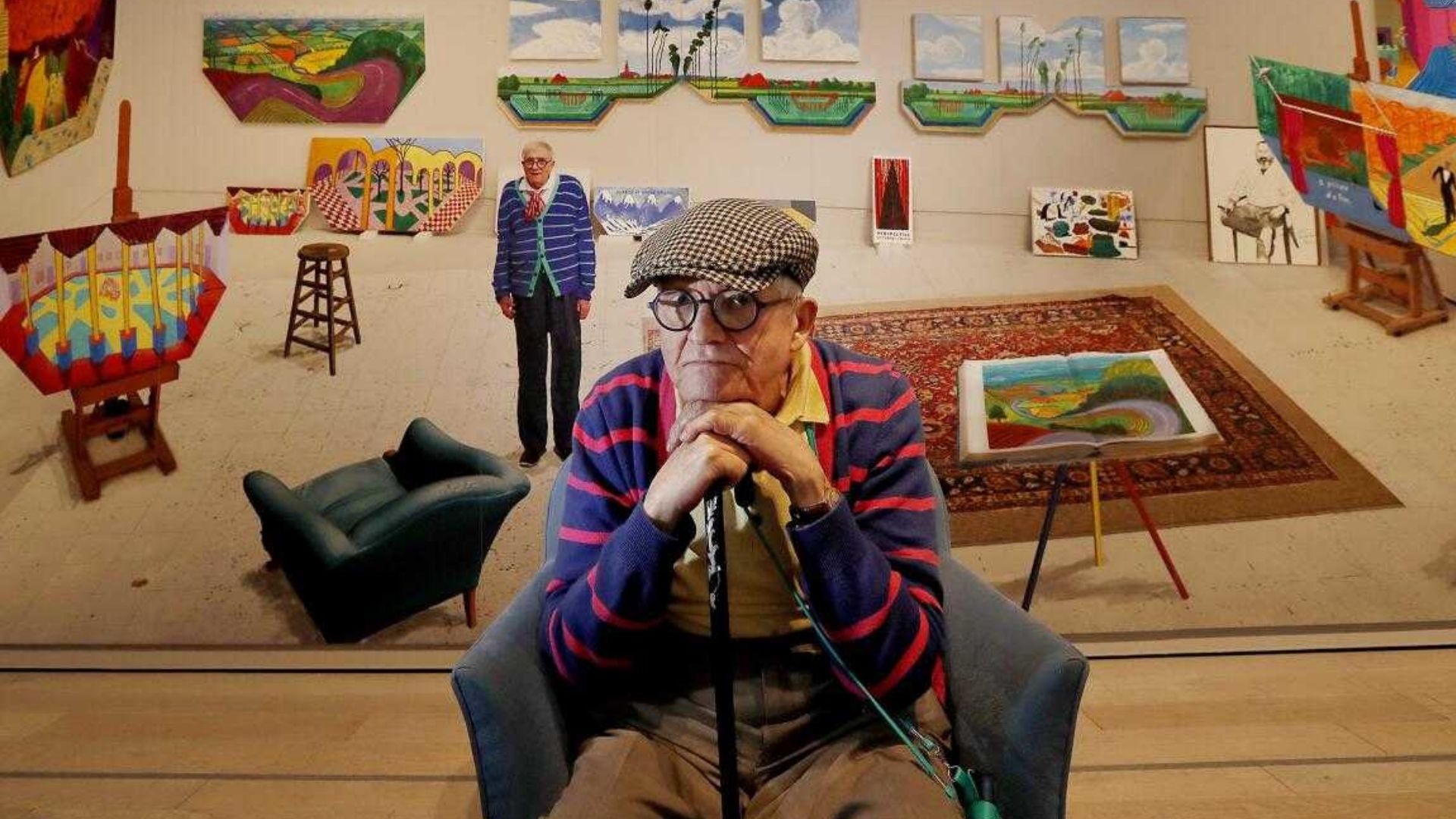


Reported by Manit Maneephantakun
“I do think that seeing is a very creative act.”
No words could better capture the essence of David Hockney than his own. For more than six decades as an artist, Hockney never believed that the role of art was simply to replicate the world in front of us. Instead, he continuously questioned how human beings perceive reality, and how a single image could hold time, memory, and emotion.
For this reason, Hockney was not merely one of the most celebrated painters of his generation. He was one of the great contemporary artists who fundamentally transformed the relationship between human beings and the act of seeing.
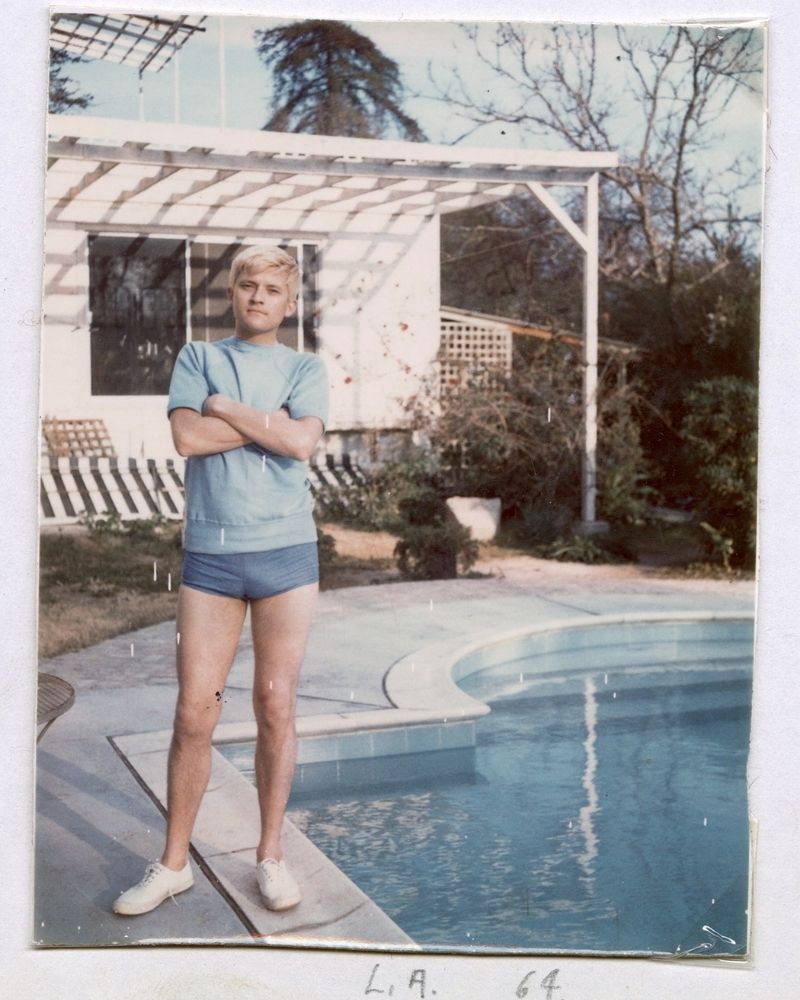
Born in Bradford, England, in 1937 and growing up in the aftermath of the Second World War, Hockney emerged as one of the leading figures of the British Pop Art movement during the 1960s. Yet, unlike many of his Pop Art contemporaries who explored mass culture, consumerism, and the imagery of advertising, Hockney was fascinated by something more profound: the experience of perception itself.
His move to California transformed both his life and his artistic language. The brilliant sunlight, endless blue skies, modernist architecture, and the relaxed rhythm of West Coast living introduced a new palette into his work.
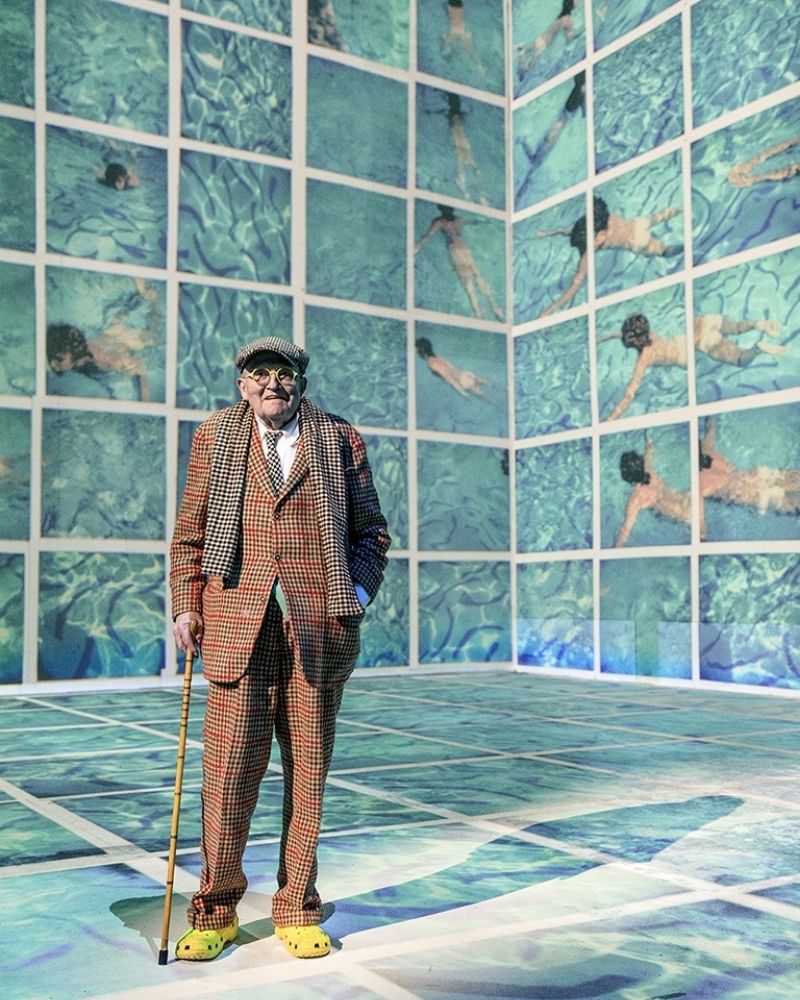
His swimming pool paintings, especially A Bigger Splash (1967), became some of the defining images of twentieth-century art. The painting of water exploding into the air after an unseen figure has entered the pool captures a moment that has already disappeared. Although no human body appears in the composition, the presence of humanity is felt everywhere.
That was the brilliance of David Hockney.
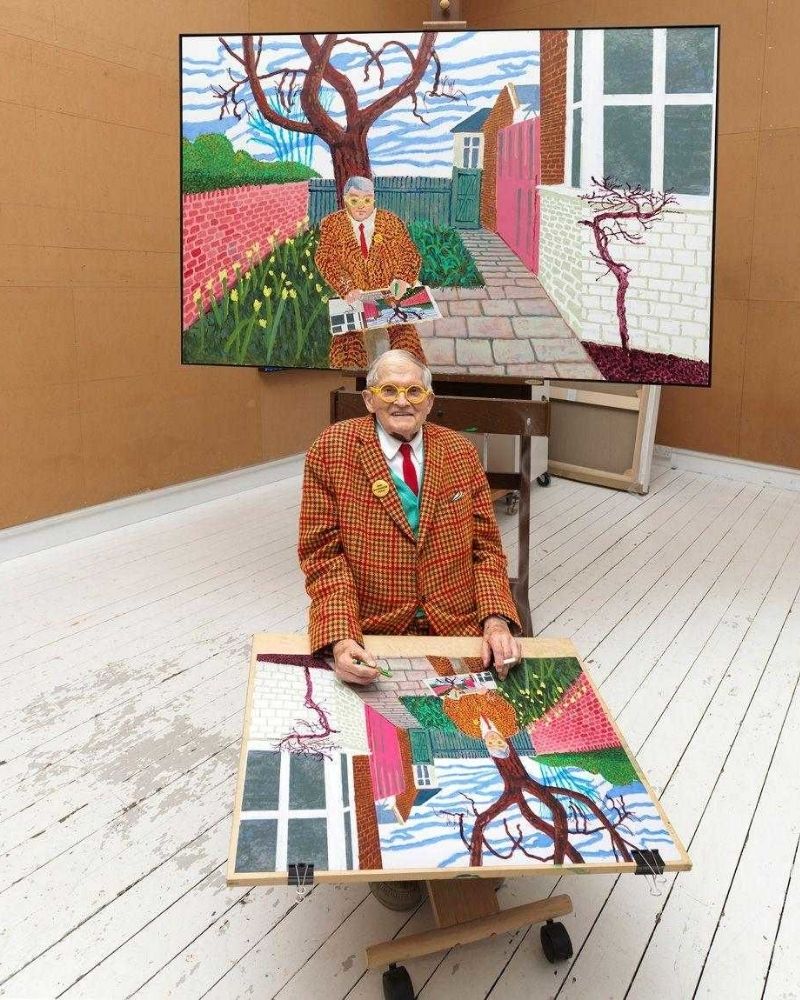
He did not simply paint what the eye could see. He painted the passage of time.
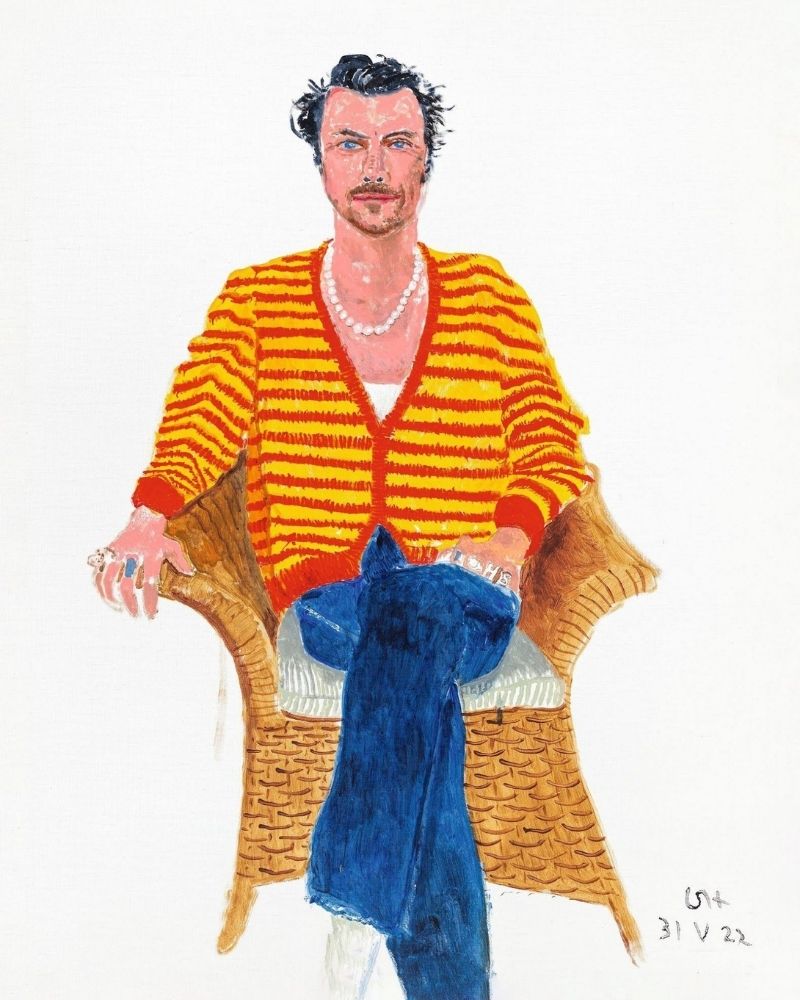
This philosophy led him to continuously experiment with artistic forms throughout his career, from intimate portraits that revealed complex relationships between artist and subject, to the monumental Yorkshire landscapes that captured the changing energy of the seasons, his revolutionary photographic collages composed of multiple images that mimicked the movement of human vision, and later his pioneering use of the iPhone and iPad as artistic tools at a time when many still questioned whether digital technology belonged in the world of fine art.
Hockney once said:
“The eye is always moving; if you’re not moving your eye, you’re dead.”
The statement reflected his entire existence. Hockney never stopped looking, never stopped questioning, and never stopped experimenting.
His modernity did not come from chasing the future, but from his extraordinary ability to remain open to it.
At an age when many artists chose to remain loyal to the techniques that had defined them, Hockney embraced the iPad to create drawings of flowers, sunrises, and the landscapes surrounding him, proving that imagination never grows old with the person who possesses it.
Another aspect that distinguished David Hockney from many of his contemporaries was his courage to celebrate happiness.
In an art world that often associated depth with pain, darkness, and conflict, Hockney chose to devote his attention to sunlight, vivid colours, flowers, trees, swimming pools, and the faces of those he loved.
As he famously said:
“People say I am a very happy painter. Well, I am.”
The statement was not merely a reflection of his personality. It was a powerful artistic philosophy. For Hockney, happiness was never something superficial; it was a way of training oneself to recognise the extraordinary beauty hidden within ordinary life.
Perhaps one of the most fascinating things about David Hockney was that he never confined colour to the canvas.
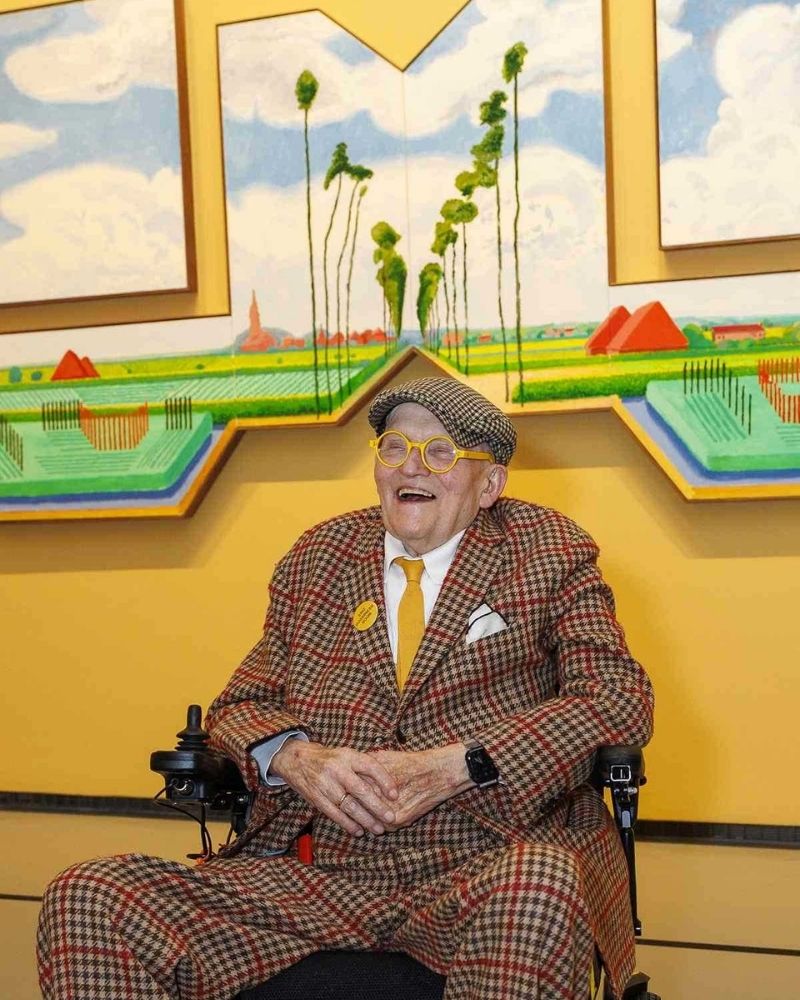
He lived through colour in the same way that he painted with it.
His signature blond hair, round brightly coloured glasses, cardigans, striped shirts, checked suits, scarves, and playful combinations of patterns became an unmistakable visual identity. He became more than an artist; he became an embodiment of true personal style.
Hockney never dressed to follow fashion trends, nor did he need to declare himself a fashion icon. His authenticity and consistency made his style timeless.
Like his paintings, his wardrobe carried joy, humour, playfulness, and an endless curiosity about the world.
In this way, he belongs to a rare group of cultural figures such as Andy Warhol, Frida Kahlo, and Karl Lagerfeld, individuals whose silhouettes alone are enough for the world to immediately recognise who they are.
Hockney’s achievements received the highest recognition in the art world. His works have been exhibited in major institutions across the globe, including Tate Britain, Centre Pompidou, and The Metropolitan Museum of Art. In 2018, his painting Portrait of an Artist (Pool with Two Figures) sold for over $90 million, becoming the most expensive work ever sold at auction by a living artist at the time.
Yet, in the end, those numbers are perhaps not what made David Hockney a legend.
His greatest legacy lies in something invisible.
It lies in the way he taught us to slow down our gaze, to observe sunlight dancing across the surface of water, to notice the changing colours of the seasons, to understand the relationship between people and space, and to realise that every moment contains more complexity than a single photograph can ever capture.
In an age where millions of images pass before our eyes every second, David Hockney reminded us of one of the simplest yet most profound human acts:
To look.
And to truly see.
David Hockney did not only leave behind paintings for the history of art.
He left humanity a new way of seeing the world.
And as long as there are people who pause to admire sunlight on water, the colour of the sky, or the quiet beauty hidden within everyday moments, the vision of David Hockney will continue to live on.