

Reported by Manit Maneephantakun
On the surface of Monogram Emblème, the memory of Louis Vuitton is not preserved inside a museum, locked away in an old travel trunk, or reduced to a beautiful symbol of the past. Instead, it is awakened through the touch of fabric, thread, colour, and the rhythm of weaving, allowing the Monogram, a motif the world has known for more than a century, to come alive once again in the language of the present.
In 2026, Louis Vuitton celebrates the 130th anniversary of the Monogram, one of the most influential motifs in the history of fashion and travel culture, with the unveiling of Monogram Emblème. A highly tactile jacquard canvas, it does not simply reinterpret the iconic House signature. Rather, it returns to the earliest memory of the Maison, to an era when travel trunks were miniature architectures of life, and canvas served to protect not only belongings, but also memories, identities, and the private worlds of those moving from one city to another.
Louis Vuitton has never treated travel merely as movement from one point to another. For the Maison, travel has always been a ritual of transition, a moment in which life is folded, stored, concealed, and revealed through the objects we choose to carry with us. Its trunks were never simply containers for luggage, but spaces between home and the outside world, between privacy and society’s gaze, between function and fantasy. On the surfaces of these trunks, the Monogram emerged as a signature that did not need to speak loudly, yet everyone understood what it meant.
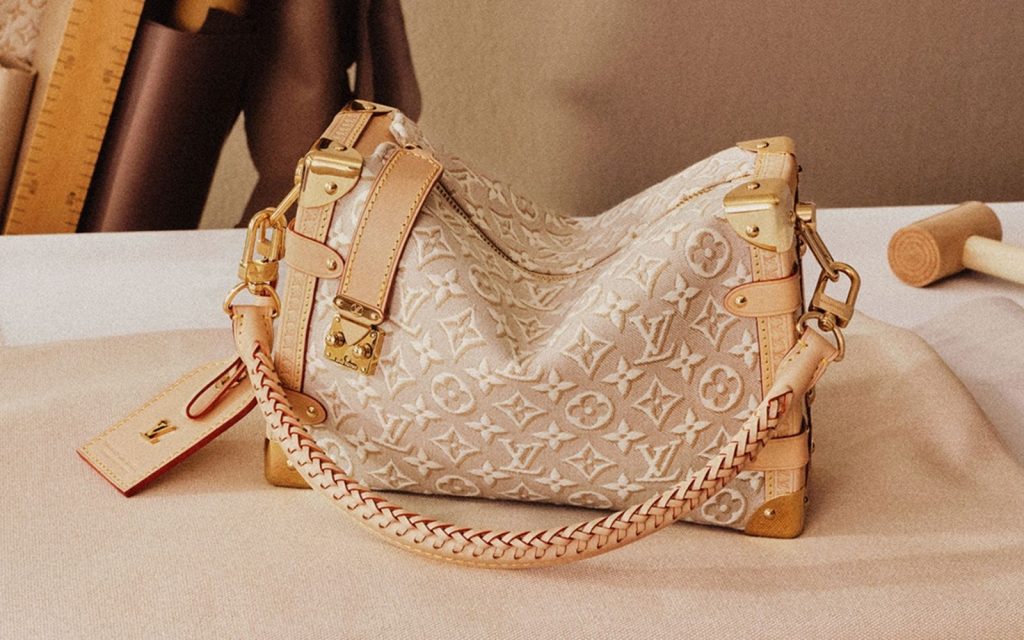
What makes Monogram Emblème so compelling is that it does not celebrate the Monogram by enlarging its familiar image or making it louder. Instead, it chooses something far more delicate: it touches the “skin” of memory. Rather than treating the Monogram as a graphic image placed upon canvas, Louis Vuitton weaves it into the very structure of the material. It becomes a motif that does not merely sit on the surface, but is absorbed into the fabric itself, as if to suggest that the true legacy of the Maison lies not only in making people recognise a symbol, but in allowing that symbol to remain tangible in a changing world.
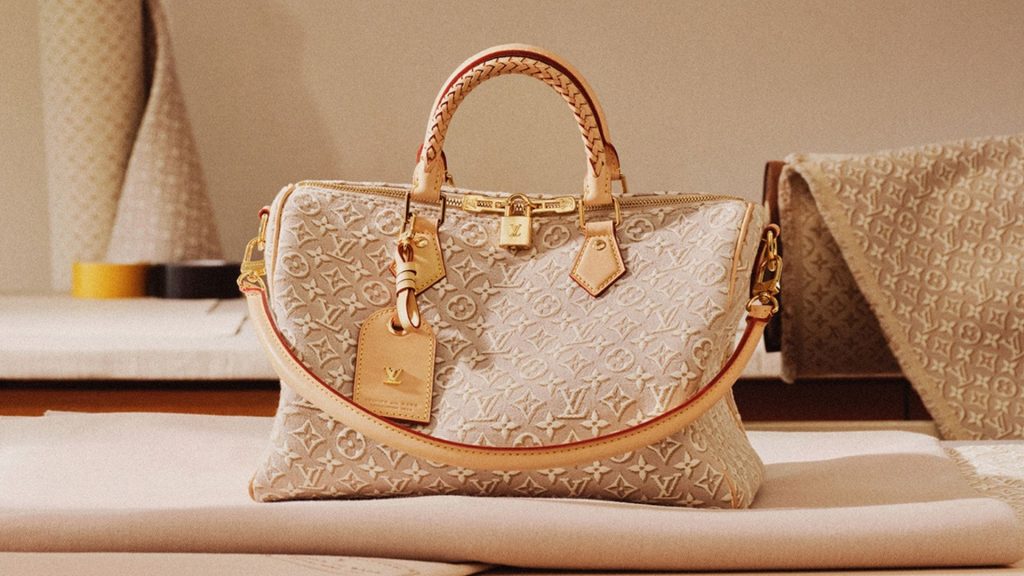
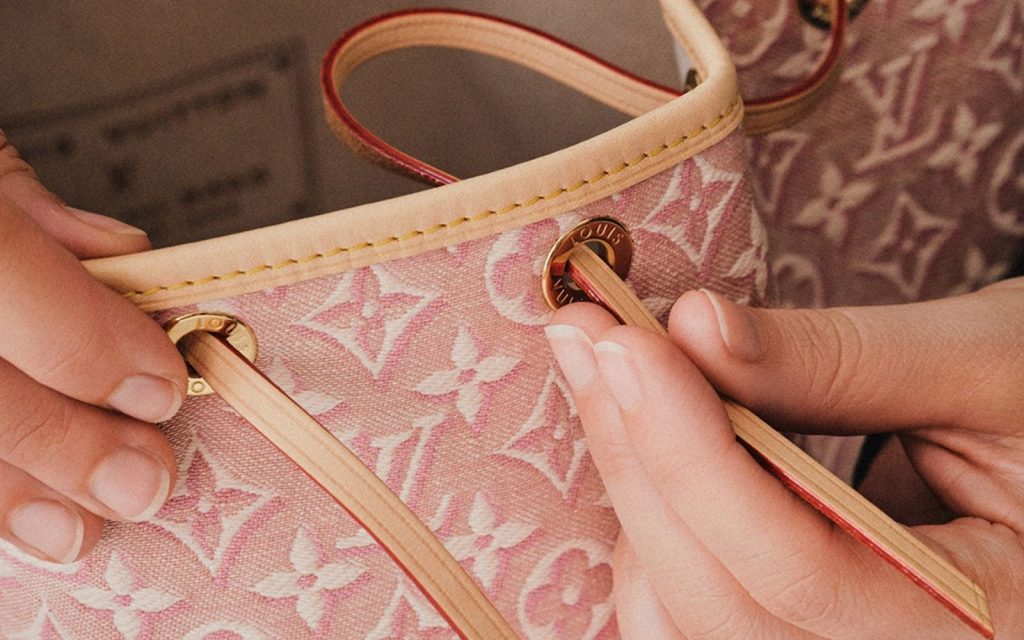
This new jacquard canvas draws inspiration from the original cotton canvases that once adorned Louis Vuitton’s historic travel trunks. Reimagined through a blend of GOTS-certified cotton and linen fibres, it creates a surface that feels dimensional, refined, and closer to craft than to ordinary industrial material. Its significance lies not only in its durability or water-repellent quality, but in its ability to transform a familiar material into a richer tactile experience. The Monogram pattern appears denser, deeper, and more visually weighted, almost reminiscent of embroidery, even though it is in fact the result of intricate and precise weaving.
This is where Monogram Emblème allows the luxury of Louis Vuitton to move beyond a superficial understanding of the word. It enters something quieter, deeper, and more enduring. In a world where logos can be reproduced endlessly across screens, campaigns, and the visual culture that passes before our eyes every minute, bringing the Monogram back to fabric and touch becomes a subtle declaration: true luxury is not only about being seen, but about how something is made, held, used, and gradually allowed to build a relationship with its owner over time.
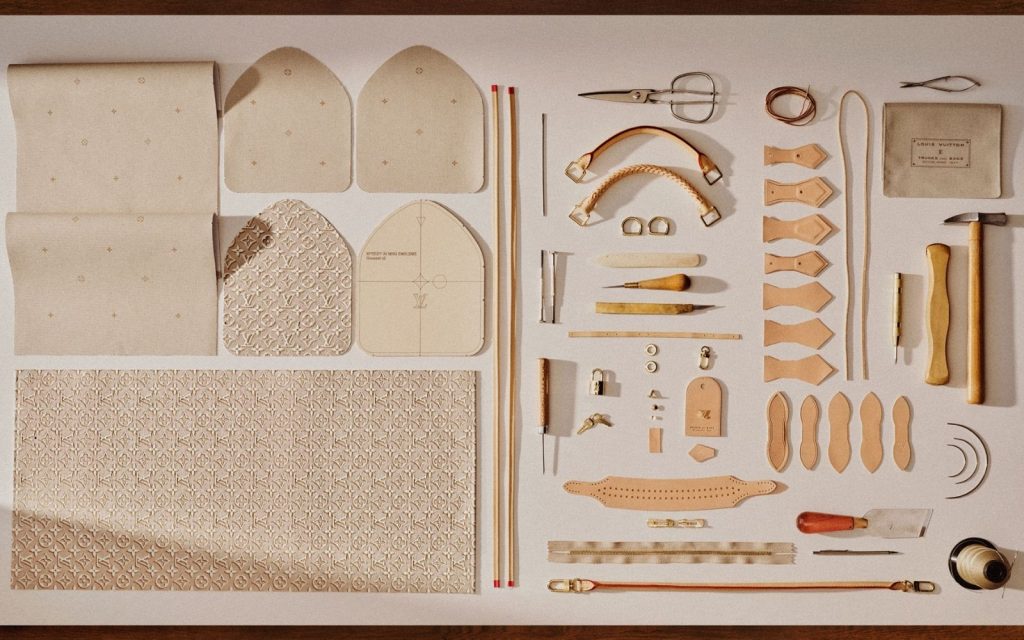
The colours of Monogram Emblème are equally considered. They are drawn from the Vuittonnier, the House’s signature colour library, which can be read almost as the emotional memory bank of Louis Vuitton. These shades do not simply decorate the surface. They open a dialogue between past and present through the meanings hidden within each tone. Created through five differently coloured threads, the hues give the canvas depth and movement, making the Monogram seem as though it is breathing within the fabric rather than being printed flat upon it.
The Pre-Fall 2026 collection, arriving in stores on 5 June, introduces two new shades: Peuplier and Rose Ruban. Both names lead us back to the structure and details of historic trunks. Peuplier is inspired by the wooden framework of the trunks, an element often hidden from view, yet essential to the strength and form of the object. It is the colour of structure, of something that does not need to announce itself, yet quietly supports the entire beauty of the piece. Rose Ruban, meanwhile, pays tribute to the ribbon detailing found on historic trunk designs. Softer in feeling, but never fragile, it carries within it the memory of tying, preserving, and adorning all at once.
In September 2026, Monogram Emblème will expand its vocabulary with Monogram Bleu and Vert Jura. The former is taken from a 1930s register, a period when Louis Vuitton continued to expand its imagination of travel alongside the modern world. Vert Jura, by contrast, is inspired by the flora of Louis Vuitton’s native region. It is a green that does not merely reference nature, but returns to the first landscape of the founder himself, before the name Louis Vuitton became a global language of travel, luxury, and desire.
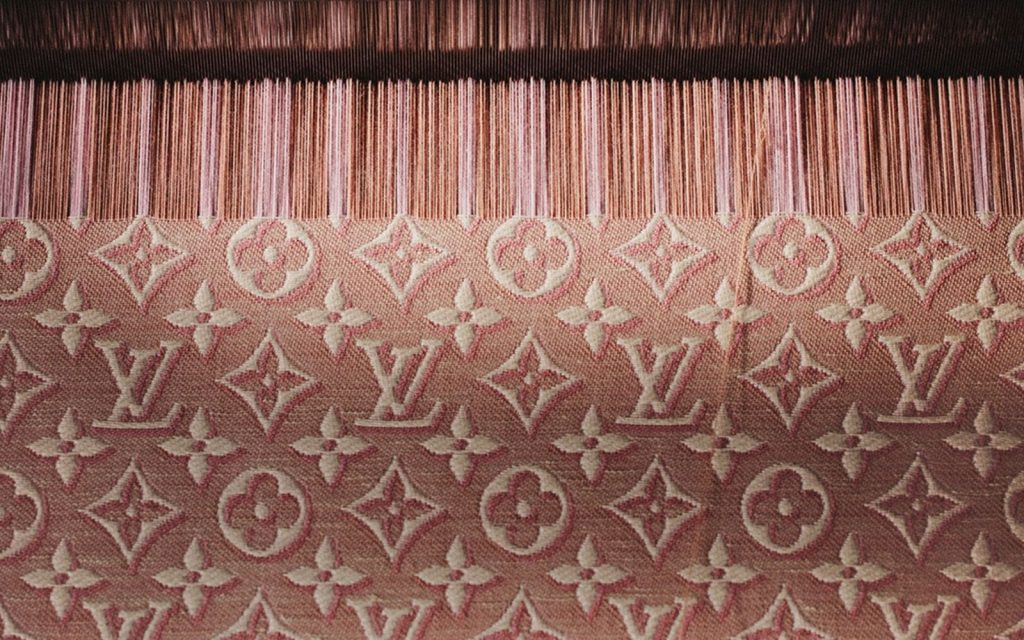
In this sense, Monogram Emblème is not simply an update of material for classic bag silhouettes. It is the placement of the Maison’s history upon the body of each icon with renewed meaning. The Alma, Neverfull, Speedy, Noé, and Keepall are more than instantly recognisable shapes. Each has its own life, its own relationship with cities, airports, streets, hotels, and the rhythms of those who carry it into the world. To place Monogram Emblème upon these forms is not to dress old icons in new clothes, but to allow them to speak in a deeper voice.
The Speedy, long associated with movement and the pace of city life, gains a new tactility that gives speed a sense of memory. The Neverfull, so closely tied to everyday practicality, becomes a space where jacquard canvas elevates familiarity into emotional texture. The Alma, with its structured and elegant form, responds beautifully to the density of the pattern, almost like a portable piece of architecture. The Keepall, one of the Maison’s most important travel symbols, reconnects Monogram Emblème most directly to the roots of Louis Vuitton itself.
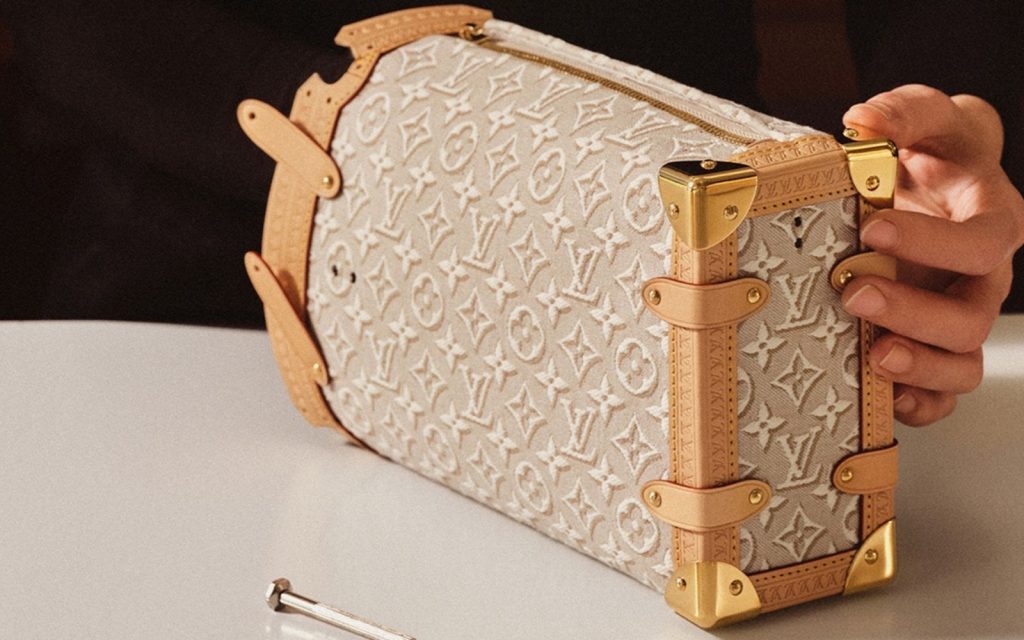
The Side Trunk may be one of the clearest expressions of this dialogue. It does not merely reference the shape of the travel trunk, but brings the language of trunk-making into the context of a contemporary bag with quiet confidence. On the Side Trunk, Monogram Emblème does not feel like a new material. It feels like a memory that has found a new body, an image of the past not placed on display like an antique object, but made ready to walk through the streets of today.
The same motif also appears across small leather goods, shoes, and accessories, making Monogram Emblème more than a capsule or seasonal novelty. It positions itself as a new signature with the potential to extend the world of Louis Vuitton in another direction. It does not replace the original Monogram. Instead, it adds depth to the symbolic system the Maison has built over generations. It seems to say that the Monogram is not finished, and perhaps never will be, as long as Louis Vuitton continues to find new ways for old memories to keep travelling.
What makes Monogram Emblème culturally compelling is that it arrives at a time when luxury houses around the world are confronting the same question: should heritage be used to preserve a familiar image, or to open the door to new possibilities? Louis Vuitton answers this question through material rather than declaration. Returning to the original idea of cotton canvas is not an act of retreat, but an exploration of what in the past can still be made contemporary without losing its essence. The use of certified fibres, combined with the development of a durable, water-repellent, richly tactile canvas, allows heritage to become not only nostalgia, but also responsibility, innovation, and craft moving together.
Monogram Emblème also reflects a shift in how logos are understood today. Once, a logo was a marker of status, a sign telling the world where its owner stood within the structures of taste and cultural power. But today, when logos are repeated endlessly across digital platforms, their meaning can no longer rely on visibility alone. A heritage brand must give its logo weight once again, not the weight of marketing, but the weight of story, material, craftsmanship, and memory that can be physically felt.
Louis Vuitton achieves this by weaving the Monogram into something that the eye sees and the fingertips understand at the same time. The LV initials, floral motifs, and geometric rhythm the world knows so well are transformed from image into moving surface. The density of the pattern, with its embroidery-like quality, gives the Monogram a stronger sense of craft, while still preserving the precision and discipline that define Louis Vuitton. It is a balance between the warmth of the human hand and the perfection of the Maison, between a living past and a future that does not need to rush.
Ultimately, Monogram Emblème is not simply a celebration of the 130th anniversary of a motif. It is a reconsideration of why the Monogram continues to matter after more than a century. The answer may not lie only in its fame, but in its ability to transform without losing itself. The Monogram has lived on historic trunks, city bags, runways, fashion images, airports, wardrobes, and now, in 2026, it returns as a jacquard canvas that allows a new generation to understand that heritage does not always have to stand still inside a gilded frame.
Because true legacy is not something preserved unchanged. It is something that continues to travel without forgetting where it came from. Monogram Emblème is therefore both a tribute to the past and a new departure for Louis Vuitton. It is a fabric that tells the story of the travel trunk without forcing us to return to another era. It is a motif that allows the Maison’s memory not only to be seen, but to be touched, carried, and taken out into life.
And perhaps this is the most beautiful thing about the Monogram at 130 years old. It does not need to prove that it remains an icon. Instead, it shows that a true icon does not have to stand still in order to be remembered. On the contrary, it must know how to move, change its surface, shift its rhythm, and find new ways to tell the same story so that it can continue to matter to people today.
For Louis Vuitton, the journey is not over. And across the surface of Monogram Emblème, every thread seems to affirm quietly that some symbols do not live on because they are repeated, but because they still have something new for us to feel.