

When Thailand’s campus-horror universe no longer speaks only of ghosts, but of youth, belief, and the wounds of growing up
Reported by Manit Maneephantakun
The appeal of the Haunted Universities universe has always rested on one simple, unsettling idea: ghosts are never as distant as we want them to be. In this franchise, fear does not live in abandoned mansions or faraway legends, but in places we know too well, dormitories, classrooms, initiation rituals, old campus houses, and bridges that students may have crossed without realizing that some stories can quietly follow them home.
In Haunted Universities 4, that familiar terror is expanded once again through four campus legends from four institutions across four regions of Thailand: Pink Room, The Concubine’s Dorm, D-Day Night, and White Bridge. Each segment is shaped by a different filmmaker with a clearly distinct background and cinematic language: Salinee Khemcharas, Thamuya Thasananukulkij, Chakorn Chaiprecha, and Putipong Saisikaew.
What makes this installment compelling is not simply the number of stories, nor the promise that this chapter will be more frightening than those before it. Rather, it is the way all four directors use campus ghost legends as a doorway into something deeper: generational distance, the pressure of appearance, the right to question inherited rituals, and the kind of love that can no longer find its way forward.
Chakorn Chaiprecha, who directs D-Day Night, once described the strength of the Haunted Universities franchise as its ability to bring in different directors whose signatures are clearly visible in each story. In that sense, the pleasure of Haunted Universities 4 is not only in discovering how terrifying each legend can become, but in watching how each director pushes the same idea of fear into a different emotional and cinematic register.
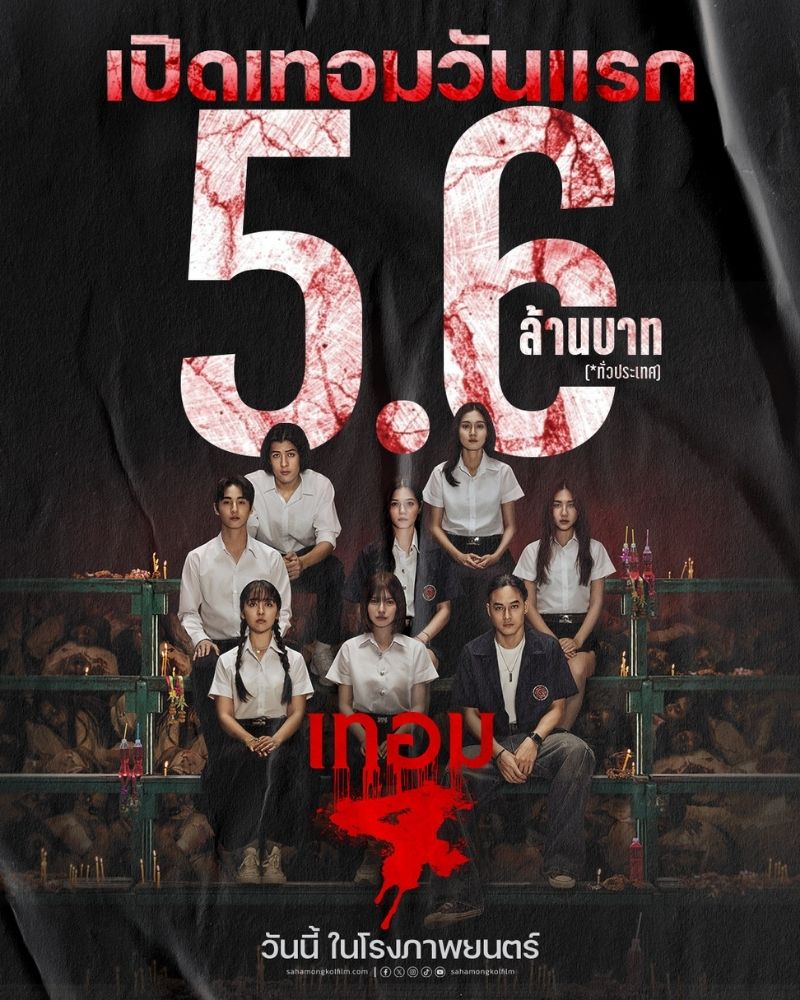
And with the film opening strongly at the Thai box office, earning 5.6 million baht nationwide on its first day, alongside early audience responses praising the four segments for their range and completeness, Haunted Universities 4 seems to prove something beyond the commercial durability of campus horror. It suggests that the Thai university ghost story still has plenty of room left to speak about human beings.
Pink Room: The sweetness that could not cover what came before
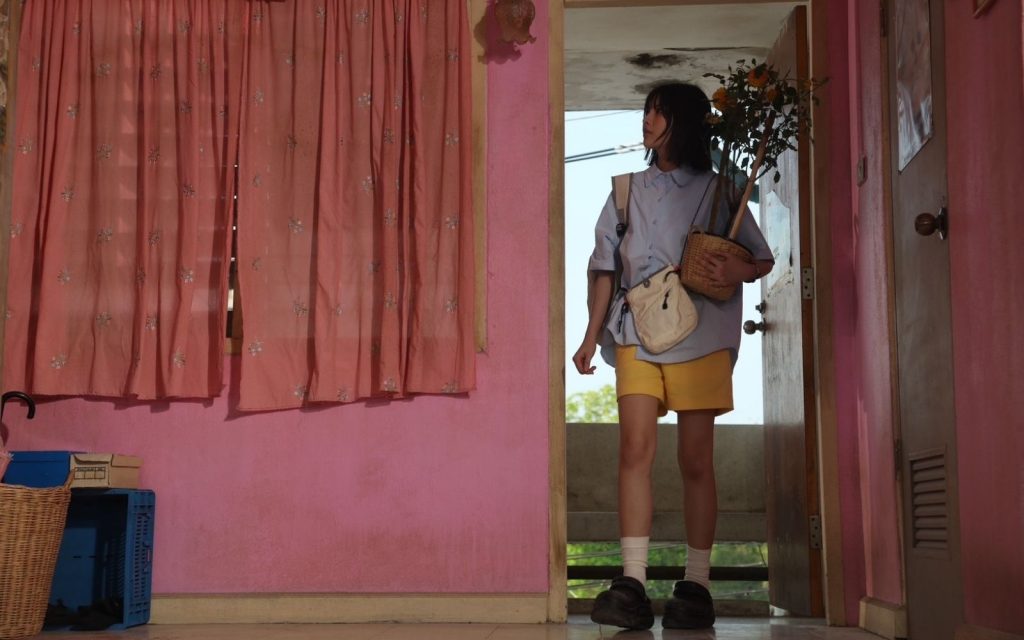
Directed by Salinee Khemcharas, Pink Room begins with an image that appears almost harmless: a brightly coloured pink dorm room, a special rental price, and the promising new student life of Kaning, played by Punthita Boonchuan. Yet beneath the surface that has been carefully painted over, the room hides an old wound and a lingering rage that no fresh coat of colour can completely erase.
This contradiction is what gives Pink Room its force. It is not simply a ghost story set inside a dormitory, but a story about beauty as concealment. Pink, in this context, is not merely cute or innocent. It becomes camouflage. The longer we look at it, the more suspicious its sweetness becomes, as if the colour itself were trying too hard to hide what lies underneath.
Salinee tells us that the legend of Pink Room has been circulating for a long time. After researching the story, she found that “in every version we heard, the details were surprisingly similar.” That observation gives the legend a weight beyond fiction. It becomes a kind of shared memory within campus life, a story that has survived because it speaks to something students continue to recognize.
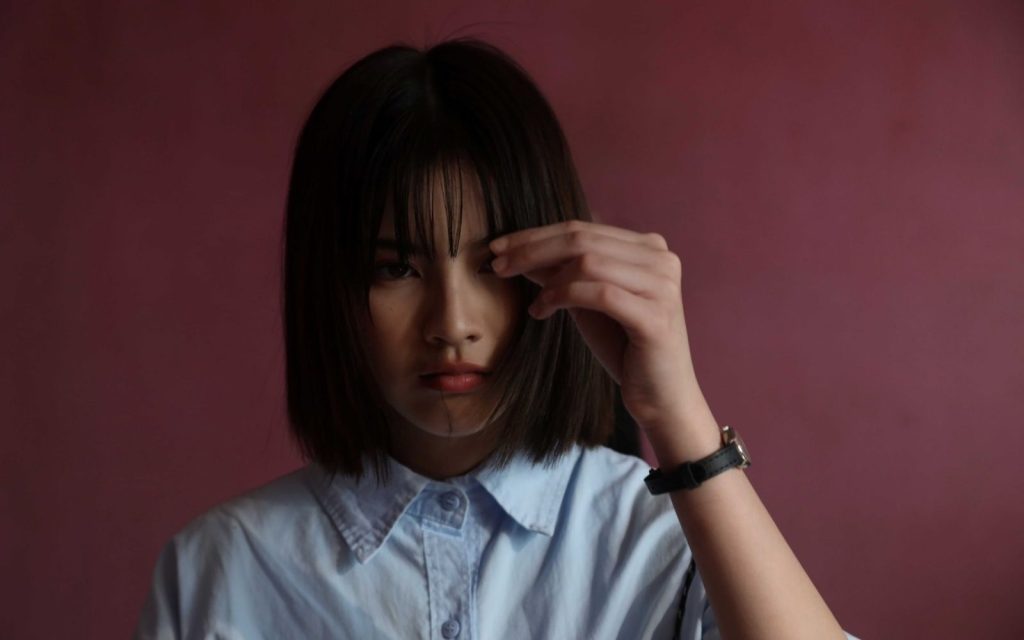
What is interesting is that Salinee does not approach the legend only as something from the past. She tries to pull it firmly into the present. Speaking about working with the writers and actors, she notes that “the screenwriters come from a different generation than students today.” The film therefore becomes an act of translation between generations: between those who grew up hearing the legend in one form, and younger viewers who must inherit that fear in another.
That is what gives Pink Room its deeper dimension. The question is not only, “Is this room haunted?” but also, “How should a ghost story rooted in a woman’s past be told in a time when younger audiences are more alert to gender, violence, silence, and the ways certain stories are buried?”
Salinee is direct about the challenge of turning this material into cinema. For her, fear needed to be seasoned with a very specific intensity. “If this were food, I wanted to season it strongly enough for a horror film,” she says. It may be the line that best explains Pink Room. This is not a cold or minimalist haunting, but a fear with colour, flavour, and a wound hidden inside every wall.
In the end, what makes the segment worth watching is the way a filmmaker transforms her own fear into cinematic language. “That fear became an obsession,” Salinee reflects. In Pink Room, that obsession becomes the image of a sweetly coloured room that can never truly erase its own past.
The Concubine’s Dorm: The ghost outside, and the envy within
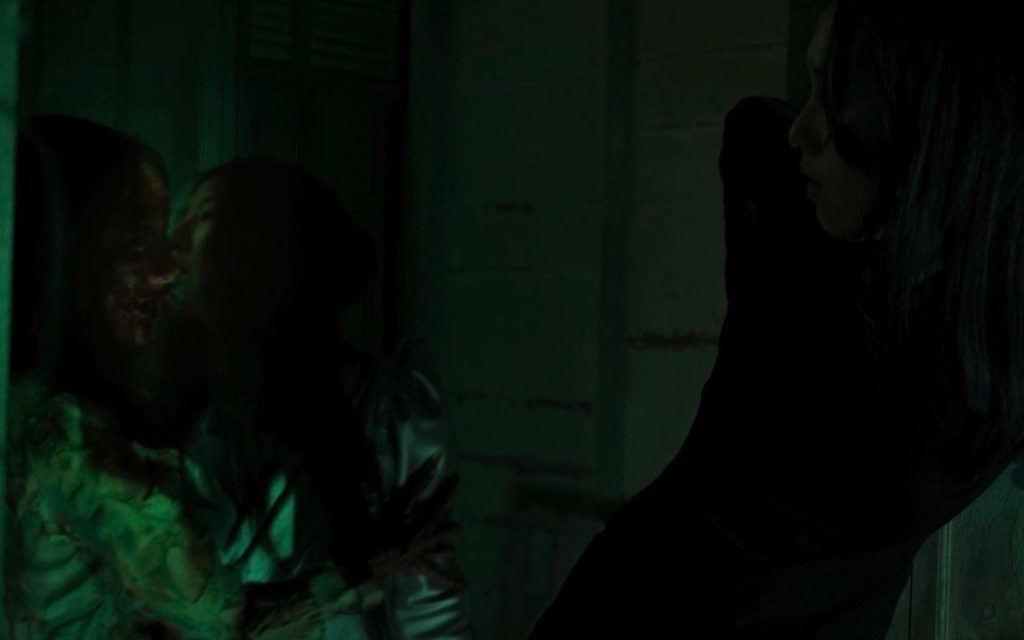
If Pink Room uses colour to hide violence, The Concubine’s Dorm, directed by Thamuya Thasananukulkij, uses images to hide what the heart cannot admit. The story begins with a fascinating condition within the legend: “Those inside the dorm cannot see the ghost, but those outside can.” In Thamuya’s hands, this is not merely a supernatural gimmick. It becomes the psychological structure of the entire film.
After reading the script, Thamuya says she was “immediately interested in the relationship between the person pressing the shutter and the person being photographed.” That line shifts The Concubine’s Dorm away from the familiar territory of a haunted Thai house and into a far more contemporary question: Who is looking, who is being looked at, and how much can an image distort the person inside it?
In an age when young people’s lives are constantly measured through photographs, feeds, posts, and the eyes of others, the fear in The Concubine’s Dorm does not come only from the mystery of an old building. It comes from the pressure the characters place on themselves. Thamuya describes how a person can become trapped by “the pressure to make the future look exactly as expected,” until comparison, insecurity, and “envy” begin to feel “suffocating and horrifying in their own way.”
This is where The Concubine’s Dorm becomes most interesting. The film does not treat envy as a small emotion or a simple personal flaw. It turns envy into a haunting in itself. In a world where everyone is expected to look good, succeed visibly, be seen, and present a life that appears complete, envy may be the ghost we cannot see in ourselves, even when others can see it clearly.
Thamuya also speaks of Haunted Universities 4 as a project that requires an open vision, because it is telling stories about a generation that lives within Gen Z culture. That idea is important. The contemporary quality of The Concubine’s Dorm does not come from simply placing young characters inside an old ghost story. It comes from understanding that the language, image culture, desires, and fears of this generation have changed.
That is why The Concubine’s Dorm is not merely a legend about an old haunted house. It is a film that quietly asks whether, in a world where everyone is constantly watched, we are truly afraid of ghosts, or of the version of ourselves reflected back through other people’s eyes.
D-Day Night: The chant that asks which beliefs deserve to remain

Directed by Chakorn Chaiprecha, D-Day Night captures a particularly sharp form of campus fear because it begins with something that does not seem supernatural at all: freshman initiation, ritual, senior-junior hierarchy, and the pressure to participate in something simply to prove that one belongs.
The story follows Pao, played by Thapana Chongkolrattanaporn, a first-year student who refuses to take part in initiation activities while still carrying the guilt of losing a close friend. On this campus, however, there is a legend: if a freshman skips initiation, the ghosts of senior students will come to perform the chant for them. When the chant ends, so may that student’s life.
It is a chilling idea because it transforms a sound associated with welcome and belonging into something threatening. Yet Chakorn does not handle the subject with easy judgment. He does not turn initiation into a simple villain, nor does he romanticize tradition to the point of ignoring its darker implications. Instead, the film asks a more careful question: What should we keep, what should we let go of, and how much freedom does a younger generation have to decide what it wants to believe?
Chakorn’s working process reflects that idea. During workshops, he allowed the actors to adjust dialogue so it would sound natural to their generation. He even told them, “Please educate me on how people talk these days.” This is not merely a behind-the-scenes detail. It reveals a directorial attitude that understands how telling a story about young people today should not come from guessing on their behalf.
In this sense, D-Day Night does not use teenagers simply as victims inside a ghost story. It allows them to have their own voices, their own language, and the right to question what has been handed down to them. Chakorn is less interested in a fixed image of what freshmen should look like than in the chemistry among three characters who seem to come from different directions, only to be forced into the same fear.
What makes D-Day Night compelling is the way it turns ritual into a test of growing up. The chant does not exist only to make the freshman submit to a system. It echoes back a question to everyone watching: Do we believe because we understand, or because we are afraid of standing apart?
That is what makes this segment feel contemporary. The ghost may not live only in the voices of the seniors. It may also live in guilt, loneliness, and the social pressure that makes someone unable to say no.
White Bridge: A love that cannot move forward, and a ghost waiting in between
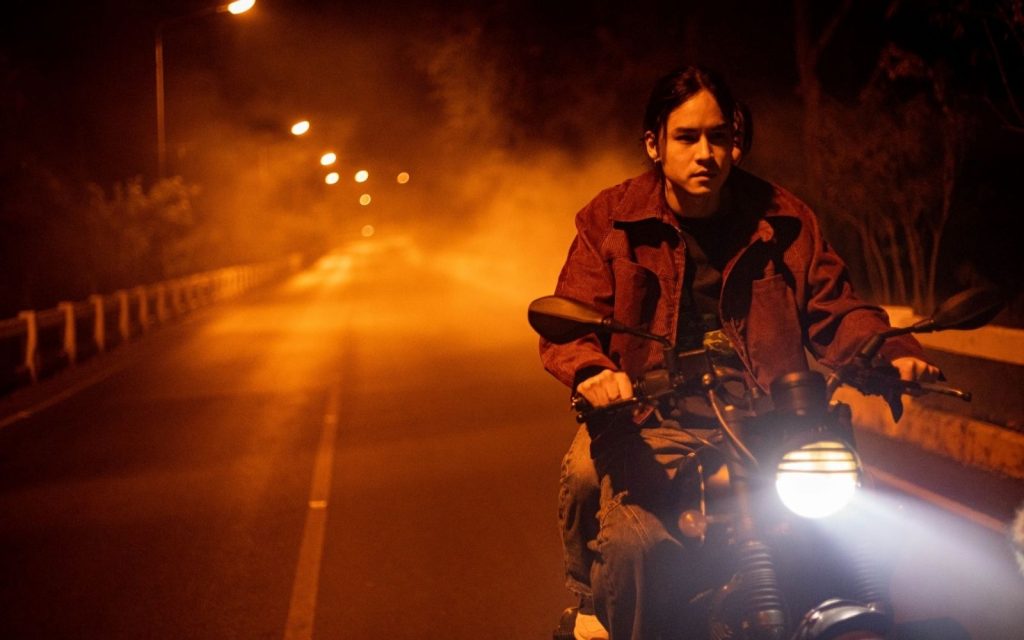
Directed by Putipong Saisikaew, White Bridge brings Haunted Universities 4 most clearly into the territory of love. The story follows Boss and Mild, played by Jirayu La-ongmanee and Violette Wautier, a student couple who have been together from their first year until their fourth, before choosing to end their relationship on a bridge tied to an old and tragic campus legend.
Because of that, this segment is driven not only by horror, but by the pain of two people who once loved each other deeply. Putipong describes White Bridge very directly as “a horror love story.” The phrase matters because it tells us that the ghost in this segment is not there simply to chase the characters. It exists as pressure, forcing two people to face what remains unresolved between them.
For Putipong, the story is about young students in the present day who once “loved each other very much,” only to reach a point where staying together is no longer simple. Some problems have no clear answer. Some relationships do not know whether they should end or continue. Sometimes crossing a bridge means deciding whether to move forward together or let go halfway through.
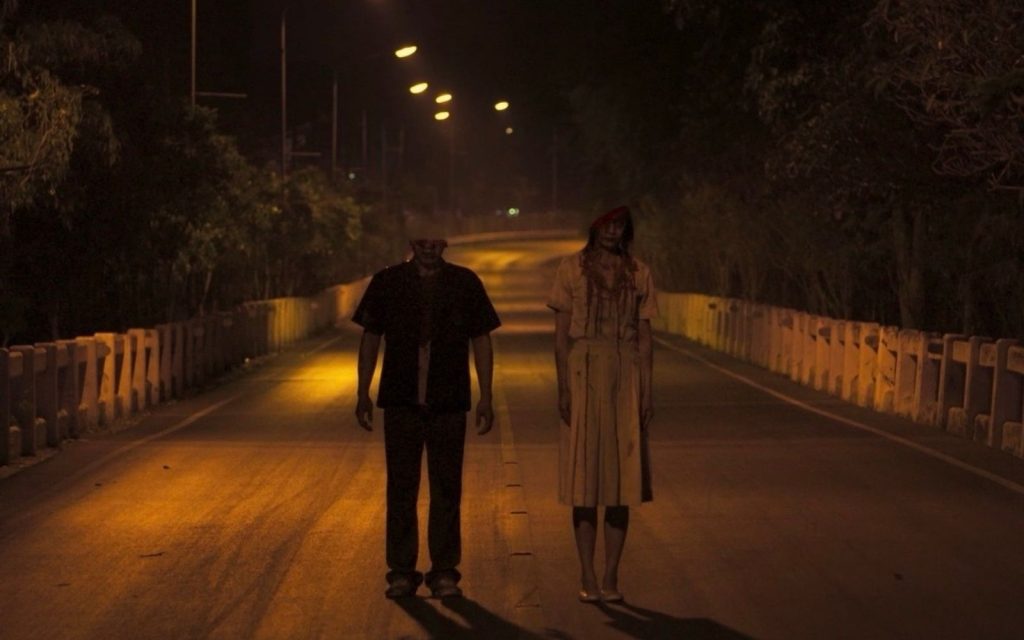
This is what makes White Bridge different from the other segments. It does not begin with a space that the characters enter in search of something. It begins with a relationship they cannot quite escape. The bridge therefore becomes more than a location. It becomes a symbol of transition, uncertainty, and the painful middle ground between past and future.
Putipong also emphasizes that the segment is “not only horror; it is also a love story.” But this is not a sweet romance. It is a love story contaminated by fear, memory, and a legend that refuses to remain still. Love in White Bridge has scratches, unspoken words, and memories that can return to harm the characters as forcefully as any ghost.
At the same time, Putipong is clear that the horror will not be softened simply because the story has romance at its center. He says the frightening elements remain “full-on,” and that when it comes to the horror scenes, he does “not hold back.” That makes White Bridge less a compromise between love story and ghost story than an attempt to let both elements wound each other with equal force.
Casting Jirayu La-ongmanee and Violette Wautier as Boss and Mild is therefore more than a matter of using the chemistry of a real-life couple as a point of interest. It gives the relationship an immediate credibility. The audience does not need much time to believe that Boss and Mild once loved each other deeply. What the film truly wants to explore is what happens after that, the moment when love has not disappeared entirely, but is no longer strong enough to carry both people safely to the other side.
Haunted Universities 4: Ghosts that speak of people, and people who cannot escape themselves

What makes Haunted Universities 4 more interesting than a conventional horror anthology is that none of its four stories uses ghosts merely as a mechanism for shock. Instead, each ghost becomes a way of speaking about what young people are facing now.
Pink Room speaks of violence covered by beauty. The Concubine’s Dorm speaks of envy and the pressure of being seen. D-Day Night questions ritual and the right to choose one’s beliefs. White Bridge turns a campus legend into a mirror for a relationship trapped in the middle of its own ending.
Together, these four stories make Haunted Universities 4 more than another semester of fear. They allow Thailand’s campus-horror franchise to grow up with its audience. Fear in this film does not live only in shadows, screams, or spirits that refuse to leave. It lives in ordinary things we know too well: a room that looks beautiful, a photograph that looks perfect, a chant once treated as sacred, and a bridge that some people may never fully cross.
Perhaps the most haunting thing about Haunted Universities 4 is not the question of which ghost is the scariest. It is the question the film leaves behind after the fear has settled: Are we truly afraid of ghosts, or of certain truths about ourselves?