

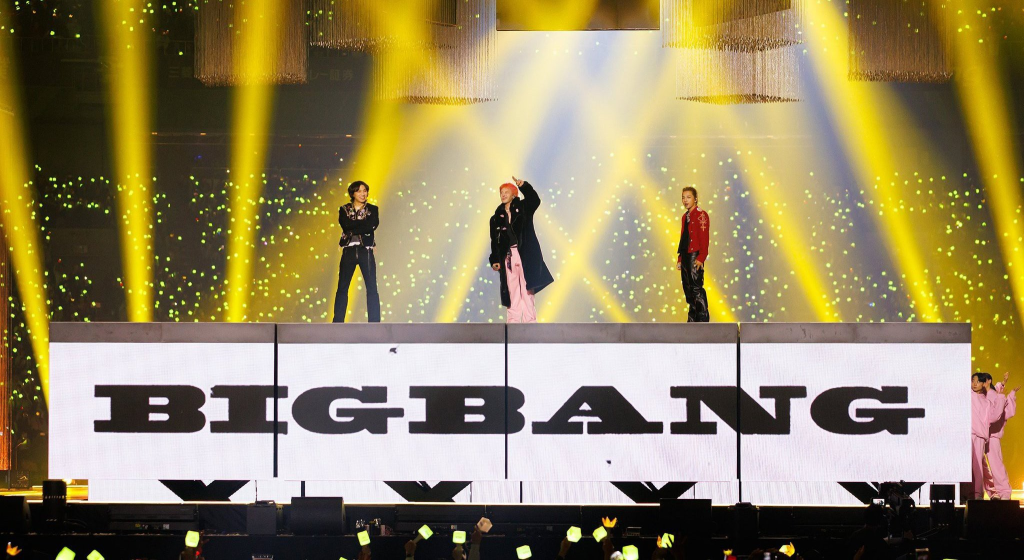

After years of distance, BigBang step back into the global spotlight as they mark their 20th anniversary, highlighted by their reunion on the Coachella 2026 stage. More than a return, the moment invites a look back at how they built their legacy as one of K-pop’s defining forces, through the key eras that shaped their rise
Breakout era (2007-2009)
Debuting in 2006 under YG Entertainment, BigBang entered a K-pop landscape defined by polished idol archetypes, yet stood apart. Their hip-hop-driven sound, unconventional styling and involvement in writing and producing their own music positioned them less as idols and more as artists. Early on, that difference wasn’t immediately embraced and reception was mixed.
That began to shift in 2007 with “Lies,” released from their EP “Always.” Blending melodic emotion with electronic elements, the track topped major Korean music charts for weeks and won Song of the Year at the MKMF Awards (now the MAMA Awards). Follow-ups like “Haru Haru” and “Sunset Glow” carried that momentum forward, establishing BIGBANG at the centre of K-pop.
“Alive” era (2012-2014)
The next turning point came with “Alive” in 2012, the project that pushed BIGBANG onto the global stage. It became the first Korean-language album by a K-pop group to enter the Billboard 200, signalling a wider shift in the genre’s international reach.
At the centre of this era was “Fantastic Baby,” a track that moved beyond language and became instantly recognisable worldwide. Paired with bold visuals and styling, it helped shape how K-pop was seen globally. BIGBANG were no longer just leading within the industry; they were beginning to shape how it travelled.
“MADE” era (2015-2016)
BigBang’s peak arrived with “MADE,” a project that redefined both of the group’s scale and impact. Released in four instalments – “M,” “A,” “D” and “E” – the rollout moved away from traditional formats, with each release carrying the weight of a title track. Songs like “Bang Bang Bang,” “Loser,” and “If You” didn’t just chart; they dominated, earning BIGBANG the Artist of the Year award at the 2015 MAMA Awards.
The impact went beyond the charts. The MADE World Tour drew over 1.5 million fans across 66 shows in 13 countries, setting a new benchmark for a Korean act. This was BigBang at full scale as a five-member group musically, culturally, and globally, cementing their place as one of the defining faces of K-pop.
The close of the five-member era (2022-2023)
After “MADE,” there was no immediate next chapter – only a pause that stretched longer than expected. Military enlistment between 2017 and 2019, followed by internal changes, distanced the group from both the industry and its momentum. Seungri’s departure in 2019 amid a major scandal marked a decisive shift, leaving BigBang in a state of uncertainty.
When “Still Life” arrived in 2022, marking their first release as a four-member group, it did not attempt to reclaim the past. Instead, it carried a quiet and bittersweet tone, reflecting on time, absence and each member’s growth. That sense of finality deepened soon after. In 2023, T.O.P confirmed his withdrawal, expressing a desire not to let his past controversies affect the others, turning reflection into a quiet farewell to BigBang’s five-member era.
Return as three (2024-Now)
The next shift came in 2024, when BigBang reunited as three – G-Dragon, Taeyang, and Daesung – on stage at that year’s MAMA Awards. As their first group performance at MAMA in nearly a decade, the set brought years of absence into a single moment, with both new and defining tracks returning to the stage
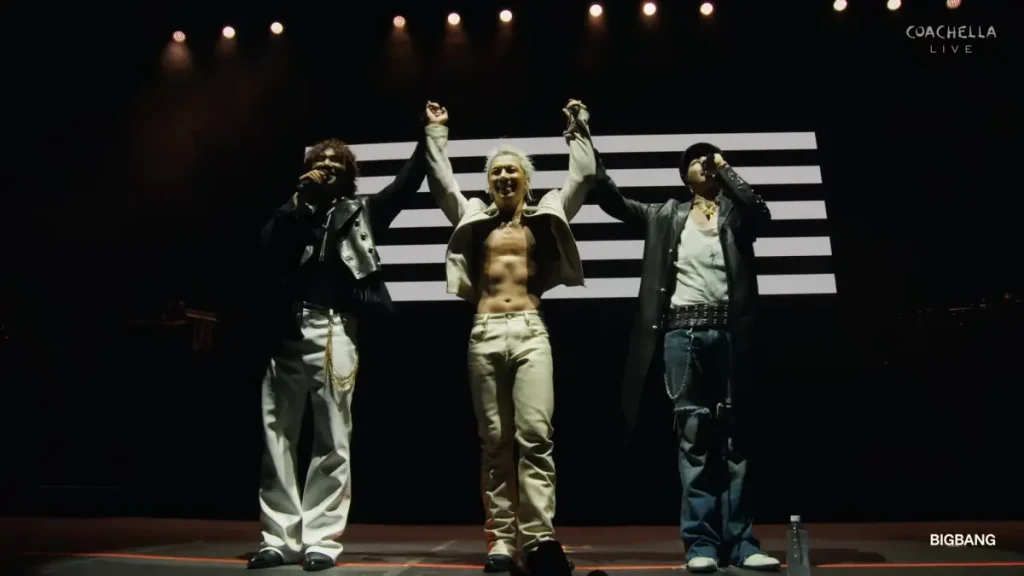
That moment extended into 2026. Marking their 20th anniversary, BigBang reappeared as a trio on the Coachella stage, performing hits that defined each of their past eras alongside individual stages. The set closed with “Still Life,” featuring T.O.P’s recorded vocals, serving as a quiet bridge between past and present. On stage, the group also signalled upcoming activity for the anniversary year, including new music and a confirmed world tour.
Two decades in, BigBang’s legacy is defined not only by its impact but by its enduring presence. Few groups have sustained relevance across such a span, even through change and uncertainty. As they move forward in this new form, the focus shifts to what lies ahead and what the next chapter might still bring.