

Through kinetic systems and living materials, Indonesian artist Bagus Pandega tells Dionne Bel about making visible the movement of resources and the hidden rhythms of extraction that shape daily life
At first glance, Bagus Pandega’s work seduces with its quiet precision: gleaming metal, rhythmic motion and systems that hum with a sense of control. Look closer, and those same works begin to unravel the fragile balance between technological ambition and ecological cost. Based in Bandung, the Indonesian artist has built an international reputation for kinetic installations that fuse industrial machinery, sound and plant biofeedback, transforming extraction and production into lived, bodily experiences.
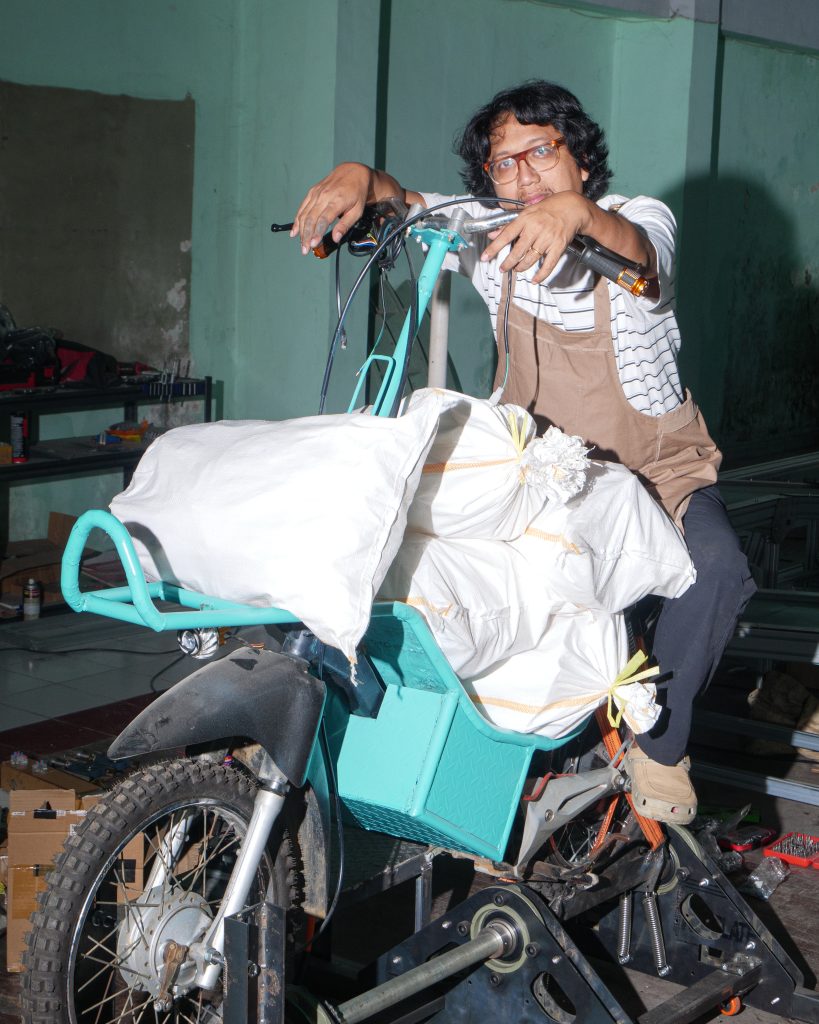
His practice is shaped by Indonesia’s material realities: nickel-rich soils, mining infrastructures, oil palm plantations and the environmental aftershocks that ripplefar beyond their points of origin. Rather than illustrating these conditions, he stages them, allowing machines to breathe, hesitate, repeat and falter, often surrendering their tempo to nature. The result is a practice that feels at once rigorously engineered and quietly vulnerable.
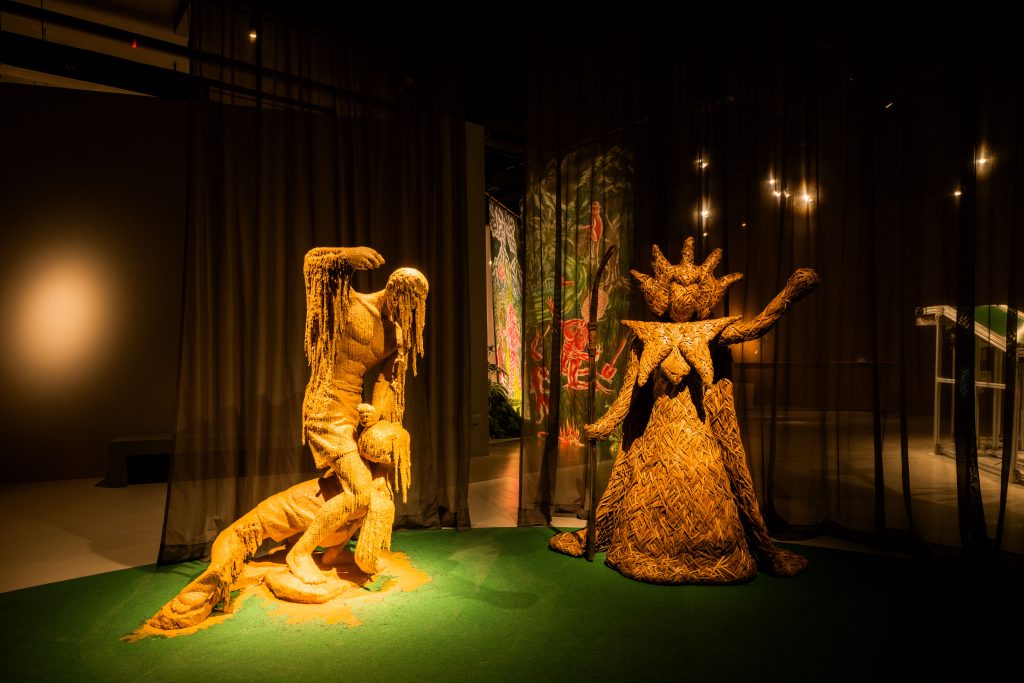
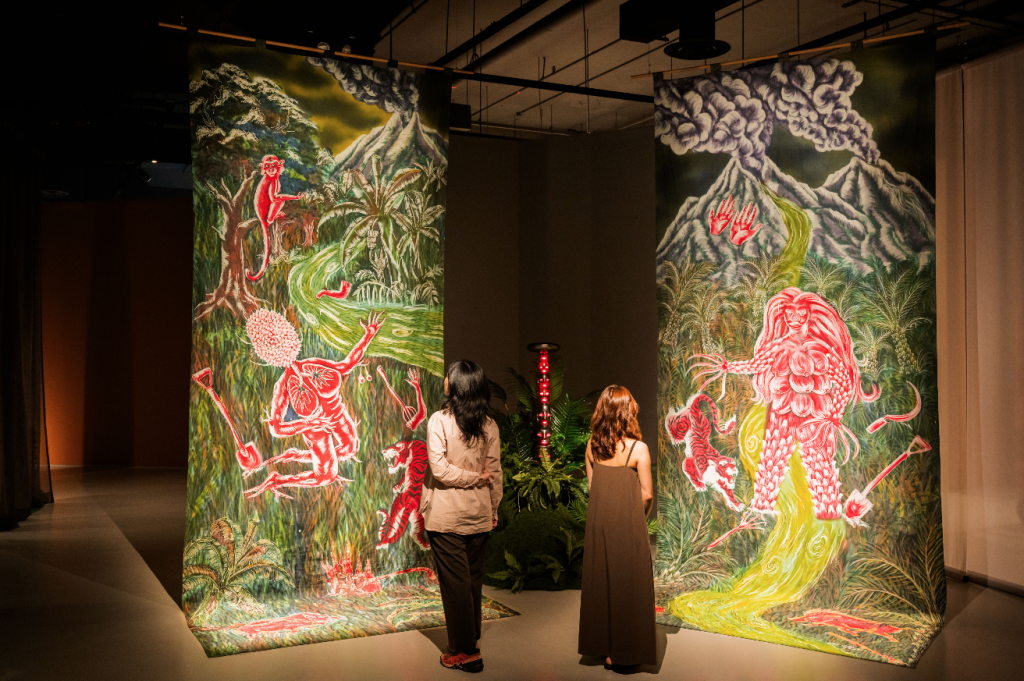
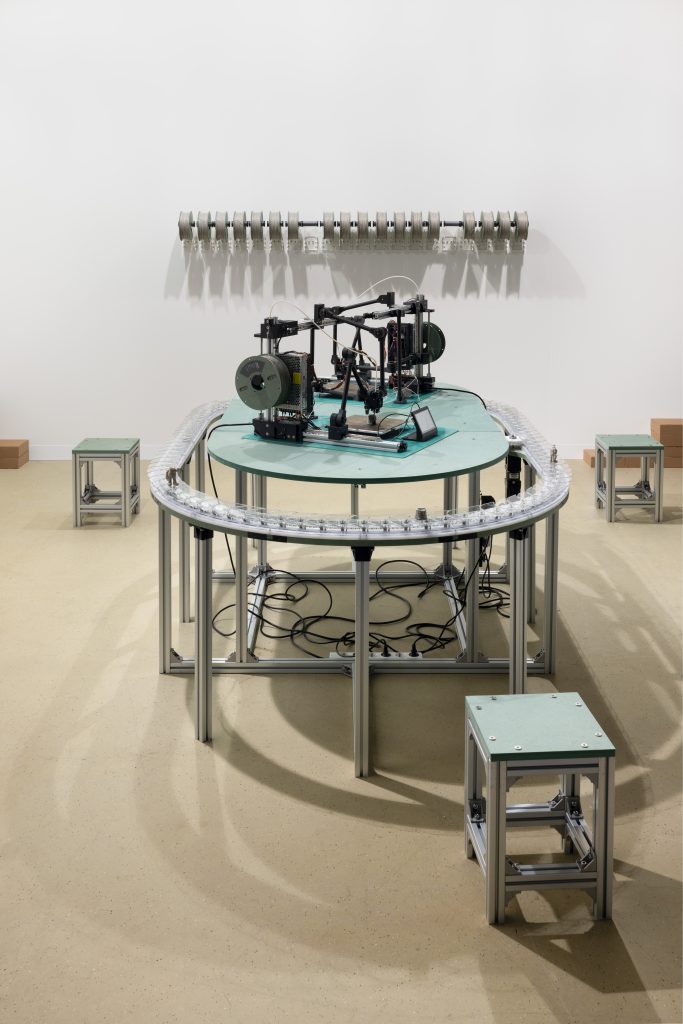
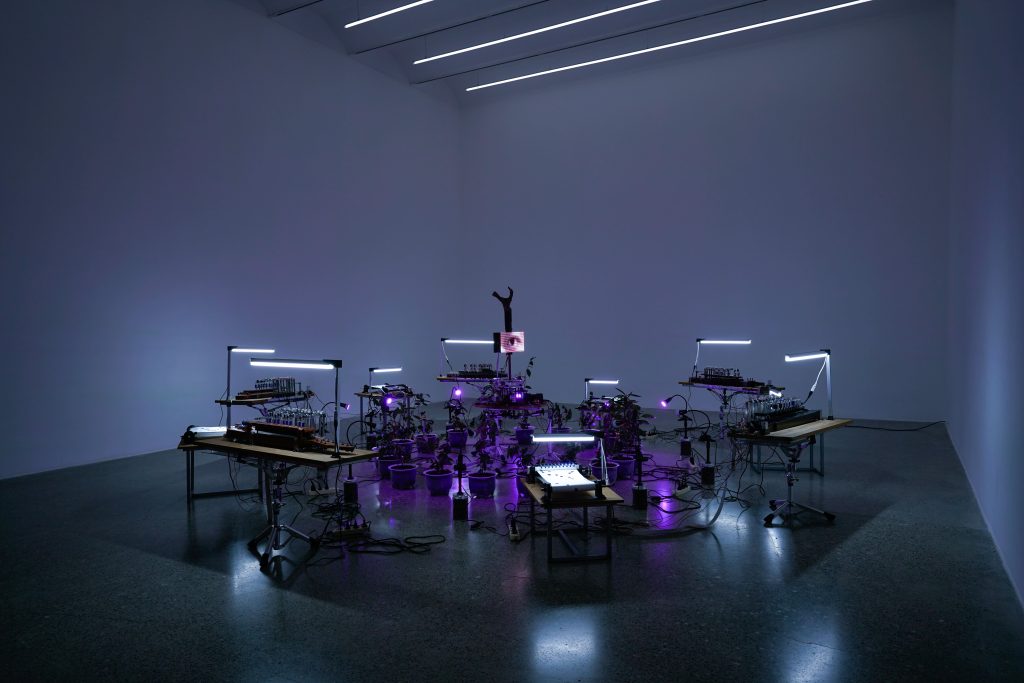
This tension is powerfully articulated in Elia Nurvista and Bagus Pandega: Nafasan Bumi ~ An Endless Harvest, a duo show at Singapore Art Museum in collaboration with fellow Indonesian artist Elia Nurvista, who focuses on food systems, agriculture and consumption. Pandega’s installations appear as stark yet hypnotic assemblies of metal frameworks, conveyor belts, live electroplating systems and softly pulsing 3D-printing machinery, where movement, noise and organic signals unfold in real time, transforming the gallery into a living industriallandscape. Part of the museum’s Material Intelligenceseries, the exhibition, on view through May 31, frames the pair’s work as a meditation on labour, circulation and the afterlives of materials that sustain contemporary life – asking what it truly means to pursue progress in an age of extraction.
You were born in Jakarta in 1985. Can you tell us about your background and how you f irst found your way into art?
I was born in Jakarta in 1985 and am the youngest of three children. I have two older sisters, and none of us comes from an artistic family background. Music played an important role in my upbringing. My father, who is a geologist, is also a Sunday musician and has a collection of musical instruments. Through him, I developed an early interest in music. During high school, I played in a band, and music became my main creative outlet. I began to develop an interest in art while I was in high school. Because I was in the social stream, the only pathway available to me at the Bandung Institute of Technology was through art school, where I later majored in sculpture. It was during the final years of my studies that I realised I wanted to become an artist.
How did your interest in extraction and natural resources develop?
My geologist father worked in a laboratory that held thousands of mineral samples collected from across Indonesia. When I was younger, I had access to thisenvironment, although I did not fully understand its broader implications. My interest in extraction and mineral resources developed much later, only within the past eight years, shaped more by reflection and distance than by direct involvement. Commodities such as palm oil, nickel, gas, oil, tea, coffee and spices were all central to colonial research and extraction. What interests me is observing how the value of these resources shifts over time in relation to global development, technology and economic priorities. Your installations are highly technical yet deeply ecological.
How do you see the relationship between technology and nature?
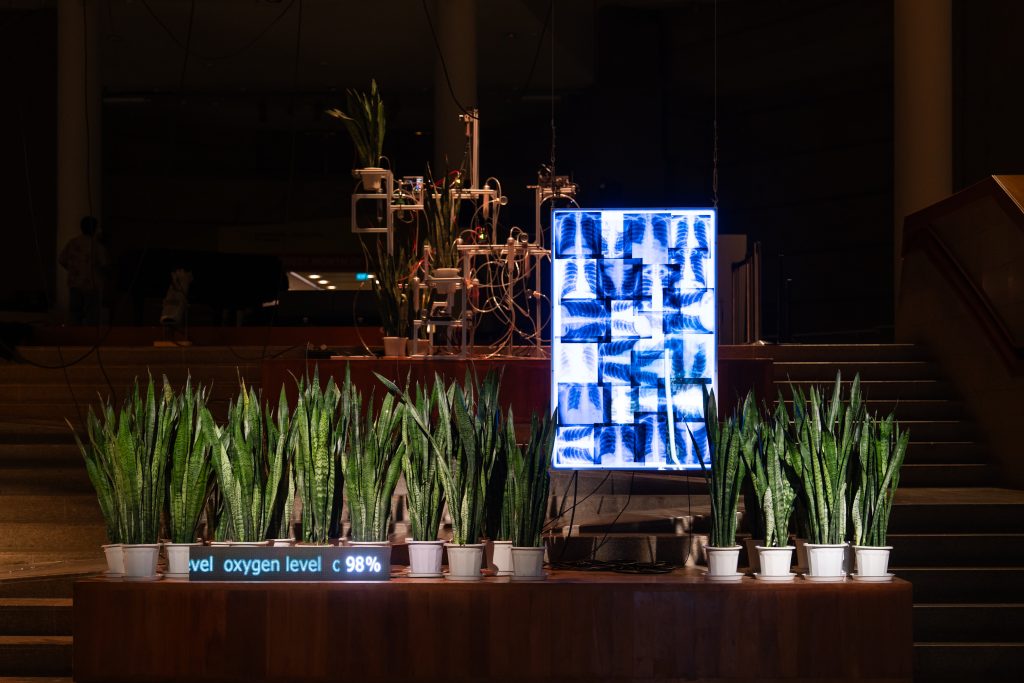
My background is in sculpture, and most of the technical aspects of my practice – mechanics, electronics and systems – have been self-taught. In the early stages of my work, I spent long periods experimenting, building prototypes and learning through trial and error. I see technology and nature as forces that stand in tension with one another. Technological development is closely tied to extraction and environmental destruction, relying on the continuous removal of resources from the earth. In my practice, I shift the agency of my machines away from humans and toward nature. The machines I build exist between the biological and the mechanical. They are not solutions, but reflections of an unequal relationship.
Why are you drawn to unstable, living or responsive materials?
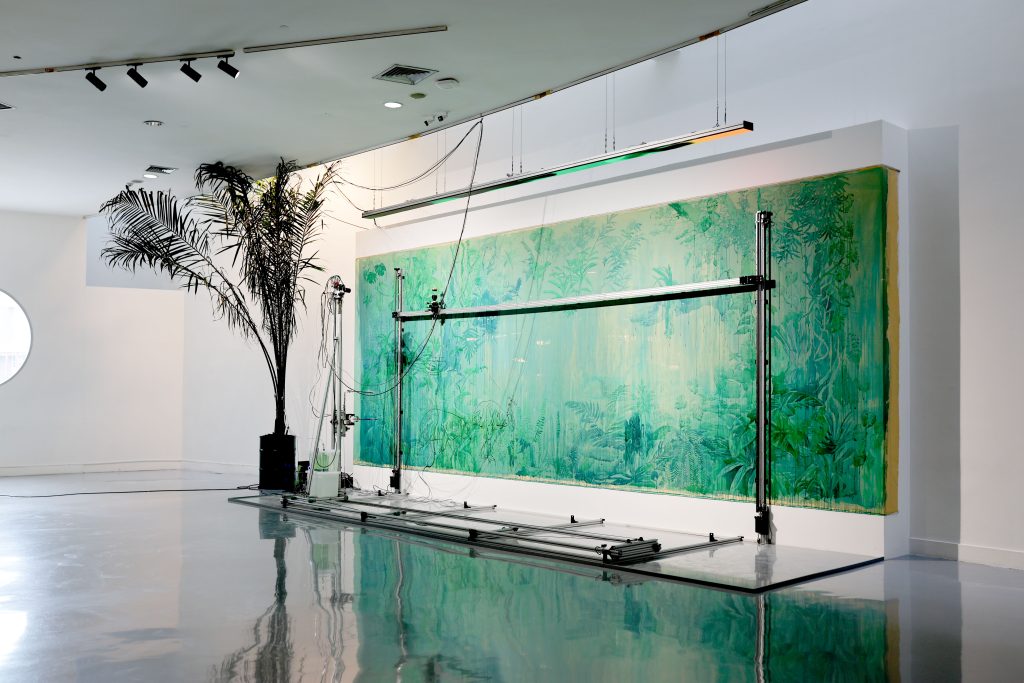
I am drawn to materials and systems that resist full control because they introduce uncertainty into the work. Plants, sound and kinetic systems behave differently over time, responding to changes in their environment rather than following fixed instructions. Working with living or responsive materials forces me to accept thatnot everything can be planned or stabilised in advance. The machines I build operate in negotiation with living systems, making fragility and dependency visible.
What are you hoping audiences take away from Nafasan Bumi ~ An Endless Harvest at Singapore Art Museum?
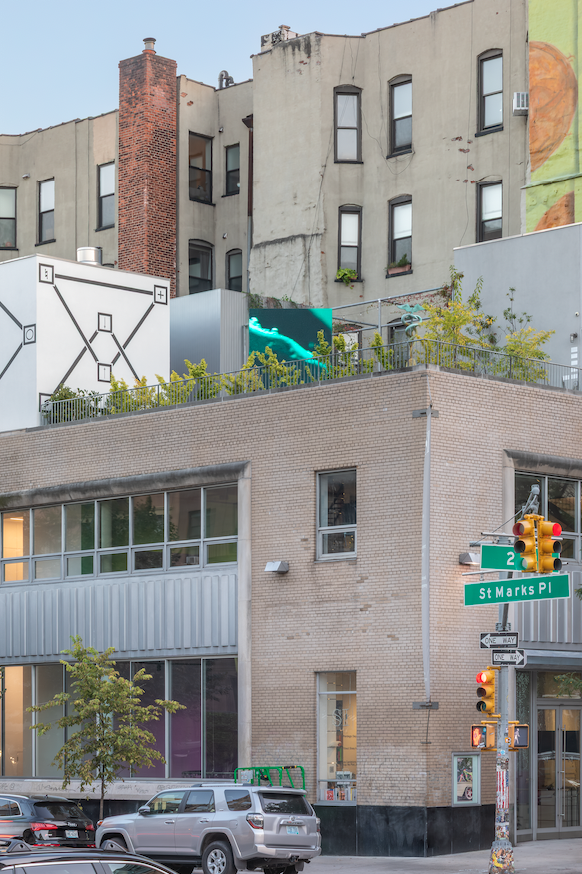
In this exhibition, the works operate collectively as one ecosystem. Agriculture, extraction, industry and consumption are not presented as separate topics, but as interdependent processes. Rather than offering solutions, the installation creates a space where extraction, circulation and transformation can be experienced simultaneously as a living, unstable ecosystem. If my work can create moments where people pause, question or reconsider their relationship with technology, nature and the resources that sustain them, then it has fulfilled its role.
Also see: 8 must-visit highlights of Hong Kong art week 2026