


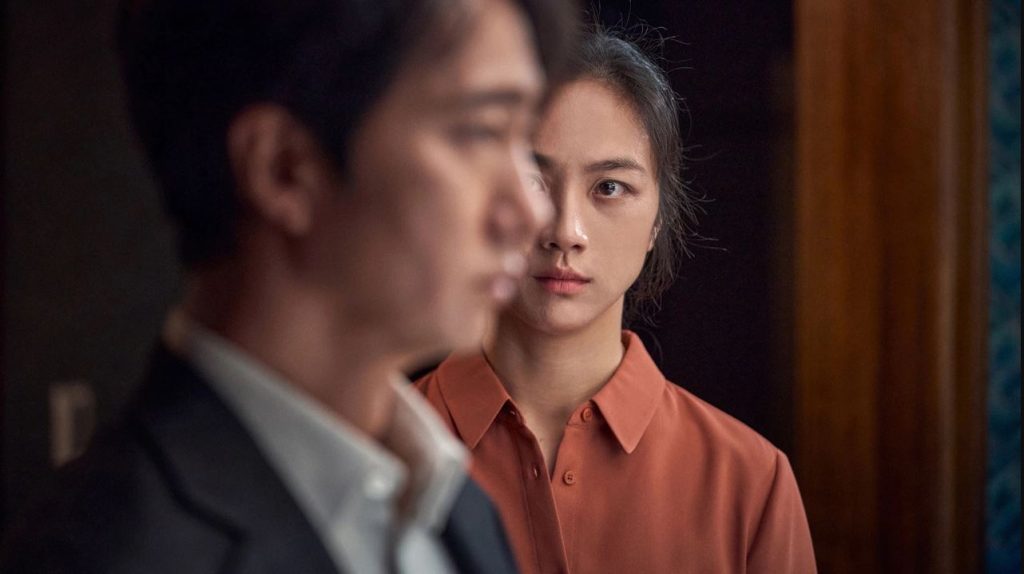

As the first Korean filmmaker to lead the Cannes Film Festival’s main competition jury, Park Chan-wook has built one of contemporary cinema’s most visually distinctive filmographies. Across the past two decades, his films have become known for blending psychological tension, striking imagery and morally complex storytelling. Here are five key films that best capture his cinematic world
Joint Security Area (2000)
Before becoming internationally recognised for his revenge thrillers, Joint Security Area marked Park Chan-wook’s first major success in South Korea. Set within the Korean Demilitarized Zone, the political thriller begins with the investigation of a fatal shooting involving North and South Korean soldiers. However, the mystery gradually reveals a tragic friendship formed across enemy lines. Compared to many of Park’s later films, the story feels warmer and more humanistic while still carrying his signature moral complexity.
Oldboy (2003)
When it comes to Park Chan-wook’s defining international breakthrough, Oldboy remains the essential title. The psychological neo-noir thriller follows Oh Dae-su (Choi Min-sik), an ordinary man suddenly imprisoned for 15 years without explanation before being unexpectedly released. Determined to uncover his captor’s identity, he becomes trapped in a devastating game of revenge and manipulation. Alongside its shocking twists, Oldboy became iconic for its highly stylised direction and the legendary one-take hallway fight sequence.
Lady Vengeance (2005)
As the final chapter of Park Chan-wook’s celebrated Vengeance Trilogy, Lady Vengeance takes a more emotional and visually elegant approach to revenge. The film follows Lee Geum-ja (Lee Young-ae), a woman wrongfully imprisoned for 13 years after being forced to confess to the murder of a child. Upon release, she carefully plans revenge against the real killer while confronting the emotional damage left behind by guilt and trauma. Alongside Park’s signature violence and dark humour, the film also questions whether revenge can truly bring closure.
The Handmaiden (2016)
Often regarded as one of Park Chan-wook’s most visually refined works, The Handmaiden transforms Sarah Waters’ novel Fingersmith into an intricate psychological thriller set in 1930s Japanese-occupied Korea. The story follows Sook-hee (Kim Tae-Ri), a young pickpocket hired to serve as a handmaiden to wealthy heiress Lady Hideko (Kim Min-hee) as part of an inheritance scam. However, the relationship between the two women gradually becomes far more emotionally and psychologically complicated. Filled with deception and constant reversals, the film balances erotic tension with elegant cinematography and lush production design.
Decision to Leave (2022)
Compared to Park Chan-wook’s earlier revenge-driven films, Decision to Leave takes a quieter and more melancholic approach while still carrying his unmistakable visual precision. The romantic mystery follows insomniac detective Hae-jun (Park Hae-il) as he investigates the death of a mountain climber and becomes increasingly drawn toward the victim’s enigmatic widow, Seo-rae (Tang Wei). As suspicion gradually turns into emotional obsession, the film unfolds into a restrained noir about longing, guilt and emotional distance.
Also see: 5 things to know about Adeline Rudolph, who plays Kitana in “Mortal Kombat II”