

Reported by Manit Maneephantakun
There are certain nights in fashion that aren’t designed to be remembered for what was worn, but for how an entire world felt. Dior Cruise 2027 at LACMA was one of those nights, a moment where reality and illusion were never meant to be clearly separated to begin with.
Set beneath the sweeping brut curves of the David Geffen Galleries, the space felt less like architecture and more like a film set waiting to be activated. Smoke drifted softly through the air, the Los Angeles sunset cast its cinematic glow, and vintage Cadillacs sat idly like props in a scene not yet shot. The audience, in turn, ceased to be mere spectators. They became extras in a narrative Jonathan Anderson was quietly constructing.
This wasn’t just a fashion show. It was a rehearsal for a film that doesn’t yet exist.
From the outset, Anderson framed the collection around a simple yet loaded idea: the space between image and reality. “I was looking at the idea of on-screen and off-screen,” he explained. “What we see and what actually happens are never quite the same thing.” But what unfolded on the runway went further than that. It wasn’t just a question of perception, it was a question of role. What role does fashion play in a world where everything has already become cinematic?
Clothes, here, were no longer just clothes. They were characters.
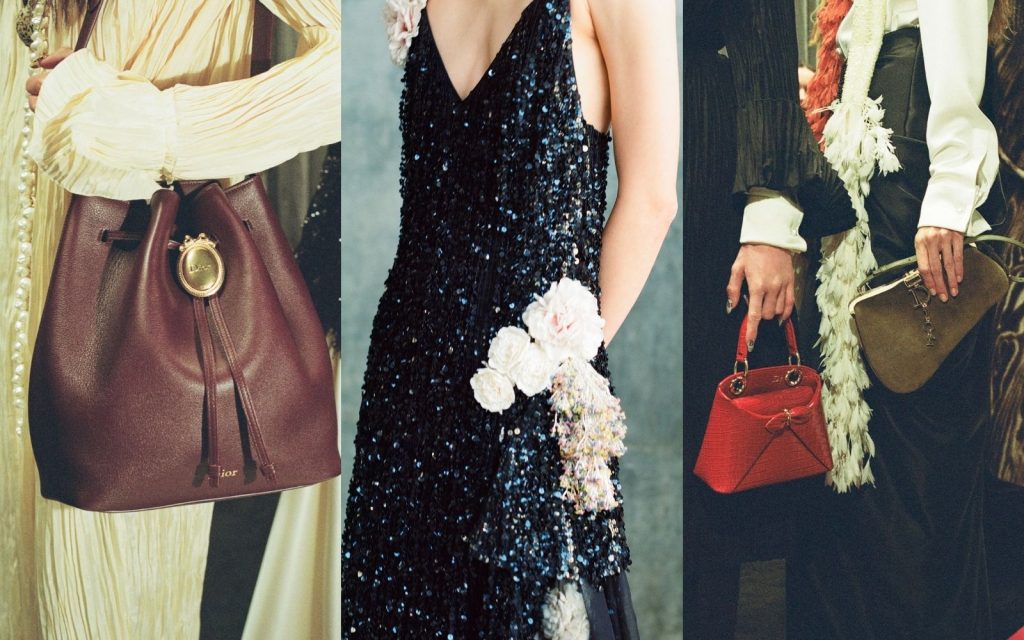
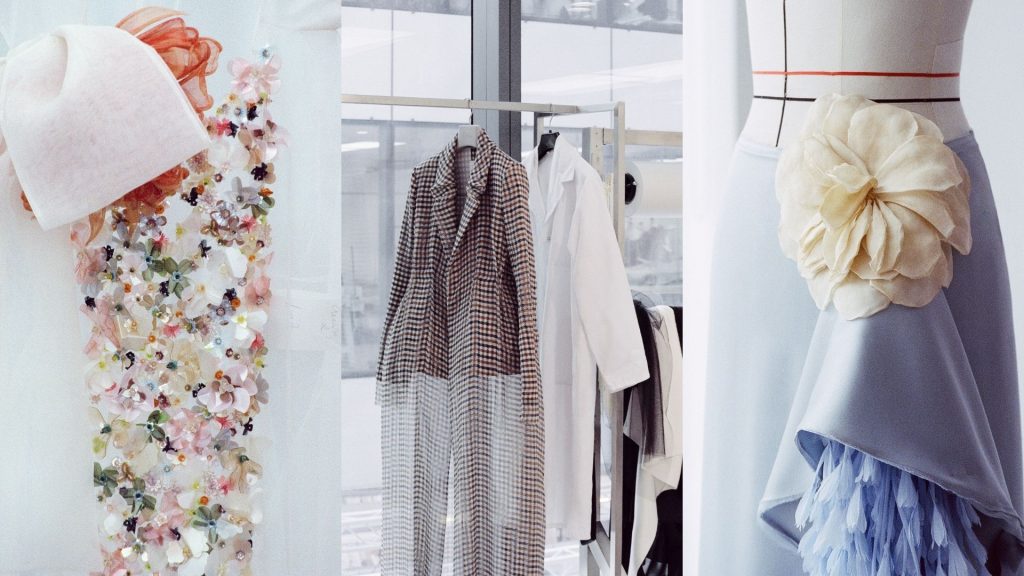
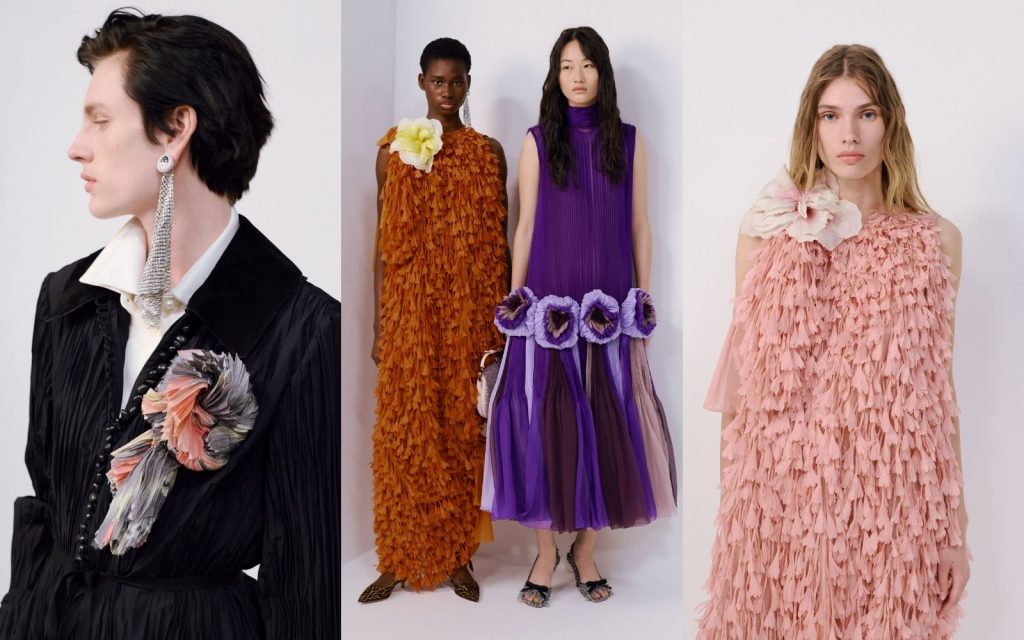
Fluttering dresses inspired by Californian poppies moved as though caught in a perpetual slow-motion shot from a 1950s film. The Bar jacket, elongated to mid-thigh, felt both familiar and estranged, a re-edit of Dior’s identity seen through a lens that is less concerned with preservation than with experimentation. Anderson was candid about this shift.
“I think about it as creating characters, almost like we’re making costumes for something,” he said. Costume, in this context, doesn’t diminish fashion, it expands it. It reframes it as part of a larger narrative system, one that exists beyond the runway.
This is a Dior that doesn’t stand reverently on the pedestal of heritage, but one that plays with it.
For Anderson, history isn’t sacred. It’s material. “I try to rebuild the bedrock of Dior historically, and then kind of dance on top of it,” he said. That tension, between reconstruction and movement, defines the collection. Denim, for instance, was not distressed after the fact but engineered from the start to carry a sense of wear. “I wanted to redo denim completely,” he explained. “We didn’t age it afterwards, we built that texture into the yarn itself.” It’s a subtle but significant shift: memory manufactured at the point of creation. Like cinema, it produces a familiarity that feels real, even when it never existed.
Nowhere is this dialogue more visible than in the relationship between fashion and film.
Old Hollywood appears not as nostalgia, but as language. A way of speaking about the present through the codes of the past. “I’m very interested in how a fashion house works with cinema, and how cinema works within a fashion house,” Anderson said. This is not merely an artistic inquiry, it’s structural.
From Ava Gardner to Marlene Dietrich, who famously declared “No Dior, no Dietrich”, these references are not revived for sentiment, but renegotiated for relevance. Dior’s historical ties to cinema are not being revisited; they are being reactivated. Anderson’s fascination with Alfred Hitchcock manifests less in direct reference than in atmosphere. “He uses a lot of blinds in his films for lighting,” Anderson noted. At LACMA, shadows stretched across concrete in a similar fashion, not just illuminating, but obscuring. Suggesting that what matters is not only what is seen, but what remains just out of reach.
Even the smallest details functioned like cinematic props.
Philip Treacy’s feathered headpieces spelling out “Dior” and “Buzz” hovered somewhere between accessory and graphic device. Ed Ruscha’s shirts scattered with words felt less like statements and more like fragments, lines of dialogue lifted from a script we never fully hear. This is not a collection that demands immediate understanding. It asks first to be felt. And perhaps this is what makes Anderson’s Dior, one year into his tenure, so compelling. He resists the urgency to define. Instead, he lingers in the question.
“I’m still learning. I’m not in a rush,” he said. A statement that feels almost defiant in an industry built on immediacy. “Money will come. And it does, which is great. It’s a product of being Dior.” It’s a pragmatic truth, but also a revealing one. Dior, as he understands it, is a house onto which people project deeply personal meanings. “Dior means something different to everyone. People have emotional attachments to it.”
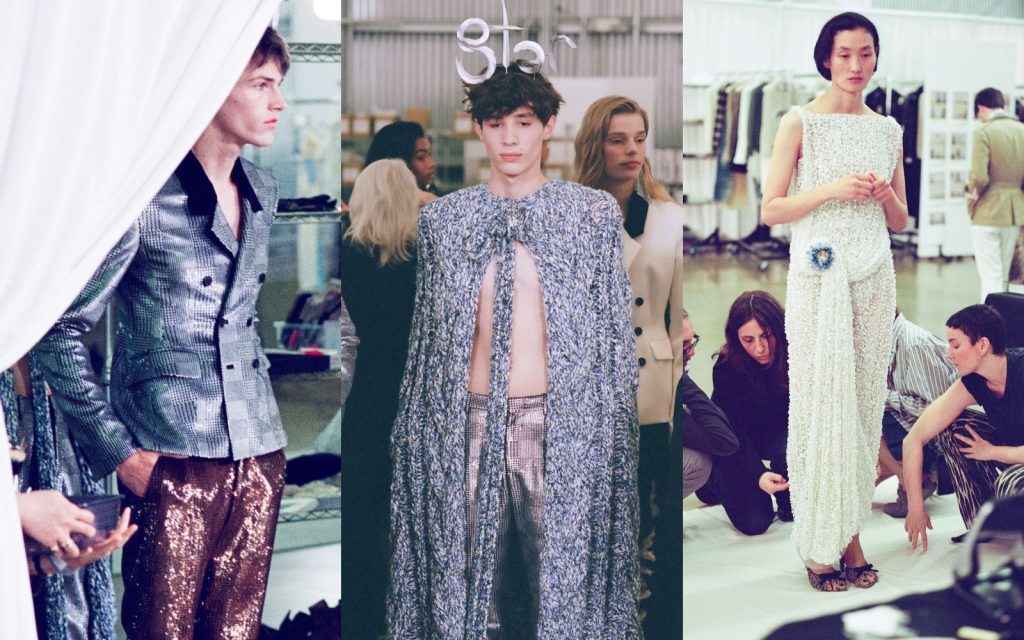
And therein lies the challenge, not to overwrite those meanings, but to exist among them.
“I know where it’s going,” he continued. “Not in terms of the end result, but in terms of the process.” Process, here, becomes the point. Not a means to an end, but the identity itself.
Dior Cruise 2027 doesn’t offer a definitive answer to what Dior will become. It feels more like the opening scene of a film still unfolding.
“What you’re seeing here is part of a much bigger picture,” Anderson said. “Over the next 12 months, we’ll be working more with cinema… there might be three more costuming films, one with Luca Guadagnino.” And with that, the direction becomes unmistakable. Dior, under Anderson, is not just a fashion house. It’s becoming a studio.
A studio that produces not only clothes, but images, dreams, and narratives—stories that feel true precisely because they are constructed. On that Los Angeles evening, under impossibly good weather, Anderson offered no final clarity. He simply smiled and added, almost offhandedly: “We’re in L.A., the weather’s good… go get a tan.” As if to suggest:
Sometimes, the most important thing in fashion is not what we try to explain, but what we allow to keep unfolding.