

Reported by Manit Maneephantakun
Some lives are never allowed to remain merely “lives.” They become reflections of what people want to believe. Antoine Fuqua’s Michael seems to understand this well. This is not only a biopic about one man, but a film about how we choose to remember him.
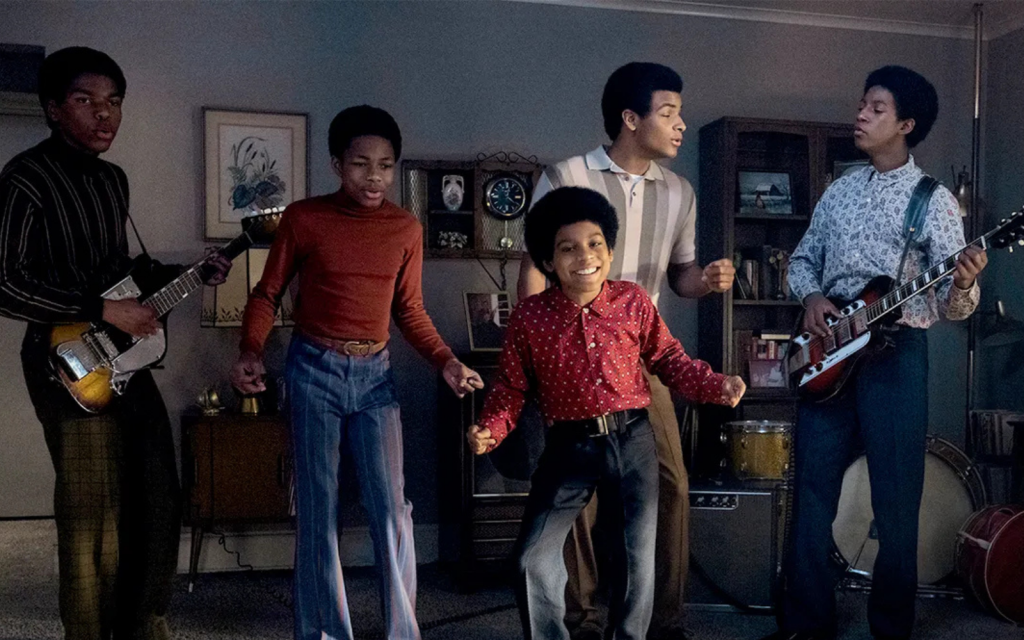
The film begins as many pop-star biopics do: a figure seen from behind, walking toward the light, with the roar of an audience swelling like a wave. Then we are taken back to a small house in Gary, Indiana, where a young boy is being trained to be “perfect” enough to escape an ordinary life. From that moment, we begin to understand that Michael is less interested in searching for Michael Jackson than in arranging him once again: cleaner, simpler, and safe enough to look at.
Joe Jackson is drawn as the film’s clearest shadow: harsh, relentless, and armed with an American Dream that he presses onto his son’s shoulders with the sting of a leather belt. Emotionally, it works, because the pain on screen feels tangible. But it also reduces the complex life of an artist into one straight line: a boy trying to escape his father.
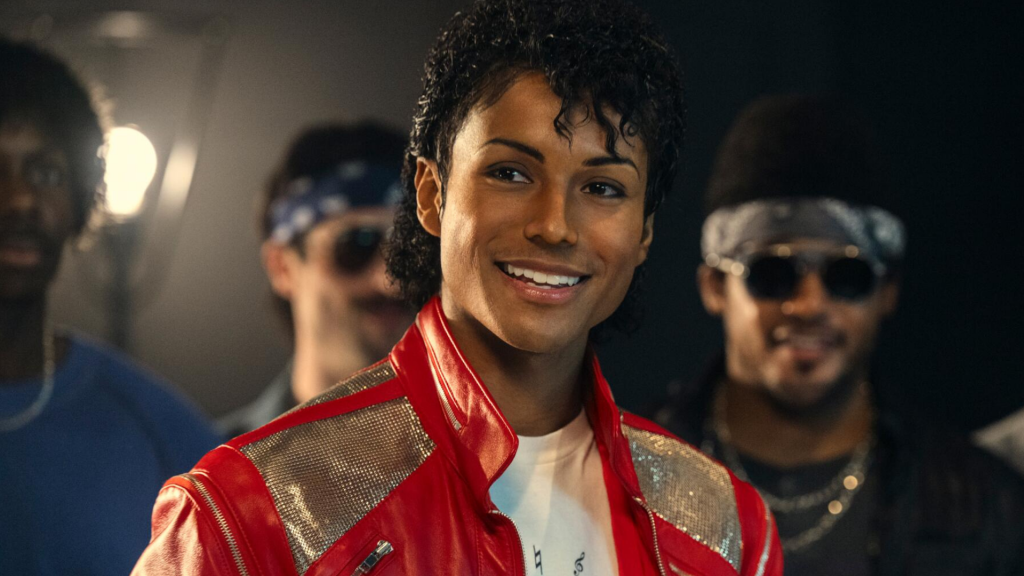
Jaafar Jackson, playing Michael, makes that line glow. He does not merely imitate his uncle’s voice, movement, or posture. He captures a strange magnetism: vulnerability hidden inside precision, softness carrying an inner steel, all expressed through the smallest shifts in his eyes.
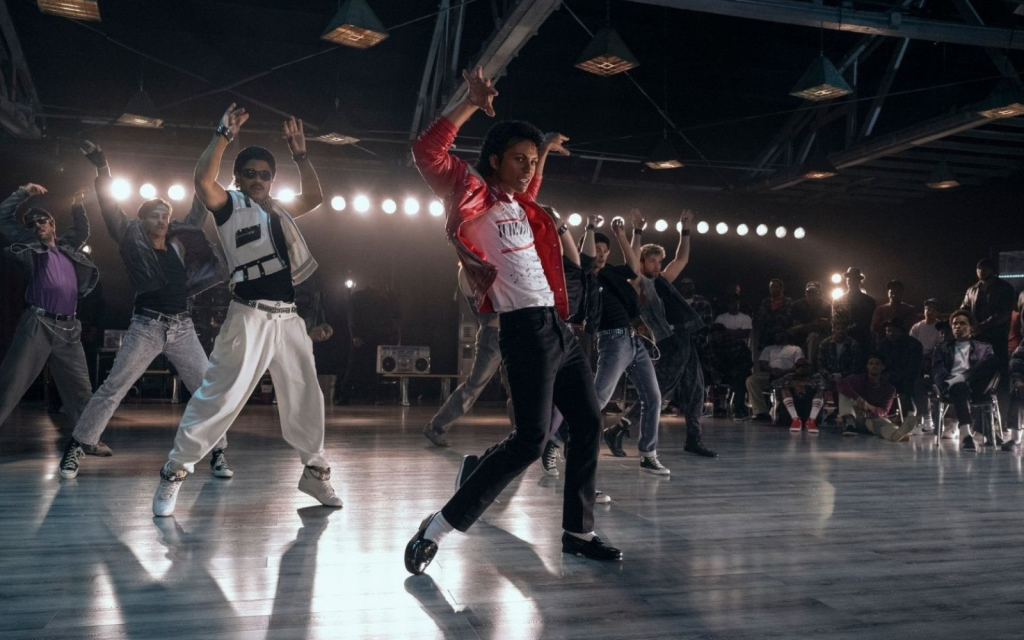
In many scenes, especially when the music begins, from I’ll Be There and Don’t Stop ’til You Get Enough to Billie Jean, and even the deeply surprising use of Ben, one of my personal favorites, the film seems to break free from its own limitations. It lets the power of Michael’s music do the storytelling. It is not just performance. It is remembrance, made alive.
But when the music stops, the film chooses a path that feels almost too safe.
This Michael is rarely allowed to be fully human. He barely gets angry, rarely loses himself, and almost never appears to create from the raw, imperfect places where art often begins. Songs seem to arrive as if already floating in the air, waiting for him to reach up and pull them down. He becomes less an artist than an otherworldly being. Perhaps that is exactly what the film wants him to be.
Because beneath its shimmer, Michael is not only avoiding the darker parts of its subject’s life. It is building a new version of him: one without accusation, ambiguity, or unanswered questions. The world of the film is filled with images of healing, innocence, and reputation restored: hospital visits, children comforted, people smiling gently from doorways, as if to tell us, “This is another truth you may choose to believe.”
At that point, the film becomes more than a movie. It becomes a conversation about narrative control.
Michael Jackson’s life may be one of the most rewritten stories in modern pop culture: by journalists, by fans, by accusers, and by those who defend him. Michael chooses to write it again in the softest possible voice. Yet the more interesting question is not what the film says, but what it refuses to say.
Ending the story at Wembley in 1988 is not only a choice to stop at a moment of glory. It is a choice to stop time before everything becomes more complicated, before Michael Jackson is no longer spoken of only as the King of Pop, but as a figure the world still cannot agree on how to see.
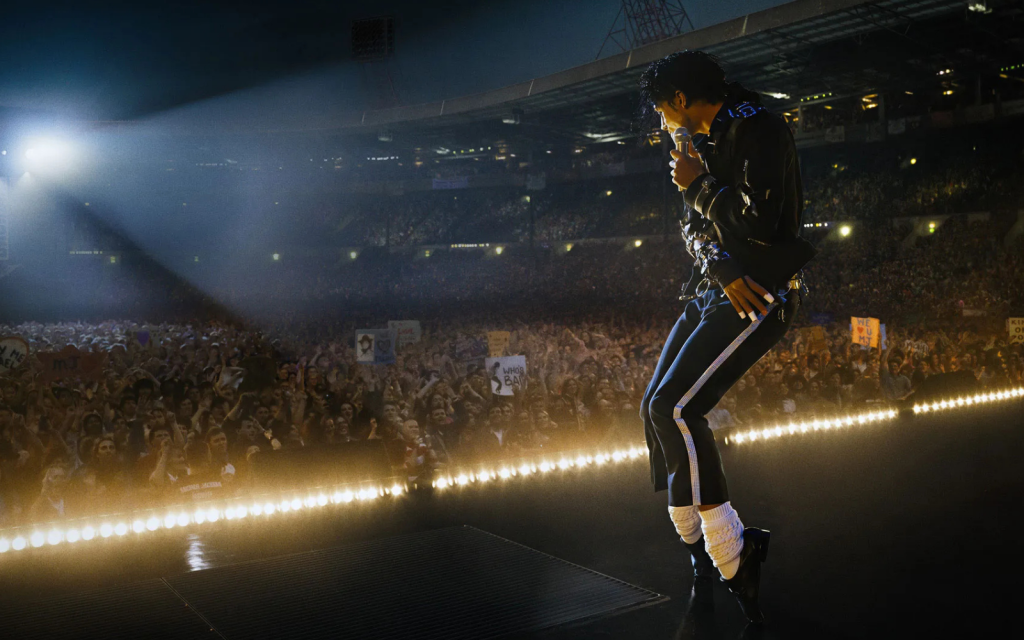
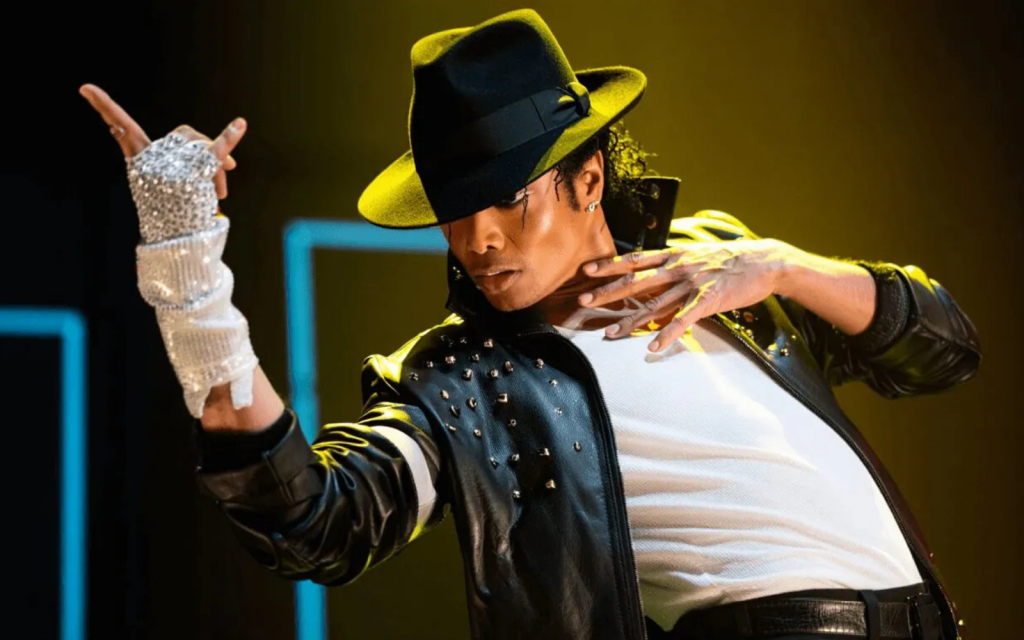
That is what makes Michael feel both true and untrue at once. True in the memory of the music, the dance, and the electricity of the stage. Untrue in the silence of everything it chooses to leave outside the frame.
In the end, the most fascinating thing about Michael may not be the film itself, but what it reflects back to us. Which Michael Jackson do we want to see? The child whose childhood was taken from him? The genius who changed pop forever? Or the complicated human being the world still struggles to hold in one image?
Michael does not answer. It offers us one version: beautiful, fluid, and safe enough to love. In the world of pop culture, perhaps that is enough.
Or perhaps not at all.
But one thing is certain: Michael is not BAD.
Michael is now showing in cinemas.