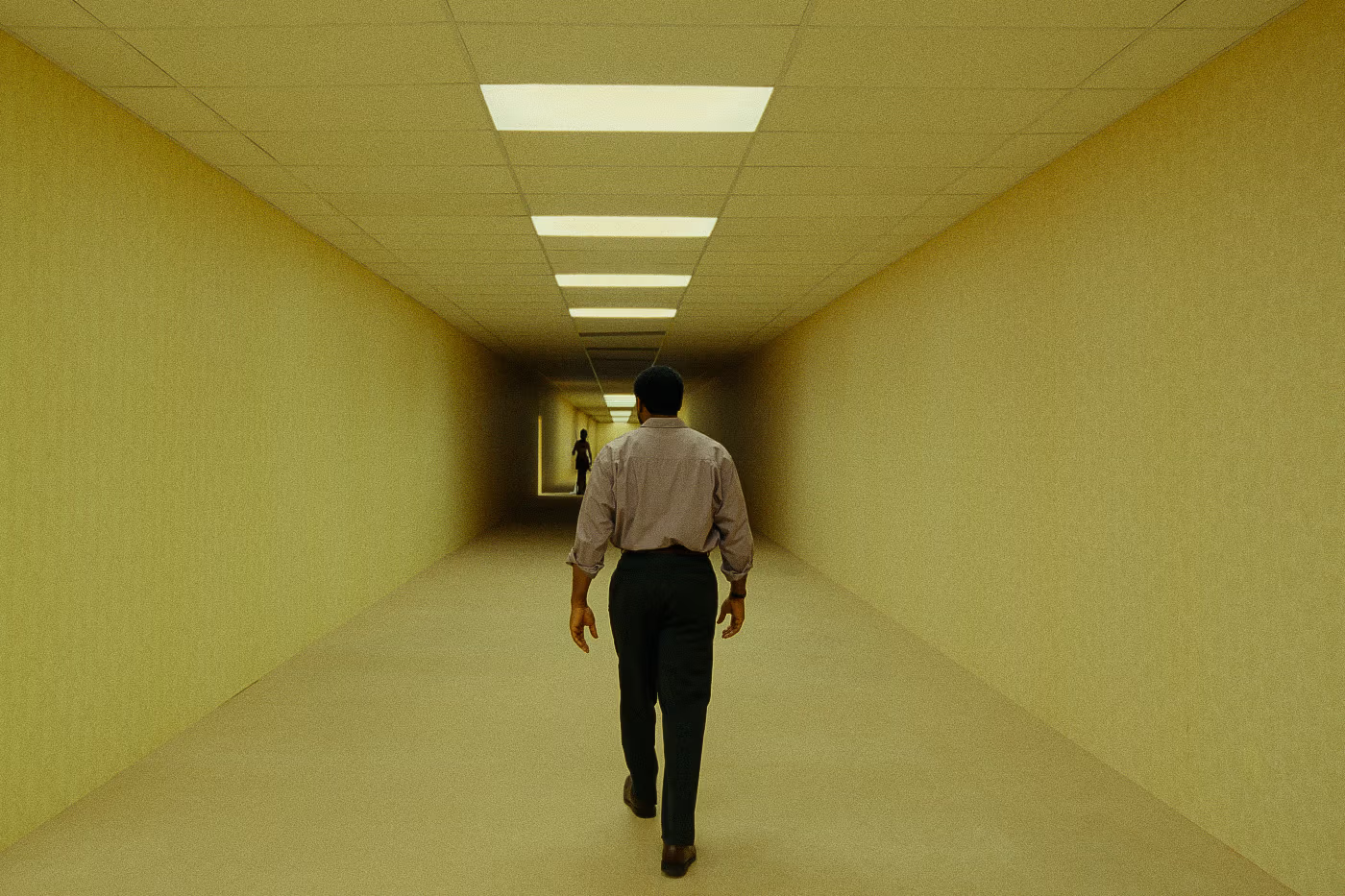



As A24’s “Backrooms” continues to dominate online horror discussions, the internet has become obsessed with its endless corridors, fluorescent lighting and uncanny empty spaces. These unsettling environments are known as liminal spaces – “in-between” places that feel strangely familiar yet oddly off. While the concept has recently exploded online, horror cinema has explored it for decades. These six films below may offer you a similarly eerie and surreal experience
Exit 8 (2025)
Based on the viral Japanese horror game, Exit 8 is perhaps the closest modern companion to Backrooms. The film follows an unnamed commuter trapped inside an endlessly looping underground subway corridor as he desperately searches for a way out. Adding to the unease is the repeated appearance of a creepy robotic salaryman known as the “Walking Man.” Rather than relying on usual jump scares, the film builds tension through repetition, paranoia and the eerie emptiness of a space that should feel completely ordinary.
Vivarium (2019)
Shifting toward a more suburban form of liminal horror, Vivarium follows a young couple trapped inside Yonder, a labyrinth-like housing estate where every pastel-green house and eerily empty street looks exactly the same. Forced to raise a strange, rapidly growing child in exchange for freedom, the pair slowly unravels as the endless repetition turns the familiar idea of suburban life into something increasingly uncanny and disturbing.
Cube (1997)
As a film that explored liminal horror as early as the 1990s, Cube follows a group of strangers trapped inside a giant maze of industrial cube-shaped rooms, many containing deadly traps. With no understanding of who built the structure or why they are there, the group slowly descends into paranoia and psychological collapse while searching for an escape. Its sterile design, endless repetition and disorienting architecture make it one of cinema’s earliest and most effective liminal horror films.
Us (2019)
While Jordan Peele’s Us is not entirely set within liminal spaces, the way it uses them remains unforgettable. The film follows the Wilson family as their beach vacation spirals into chaos after being attacked by terrifying doppelgängers known as the Tethered. Later in the story, it is revealed that beneath the surface of America lies a sprawling underground labyrinth of fluorescent hallways and endless tunnels, creating the same surreal unease and uncanny atmosphere that made Backrooms so unsettling in the first place.
The Platform (2019)
Set inside a brutal vertical prison known as “The Pit,” Netflix’s The Platform transforms cold concrete architecture into a nightmare of endless repetition. Every level looks nearly identical, with prisoners surviving on scraps from a descending platform of food controlled by those above them. As inmates are randomly reassigned to different floors each month, the film explores greed, class inequality and psychological collapse through harsh industrial spaces that feel both dystopian and strangely surreal.
The Shining (1980)
Finally, when it comes to original liminal space horror classics, The Shining remains impossible to ignore. Set inside Stanley Kubrick’s iconic Overlook Hotel, the film follows the Torrance family as isolation and supernatural forces slowly drive Jack Torrance (Jack Nicholson) into madness. Filled with impossibly long hallways, empty ballrooms and strangely disconnected architecture, the hotel feels both luxurious and threatening at the same time. Long before liminal horror became an internet obsession, The Shining had already perfected it.
Also see: Filmmaker Herman Yau and Anson Kong on the bleak humanity of “We’re Nothing at All”