


Reported by Manit Maneephantakun
There are people in fashion who don’t simply “dress well,” but permanently alter the way we understand the very idea of style. Diane Keaton is one of them. Not because she wore menswear tailoring at a time when women were expected to wear dresses. Not because the bowler hat or the polka-dot tie became signatures that others could imitate. But because she transformed fashion into a system of thought rather than a surface image.

So when Bonhams chose to tell the story of her life through The Architecture of an Icon, what emerged was not merely an auction of personal belongings, but a revelation of an internal structure, an identity carefully constructed, like a house in which every room, every wall, every object exists for a reason. New York in June may be filled with people searching for “valuable things,” but within this exhibition, what is being presented is not value in the conventional sense. It is the method by which meaning is assembled, piece by piece, from clothing and artworks to furniture and fragments of paper that might seem insignificant, yet belong to a narrative she has been writing her entire life.
Diane Keaton was never just an actress. Even though her roles in Annie Hall and The Godfather have become part of global cultural memory, what sets her apart is her refusal to remain confined within a single frame. She writes. She designs spaces. She collects images. She composes her life as though it were an editorial spread that never reaches its final print.
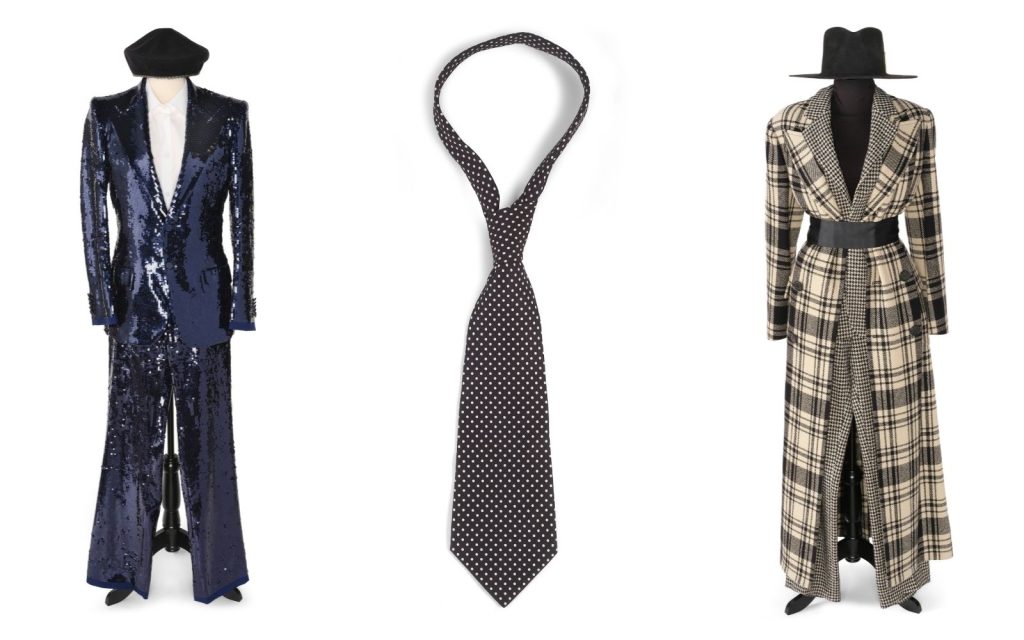

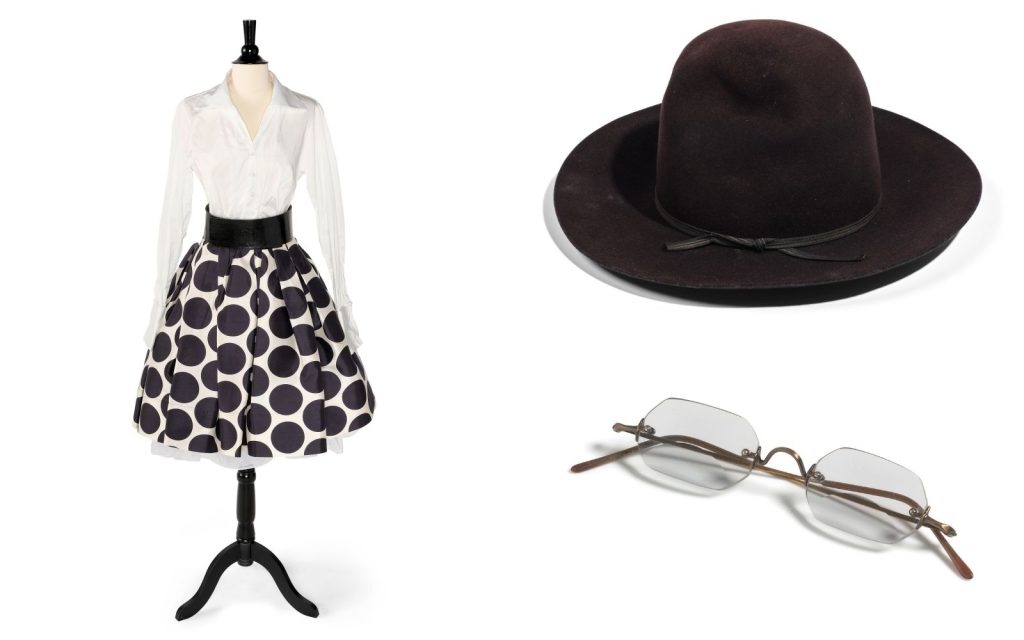
For her, the word “collection” has never meant possession, but rather conscious selection. Perhaps that is why Anna Hicks describes her not as a collector, but as an editor of her own life, someone who knows what to keep, and what to let go, without the need for spectacle. In a fashion world driven by novelty, speed, and desire, Keaton exists in a different rhythm, slower, but more precise. The Ralph Lauren suits she wears are not merely looks; they are statements of structure, discipline, and a quiet refusal of prescribed femininity. The black hat is not simply an accessory, but a way of defining silhouette, of claiming presence in public space.
What becomes even more compelling is that when these items are placed within the context of an auction, they do not lose their meaning. Instead, they sharpen it. Because Keaton’s style has never depended on the garments themselves, but on the way she assembles them, how she composes relationships between form, memory, and intention.

And perhaps the most revealing expression of her identity is not clothing at all, but “The Wall”, a large board in her home filled with photographs, collages, and fragments of thought, pinned together like a map of imagination. It is not a mood board, but a living space of experimentation, where images are revisited, reinterpreted, and given new meaning over time.
These images are not arranged to be beautiful. They are arranged to think.
And that may be the essence of everything.
Because in the end, what Bonhams presents is not the wardrobe of an actress, not the interiors of a home in Sullivan Canyon, nor even artworks valued in tens of thousands of dollars. It is a way of seeing the world, belonging to a woman who has lived as though she were creating a work of art that is never truly finished.
In a contemporary fashion culture defined by repetition, acceleration, and the easy commodification of identity, Diane Keaton stands as a compelling exception. She never set out to become an icon. She became one precisely because she refused to resemble anyone else.
She does not follow trends.
She builds her own system.
And perhaps that is why her objects, once separated from their owner, still manage to speak.
Not because they are beautiful,
but because they have been thought through,
deeply enough to become part of the world’s memory.