
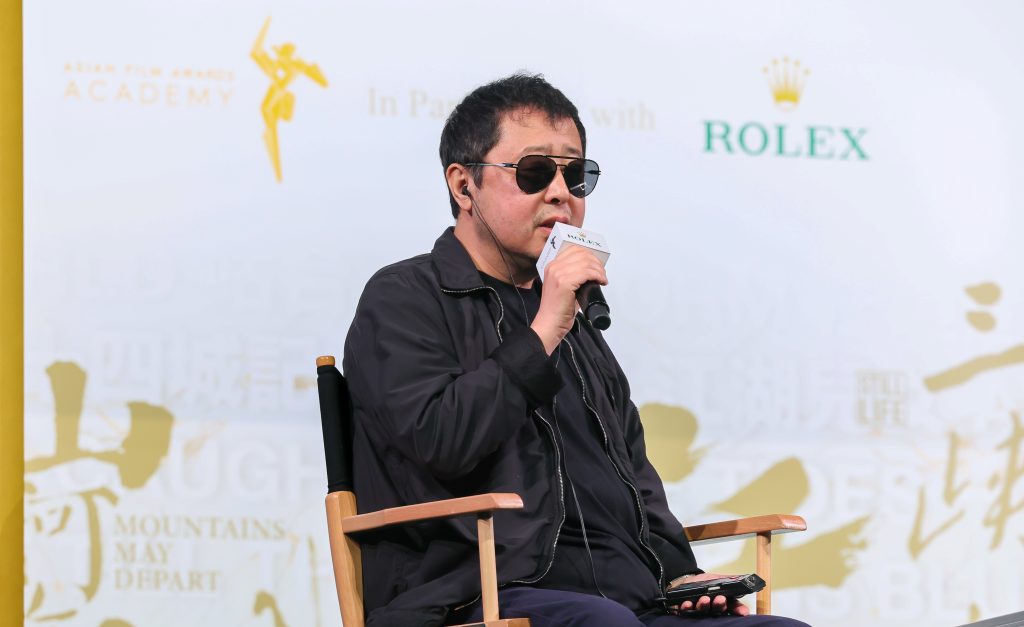

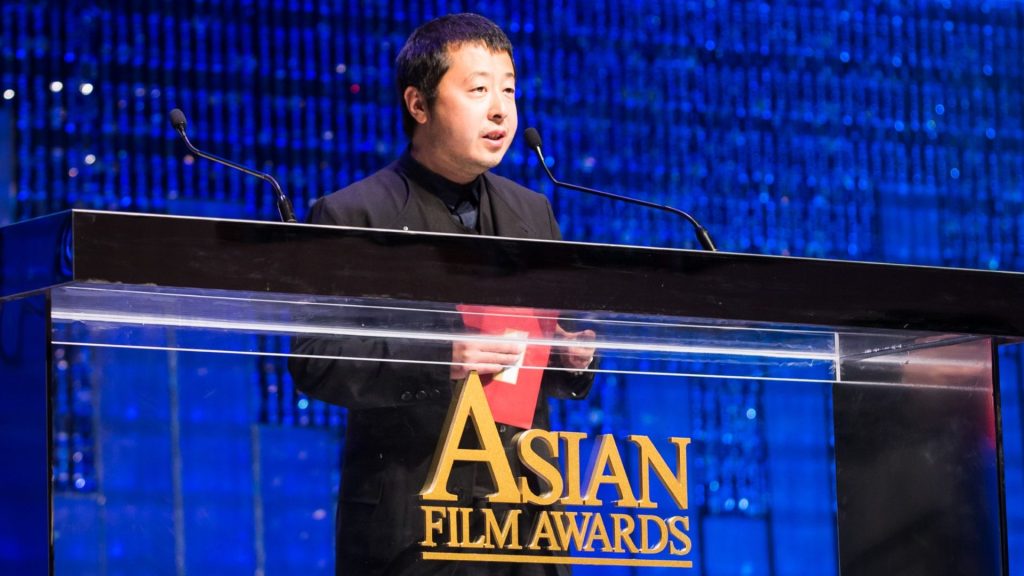
On March 15, alongside the 19th Asian Film Awards, acclaimed Chinese filmmaker Jia Zhangke joined the programme for a masterclass presented in partnership with Rolex. The session offered a closer look at his creative philosophy, spanning filmmaking, emerging technology and the evolving role of cinema in society. Drawing on decades of experience, he spoke with both pragmatism and reflection about what it means to make films today. Here are 5 key takeaways from the conversation
Cinema should stay connected to real life
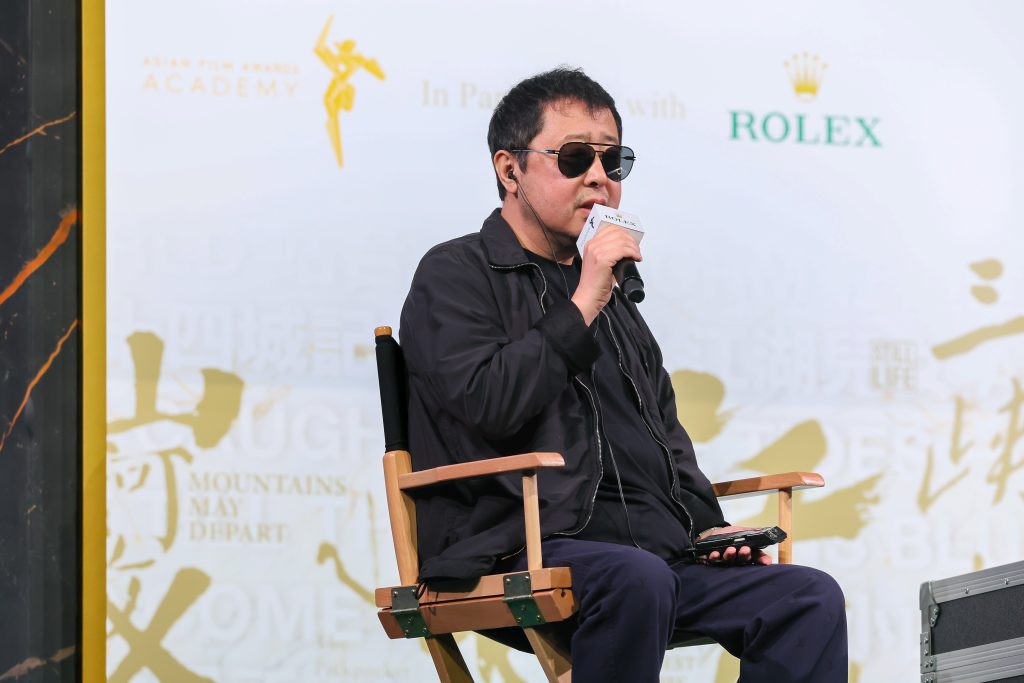
Jia repeatedly returned to one idea during the masterclass: the importance of keeping cinema grounded in real life. Many of his films focus on ordinary people navigating social change, and he believes these everyday stories often carry the most universal meaning. For him, cinema is more than entertainment – it is an art form closely tied to society, philosophy and the human condition. Reflecting this approach, he recalled promoting his 2024 film Caught by the Tides by travelling across China to meet audiences in person, encouraging open dialogue and exchange between filmmaker and viewers.
Don’t rush to judge new technology
Jia also spoke about how technology continues to reshape cinema. Having worked through the shift from shooting on film to digital formats, he sees change as a constant in filmmaking – much like the recent rise of AI. During the masterclass, he shared that he has experimented with AI-generated short films, even using his own image and voice to understand better what the technology can do. His approach is simple: don’t rush to reject new tools or celebrate them blindly. Take time to understand them first. As he noted, film history itself is a history of technological change.
Passion thrives in tougher times
When asked what advice he would give to newcomers, Jia emphasised persistence and a genuine passion for cinema. He acknowledged that the current economic climate has slowed film investment and made the industry more uncertain, but he does not see it entirely as a negative. In his view, when conditions become tougher, those who continue investing in films are often those who truly care about the medium. For passionate filmmakers, this can be an opportunity to find collaborators and investors who share the same mindset.
Constraints can sometimes shape your path
Jia also shared a story from the early days of his career. The first feature he wanted to make was Platform (2000), an ambitious story spanning a decade of social change in China. At the time, however, the project was too large for him to realise. Instead, he began with a smaller film, which became Xiao Wu (1997). The film went on to gain international recognition, winning the Wolfgang Staudte Award in the Forum section of the 48th Berlin International Film Festival and launching his career. For Jia, it was a reminder that creative paths rarely unfold as planned – and that constraints can open unexpected doors.
Discipline helps sustain creativity
Beyond filmmaking itself, Jia spoke about the importance of personal discipline. Earlier in his career, he often worked late into the night and kept an irregular schedule. Over time, he realised that sustaining creative work requires physical balance, especially given the long hours and demands of film production. Today, he wakes at six every morning and begins the day with a run before heading to the studio. The quiet early hours, he explained, give him the space to write, reflect and develop new ideas with clarity.
Also see: Zhang Ziyi, Liu Haoran and Terrance Lau honoured at the 19th Asian Film Awards