
Reported By Manit Maneephantakun
The night of the 2026 Oscars began as it always does, camera flashes bursting across the red carpet, reporters calling out the names of arriving stars, and gowns gliding across the pavement as if the film had already started rolling before anyone entered the theatre. Yet as guests stepped inside the Dolby Theatre, it became clear that this year’s ceremony carried a slightly different atmosphere.
The stage had been transformed into what looked like a quiet garden in the middle of a city. Golden light filtered through trees and wooden textures, creating a set that felt more handcrafted than typically Hollywood. The theme of the night was “A Human Touch,” a concept that seemed to send a subtle message: after years in which cinema has had to compete with algorithms, streaming platforms, and artificial intelligence, Hollywood still believes that human beings remain the heart of storytelling.
And perhaps that is why the results of the night felt strangely aligned with the stage standing at its center.
The evening ultimately belonged to One Battle After Another, the new film by Paul Thomas Anderson, a work many critics have described as a contemporary political epic. The film follows former leftist revolutionaries in America who are forced to confront their past in a world where the ideologies that once defined them seem to have lost their meaning.
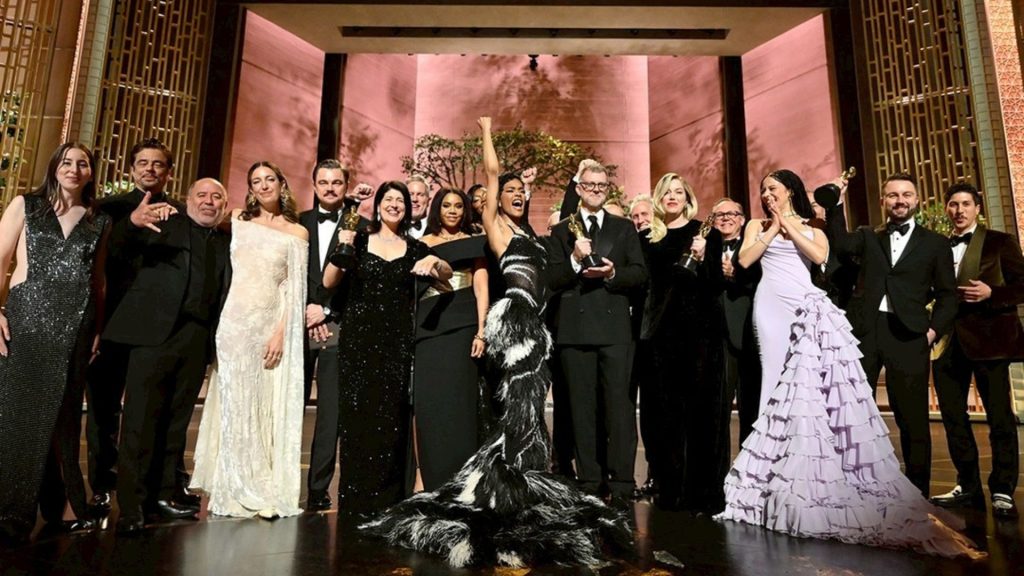
When the title was announced for Best Picture, nearly the entire cast and crew rose to their feet at once, like a wave moving across the vast auditorium. The applause lasted long enough to feel almost ceremonial. And on stage stood Anderson, a filmmaker who had been nominated multiple times throughout his career but had never before held an Oscar in his hands.
That moment finally arrived.
But the victory did not stop there. The film also won Best Director, Best Adapted Screenplay, and Best Supporting Actor for Sean Penn, bringing its total to six awards for the night. In many ways, the win felt like a restoration of status for a director long regarded as one of the most important filmmakers in modern American cinema, yet strangely absent from the Academy’s winners list for decades.
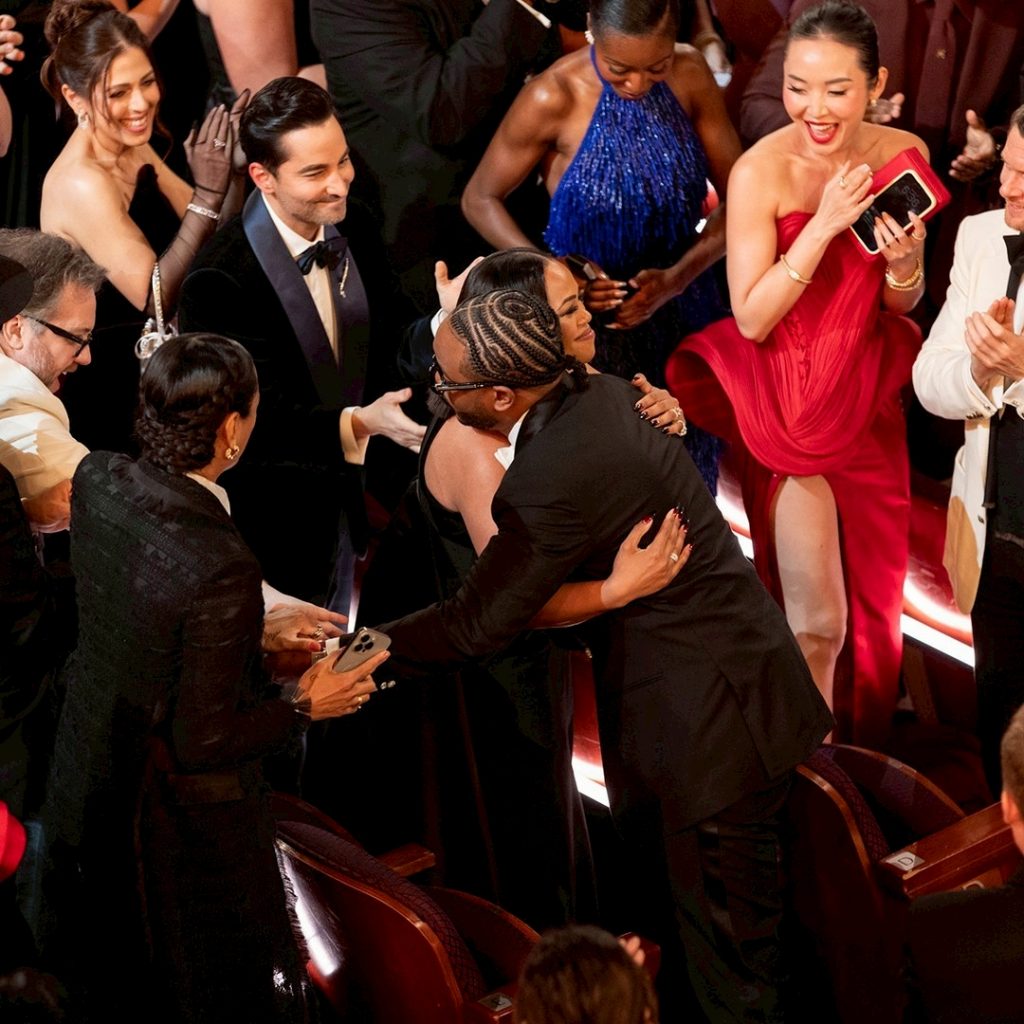
Taking the stage, Anderson spoke with a tone that suggested he was still processing the moment. He thanked novelist Thomas Pynchon, whose book inspired the film, and explained that the story had been written, in part, “to understand the world our children are growing up in.”
It was a line that made the film feel less like a political thriller and more like a question about the future.
Throughout the awards season, two films had come to symbolize two very different visions of Hollywood.
One was One Battle After Another, a dialogue-heavy political drama filled with interpretation, philosophy, and ideological questions.
The other was Sinners, a visceral horror film that became one of the year’s most talked-about cinematic events, earning an astonishing 16 nominations.
Even though the political epic ultimately took the top prize, the horror phenomenon did not leave the stage empty-handed.
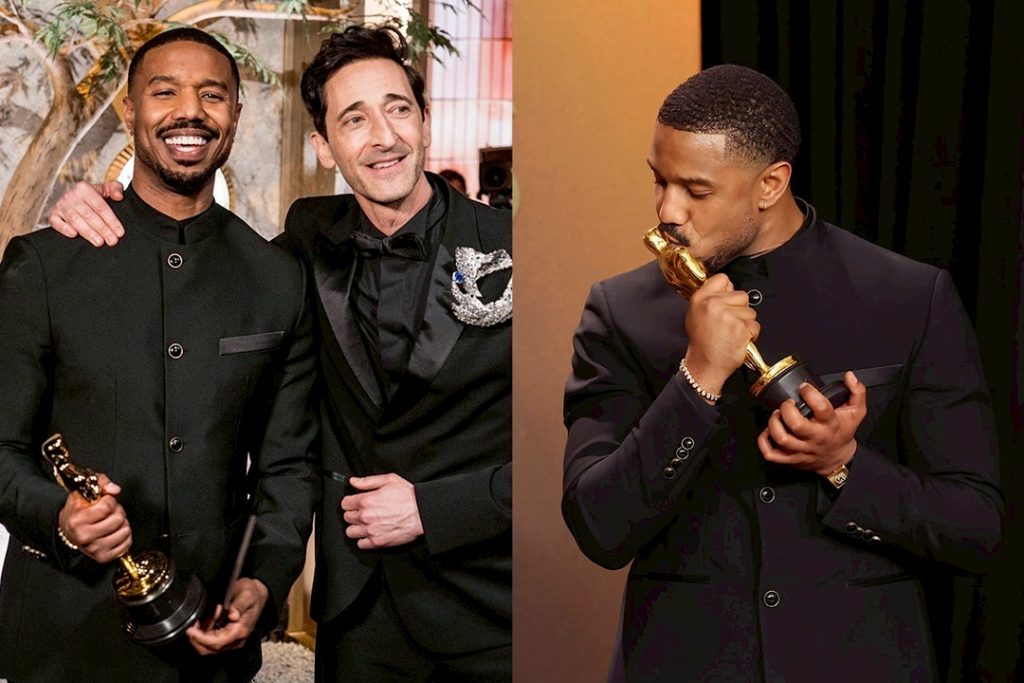
Its star, Michael B. Jordan, walked up to receive the award for Best Actor, a moment that quickly became one of the defining images of the night. With that win, Jordan became only the sixth Black actor in history to receive the Academy Award for Best Actor.
The significance of the moment extended far beyond the performance itself. It marked another step in Hollywood’s ongoing transformation, an industry that has long been criticized for its lack of representation and diversity.
On the same night, a very different kind of performance was honored.
Irish actress Jessie Buckley took home Best Actress for her role in Hamnet, portraying a mother confronting the devastating loss of her child in a story set within the emotional world surrounding Shakespeare.
Her performance was not grand or theatrical. It was quiet, restrained, and deeply intimate, an acting style built on subtle gestures and emotional restraint.
If Michael B. Jordan represented the raw power of a new cinematic generation, Jessie Buckley represented the quiet depth that reminds audiences why cinema remains an art form.
What made this year’s Oscars particularly fascinating was the sense that it captured two emotional states of the world at once.
On one side stood fear, chaos, and uncertainty, embodied in films like Sinners.
On the other stood reflection, political questioning, and historical reckoning, represented by One Battle After Another.
Seen through that lens, the victory of a politically charged film no longer felt accidental. The world of 2026 is a world filled with questions about power, ideology, and truth.
Hollywood, it seems, simply reflected it back.
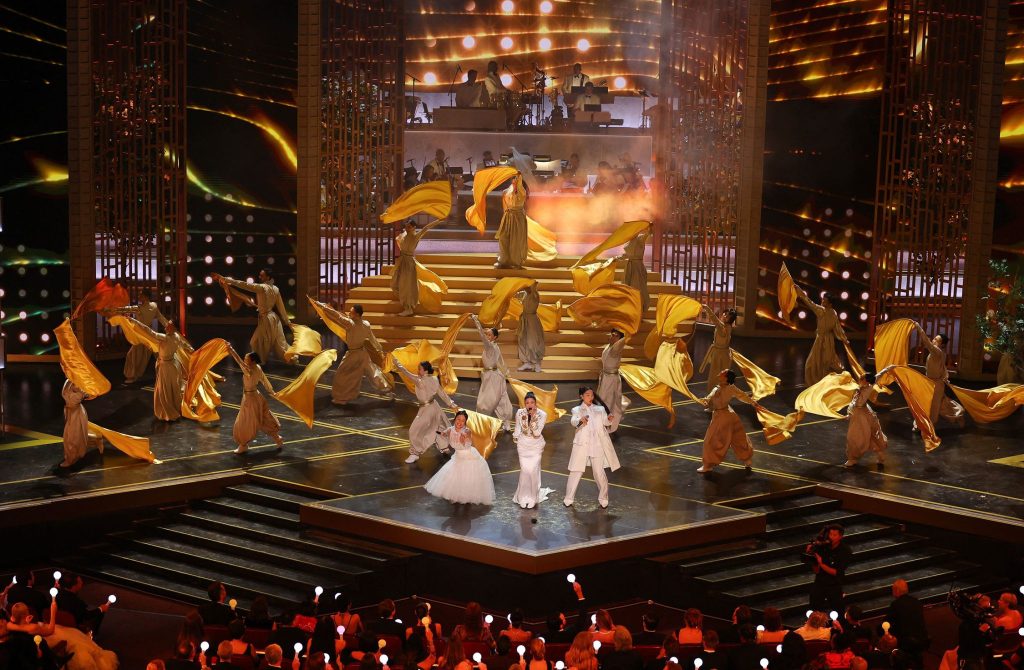
The night also contained moments that revealed how closely cinema remains tied to the cultural climate beyond the theatre.
Host Conan O’Brien, returning for a second year, balanced sharp humor with pointed commentary, maintaining a tone that oscillated between celebration and reflection. Several acceptance speeches moved beyond personal gratitude, touching on global conflicts, human rights, and the anxieties of the contemporary moment.
In the past, the Oscars often tried to preserve the illusion of being purely an entertainment event.
Today, it increasingly feels like a stage where artists speak directly to the world.
Once the ceremony ended, the night simply shifted locations.
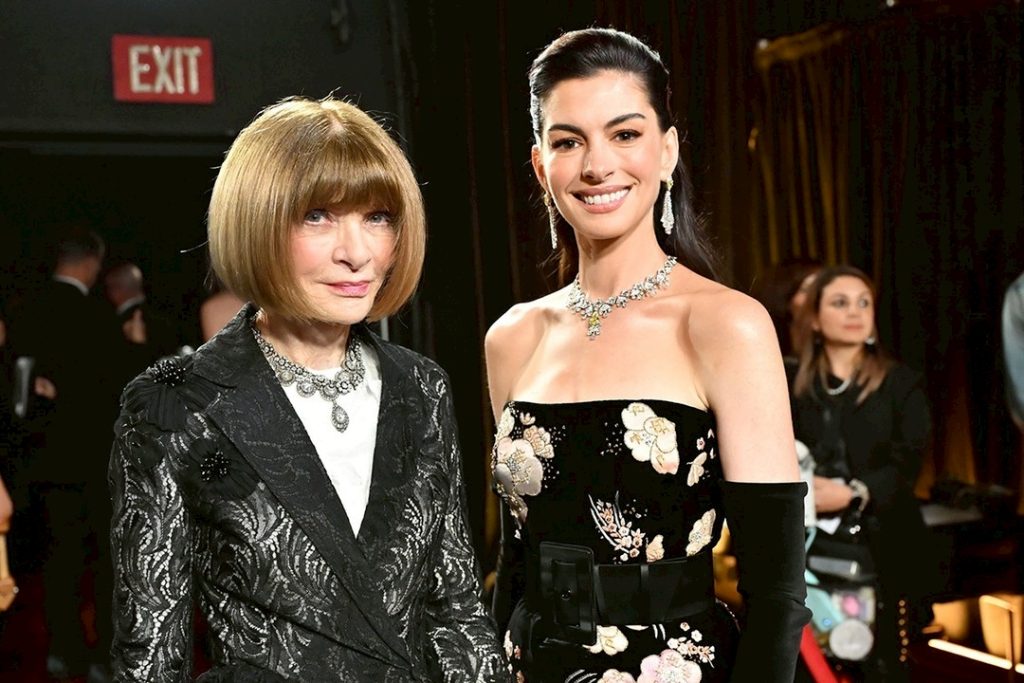
Hundreds of guests continued on to the after-parties, from the official Governors Ball to the legendary Vanity Fair Oscar Party, often considered the unofficial second act of the Oscars.
There, the flashes of cameras continued, gowns and tuxedos still moved across the room, and conversations about the year’s films carried on late into the night. Within fashion circles, the Vanity Fair party has become a space where red-carpet style can loosen its formality and evolve into something more experimental.
It is one of the rare moments when film, fashion, and pop culture intersect in the same room.
By the time the lights inside the Dolby Theatre dimmed completely and music from the after-parties filled the air, the 2026 Oscars had left behind a lingering sense of transition.
Hollywood appears to be entering a new chapter.
Auteur filmmakers once considered “too artistic” for mainstream awards are now claiming the industry’s highest honors. Horror cinema is receiving recognition once reserved for prestige dramas. A new generation of actors is rising to replace the stars of the previous era. And the Oscars themselves are evolving into a space where complex conversations about the world are no longer avoided.
Perhaps that is why audiences still watch the Oscars every year.
Not simply to find out who wins.
But to understand what Hollywood believes about the world at that moment in time.
And in 2026, the message seemed clear:
The world is confused, fragmented, and full of questions.
Yet as long as cinema continues to tell those stories, Hollywood will still matter.