
Reported by Manit Maneephantakun
In a season when Milan seems to be turning through a moment of profound transition, several of Italy’s legendary fashion houses are beginning new chapters under the direction of a new generation of creative directors. Gucci, Fendi, and Marni are already navigating fresh creative leadership, while change is also looming at Versace. The atmosphere at Milan Fashion Week this year is therefore filled with questions about the future: who will define Italian style in the next era, and how can heritage brands preserve their identity amid the mounting pressures of the contemporary fashion system?
Yet amid all this movement, Dolce & Gabbana stands almost entirely in the opposite position.
Instead of speaking about “new beginnings” or “visions of the future,” Domenico Dolce and Stefano Gabbana have chosen to turn their gaze back toward what they have believed in for four decades: the identity of their brand. The year 2025 marked the duo’s 40th anniversary, and before the show began, black-and-white images of the new collection appeared on screen, accompanied by a voiceover reflecting on the power of identity—like a quiet but resolute declaration.
“Many brands today completely lose their identity,” Domenico Dolce said before the show.
“But our history is very long.”
The remark was not delivered with drama or provocation. Instead, it sounded more like a reminder—to themselves and to the fashion world—that Dolce & Gabbana has never intended to chase trends that shift every season. For them, identity is not something to be constantly refreshed; it is something to be protected and refined.
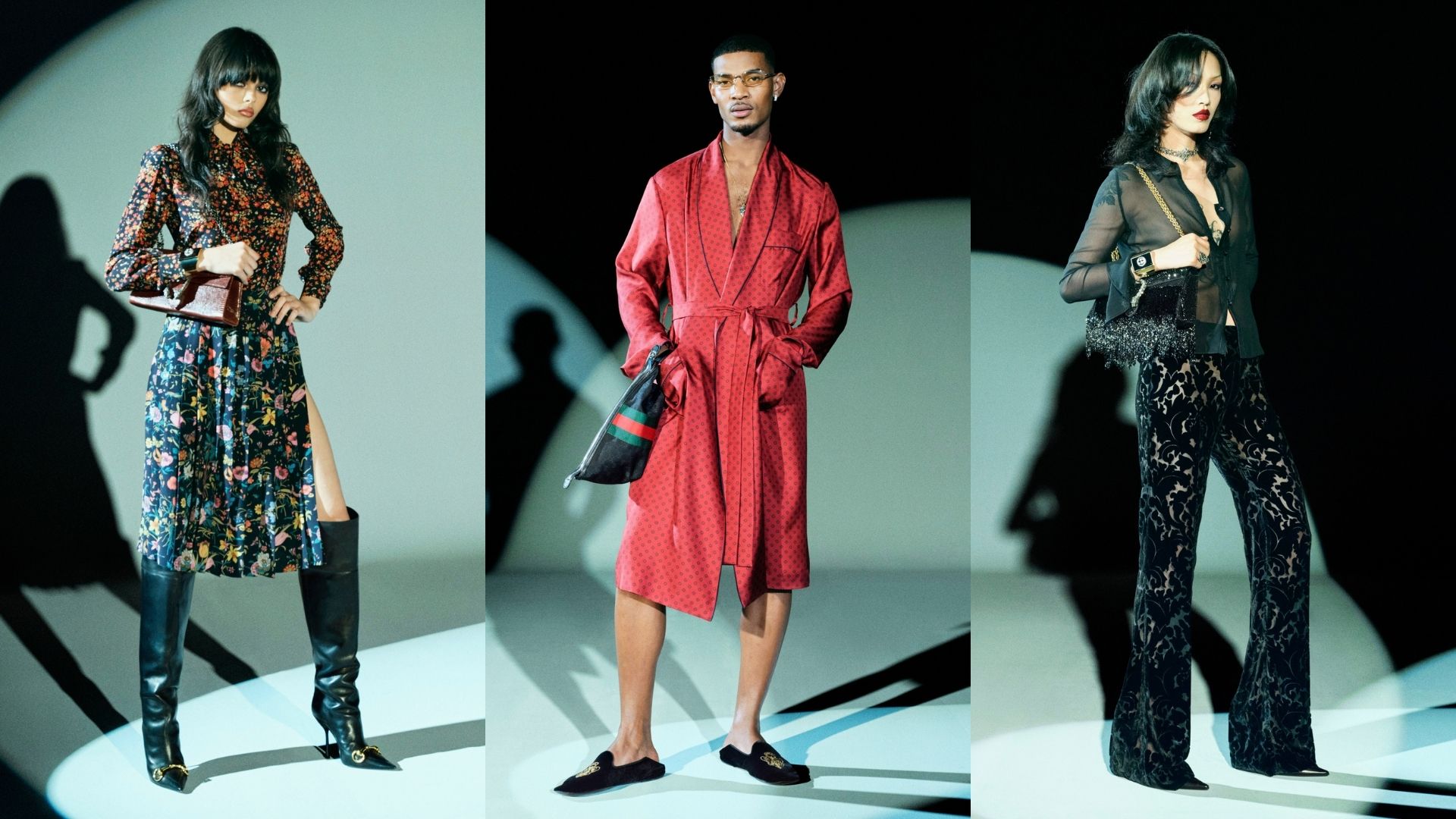
Over the past two seasons, Dolce & Gabbana had briefly ventured into more contemporary modes of dressing. Last spring they explored the idea of “pajamas all day,” reflecting the rhythms of modern urban life. The season before that, they drew inspiration from the off-duty style of their model friends—vintage T-shirts, jeans, biker boots, and oversized men’s coats—creating a collection that felt like snapshots of real life rather than meticulously staged fashion images.
This season, however, they chose to go much further back.
Several days before the show, in their studio, the designers pointed to old photographs of Marpessa Hennink and Isabella Rossellini from the late 1980s—the period when Dolce & Gabbana had just founded their label and began building its reputation by translating Sicilian men’s tailoring into powerful womenswear.
Sicily was the beginning of everything.
And it seems it will always remain their place of refuge.
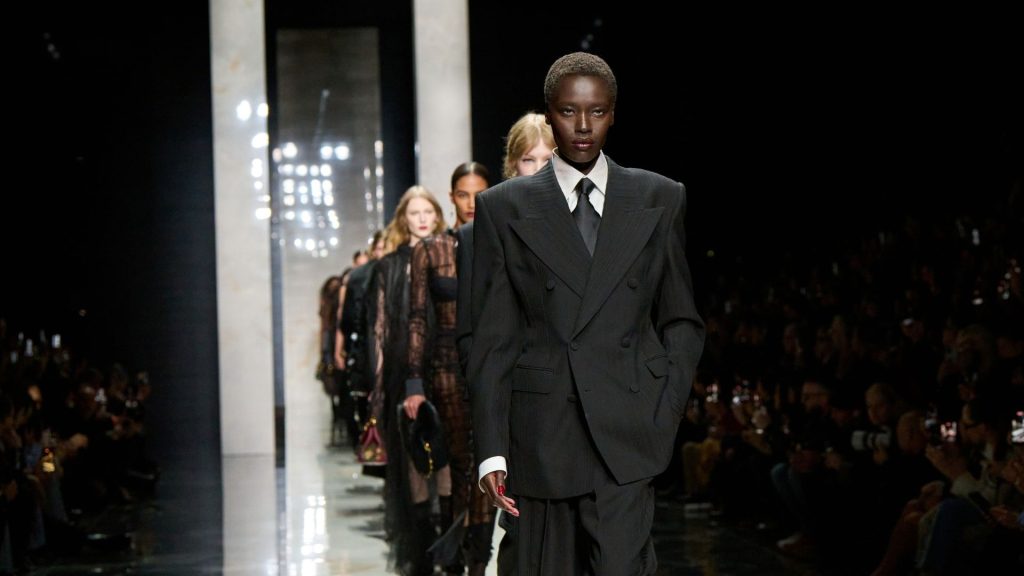
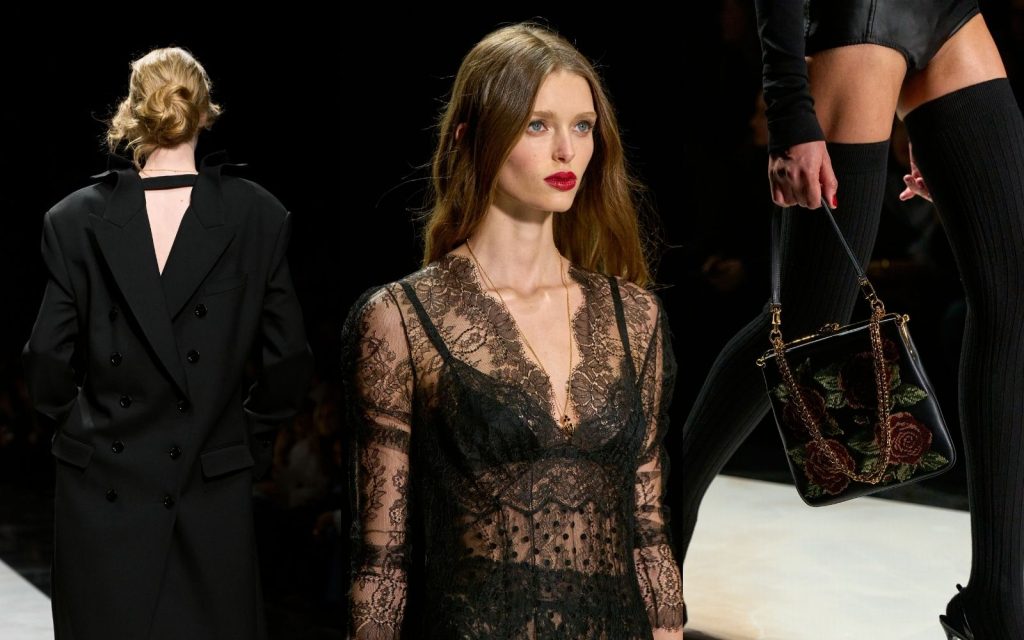
Four decades later, Domenico Dolce’s tailoring skills remain remarkably sharp. The hourglass silhouettes that have long defined the brand returned once again, though now rendered with even greater intricacy. Some jackets and coats were cut so that the back mirrored the front exactly—lapels and buttons marching up the spine like the reflection of the garment itself.
“It’s a big challenge,” Dolce admitted.

To allow the audience to appreciate the craftsmanship fully, he asked the models wearing these special pieces to pause midway down the runway and perform a classic old-school twirl. The small gesture brought the garments to life in an unexpected way, especially in a man-sized double-breasted blazer that revealed just a glimpse of a delicate lace silk camisole beneath. It was a perfect collision of strict masculine tailoring and sensuality—the tension that has always been at the heart of Dolce & Gabbana.
The collection was almost entirely drenched in black, a color that seems to dominate Milan this week. Yet for Dolce & Gabbana, black is not merely a stylistic choice. It has always been the emotional language of the brand.
It is the color of Sicily.
The color of discipline.
The color of effortless sensuality.
Toward the end of the show, the darkness softened slightly with a series of micro-print dresses inspired by an iconic Helmut Newton photograph from 1975. In the image, model Lisa Taylor reclines on a couch, her printed dress parted between her legs as she fixes a powerful gaze upon a shirtless man standing with his back to the camera.
It is an image that embodies the female gaze—long before the term itself entered cultural vocabulary.
“We talk all the time about our memories of photographs,” Stefano Gabbana explained.
For Dolce & Gabbana, memory is not merely inspiration; it is a material for design, much like silk or wool in a tailor’s hands. Photography, cinema, music, and women from the history of popular culture all become layers of narrative woven together.
And one of those women appeared in the show space today.

Madonna.
She was the guest of honor of the evening, and her presence seemed to complete the entire narrative of the show. In 1993, Dolce & Gabbana designed the costumes for Madonna’s legendary Girlie Show tour—one of the most influential pop tours of the 1990s.
More recently, Madonna recorded “La Bambola,” a 1968 song by Patty Pravo, for the Dolce & Gabbana The One fragrance campaign. The classic Italian song celebrates the allure and cultural influence of Italy across the world.
And in many ways, Dolce & Gabbana has done the same.
Madonna sitting front row today was therefore more than just a celebrity moment. It symbolized the long relationship between the brand and pop culture—a relationship that stretches almost as far back as the brand’s own history.
In a fashion world that moves faster every year, where change is often celebrated as the ultimate virtue, Dolce & Gabbana chose to say something different.
They did not attempt to avoid the feeling of déjà vu in this collection.
In fact, they intended it.
Returning to the late 1980s—the era when their fashion was steeped in black, sculpted silhouettes, the collision of strict tailoring and lingerie, and a sensuality controlled by the discipline of craftsmanship—was not merely an act of nostalgia. It was a clear declaration.
This is who we are.
This is what our clients expect from us.
And perhaps, in a moment when the fashion industry is filled with uncertainty, holding firmly to one’s identity may be the most radical gesture of all.
Because when the world begins to blur, Domenico Dolce and Stefano Gabbana simply turn back to the same place.
Sicily.
The home of all their stories.
And the place where Dolce & Gabbana always begins.