
Reported by Manit Maneephantakun
At a time when many fashion shows are designed to deliver an instant “image” for social media, monumental sets, theatrical lighting, or a single moment engineered to go viral, Prada’s latest show in Milan moved in almost the exact opposite direction. There was no dramatic spectacle intended to make the audience gasp. Instead, what Miuccia Prada and Raf Simons were interested in this season was something far simpler. A question nearly every woman has asked herself in front of her closet:
What do I wear with what?
Is it possible to try it another way?
Or should I change the whole thing entirely?
Prada’s show this season was therefore not a declaration of trends. Rather, it was a reconstruction of the real process of dressing a process filled with trial and error, layering and unlayering. What unfolded on the runway felt less like a conventional fashion show and more like opening the door to someone’s wardrobe.
When the Runway Became a Wardrobe
The show began with striking simplicity.
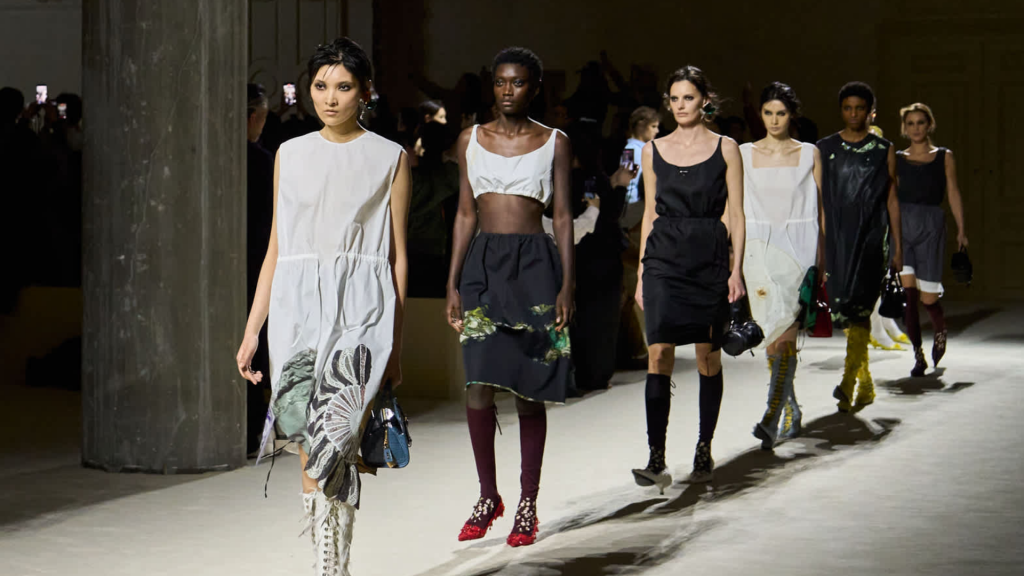
Only 15 models walked through a vast show space designed to resemble a hollowed-out mansion, ornate moldings still clinging to the walls, colonial windows, marble fireplaces, and furniture from different centuries scattered across the room. The atmosphere felt like a house layered with history, much like a wardrobe that has accumulated the stories of several lives.
But when the same models returned to the runway a second, third, and fourth time, the audience slowly began to understand what was happening.
They were not wearing new outfits.
They were removing layers of clothing.
A coat disappeared.
A sweater was taken off.
A skirt revealed itself to be a dress.
The dress exposed a delicate slip and almost old-fashioned undergarments beneath.
The same look kept transforming. Each pass revealed something new, as though fashion itself were being slowly uncovered layer by layer.
What appeared to be 60 looks was in reality 15 wardrobes being explored. And as the rhythm became clear, the idea behind the show quietly revealed itself.
Fashion is not a single answer.
It is a series of possibilities.
Clothes That Lived Before Us
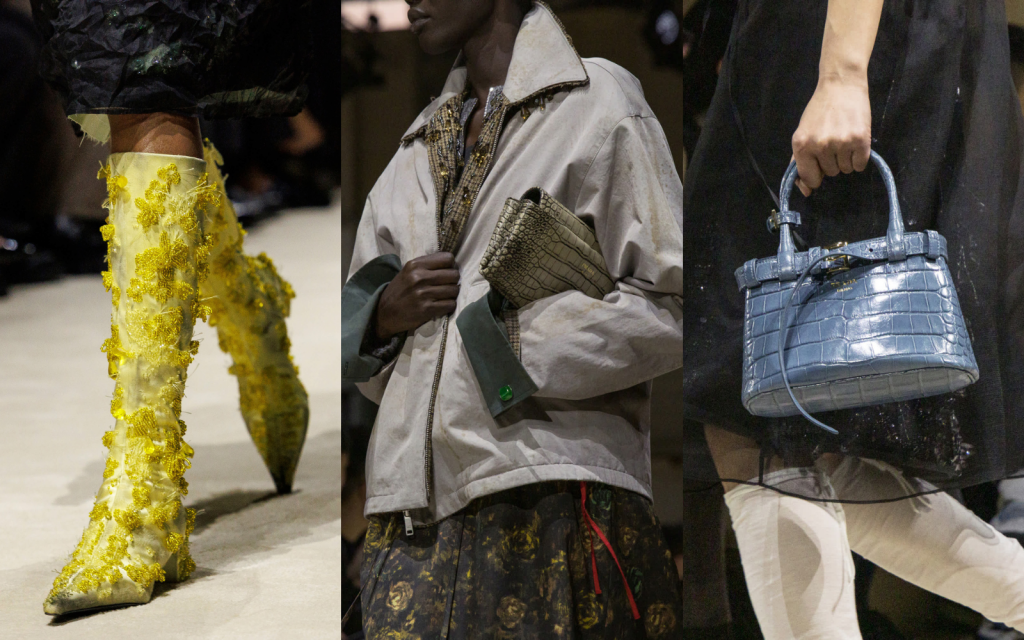
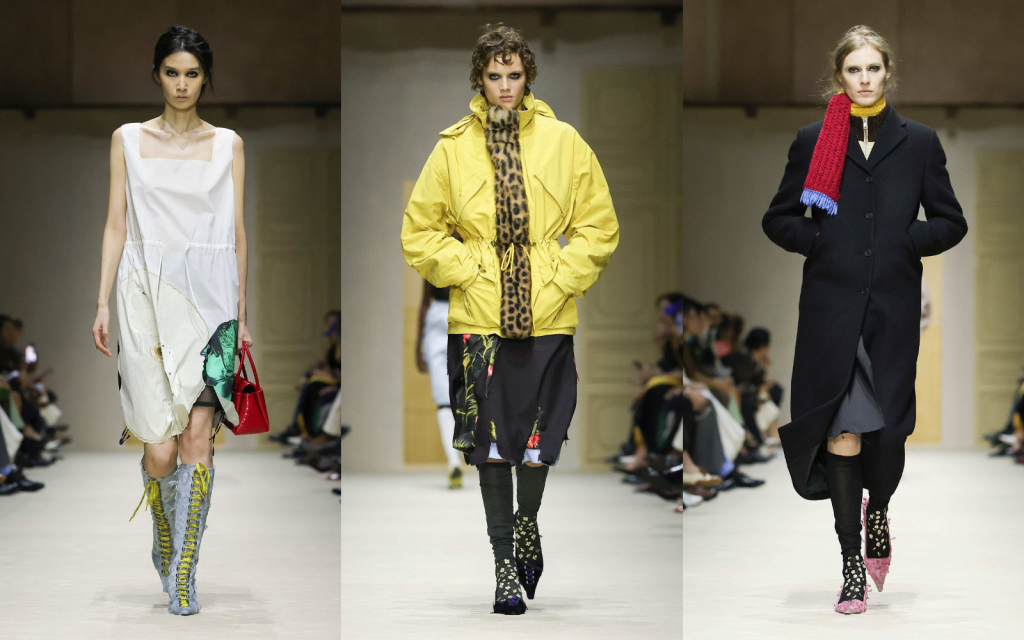
Looking closely, many garments in the collection appeared worn, even weathered.
Shirt cuffs were lightly soiled.
Hems were frayed, loose threads trailing behind.
Wax-coated Harrington jackets seemed to peel away, revealing houndstooth underneath.
Oxford shoes carried pre-scuffed heels, as if they had already walked miles before arriving on the runway.
This was not decay. It was life.
In an era where the second-hand and vintage markets are booming, consumers increasingly understand that clothing that looks too perfect can sometimes feel less interesting than pieces that carry a history.
Scars can give objects character.
Traces of time can make them feel real.
Prada and Simons were not simply producing new garments. Instead, they seemed to be creating clothes that looked discovered rather than newly made, as if someone had opened a long-forgotten closet and rediscovered a piece worth wearing again.
The Memory of Prada
Another layer of the show revealed itself to those deeply familiar with the Prada universe.
A floral print from a past season.
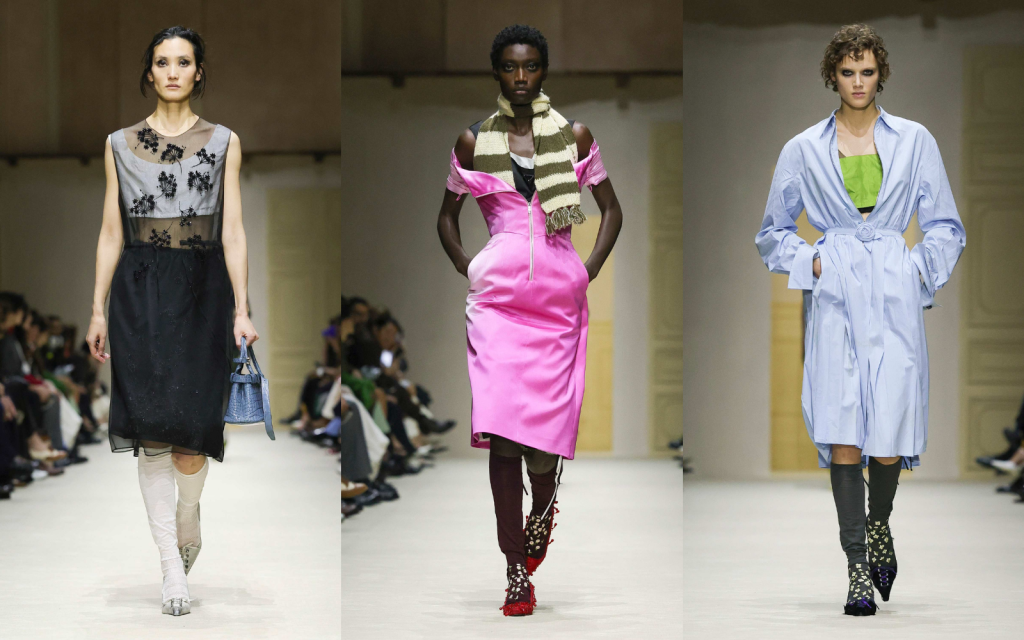
A shade of pink duchesse satin from another.
Loose, flower-embroidered socks.
The particular gesture of models clutching their coats close to their bodies.
These subtle details are what insiders often call “Miuccia-isms”, small signatures that quietly say: this is Prada.
In a fashion industry currently defined by constant turnover, creative directors changing frequently, brands producing more collections than ever, and social media accelerating everything, returning to one’s own archive may be a remarkably intelligent strategy.
Prada was not inventing a new narrative.
Instead, the house was excavating its own history, asking a simple question once more:
If Mrs. Prada were standing in front of this closet, how would she wear it?
Identity Built in Layers
On a deeper level, the show also addressed a central question of our time:
What is identity?
In an era where individuals constantly construct versions of themselves online, performing different roles as professionals, friends, partners, and public figures, identity rarely exists as a single, fixed layer.
It is instead a complex overlay of roles, memories, and contexts.
The act of stripping garments layer by layer on the runway therefore felt symbolic. It suggested that identity does not emerge fully formed.
It is assembled gradually.
Much like getting dressed.
The Intention of Mess
Of course, not everyone will love this collection.
For some, the dense layering and elaborate styling may feel deliberately messy. Certain outfits appeared intentionally mismatched. Others seemed almost on the verge of falling apart.
But perhaps that was precisely the point.
The world today is not orderly.
It is full of contradictions, instability, and rapid change.
If fashion is meant to reflect the reality we live in, perhaps it must occasionally embrace a certain degree of chaos.
The Small Pleasure of Dressing
Ultimately, the most compelling part of this show may not lie in theory or philosophy.
Instead, it lies in the gentle invitation Prada and Simons extend to the audience.
Why not tuck a simple poplin shirt into an embellished slip dress?
Why not wear a jacket that appears plain on the outside but hides crystal embroidery within?
Why not combine two garments that were never meant to meet?
The answer may not require complicated reasoning.
Simply because you can.
When Fashion Returns to Imagination
In a moment when fashion is increasingly measured through metrics: views, likes, engagement rates, and algorithmic velocity, Prada’s show served as a quiet reminder of something more fundamental.
Clothes are not merely products.
Fashion is not merely trends.
It is a space for imagination.
A place where we layer garments together, experiment, remove them, and begin again.
Like opening a wardrobe on a quiet morning,
and deciding who we want to be today.