
Reported by Manit Maneephantakun
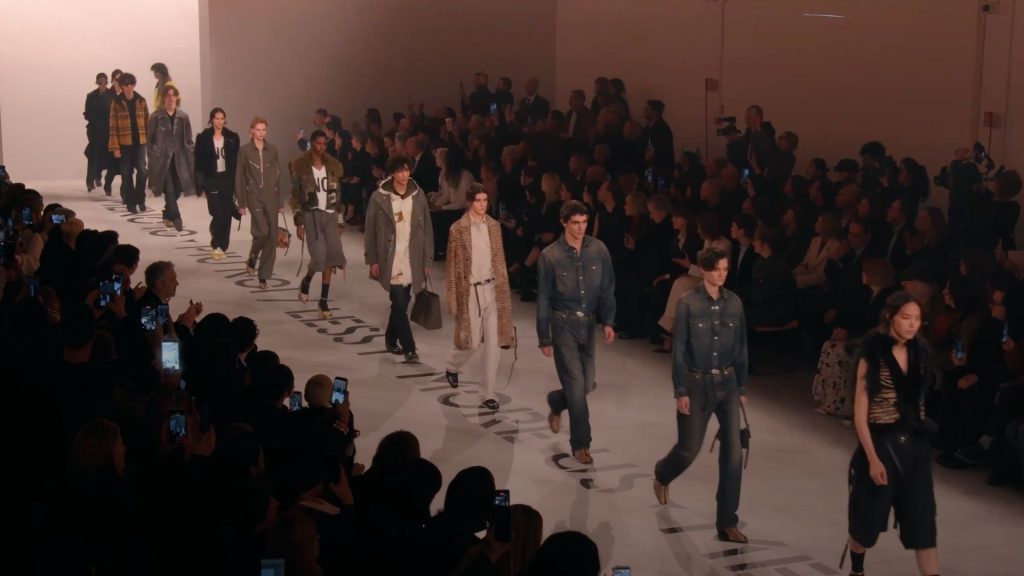
At a moment when many fashion shows are engineered to become “events” for the social media age, designed to deliver an instant visual memory, a gasp-inducing moment, or a single image ready to circulate millions of times online, the debut of Maria Grazia Chiuri as the new Chief Creative Officer of Fendi chose to move in almost the opposite direction. There were no flamboyant colors. No theatrical staging. And very little attempt to shock an audience within the seven minutes of the runway show.
Before the show began, the Roman designer offered a sentence that seemed to frame everything that followed: “I’m not an entertainment designer.” The statement may sound simple, but its implications run deeper. It reflects a way of thinking about fashion at a time when the industry is seriously questioning itself: what meaning do clothes still hold, beyond being content for screens? And as the lights slowly rose over the Milan runway, her answer began to unfold layer by layer.
The Return of a Designer Who Grew Up at Fendi
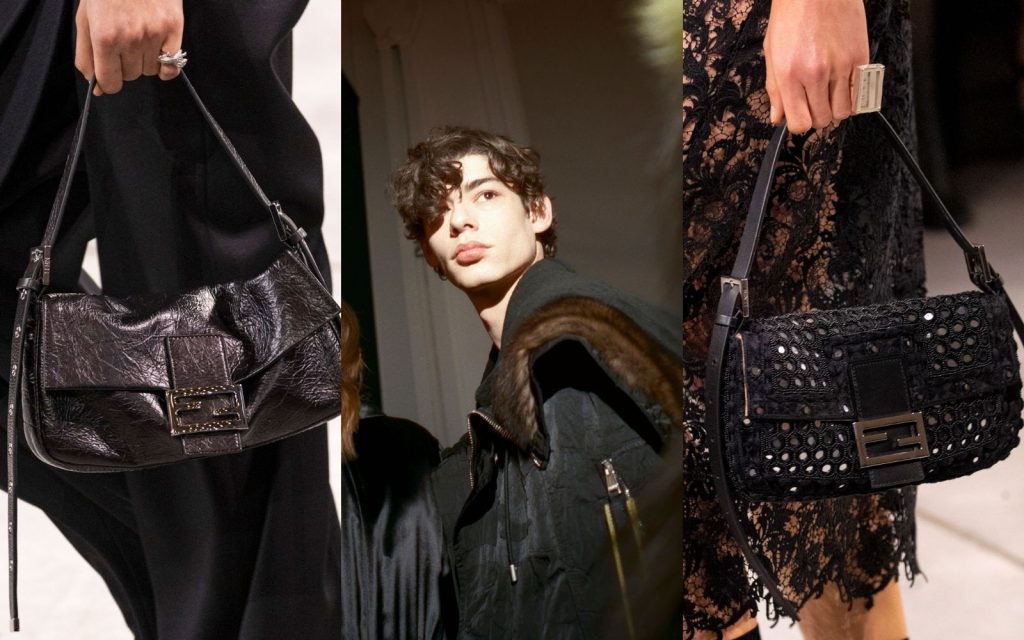
For Maria Grazia Chiuri, arriving at Fendi is not merely a career move within the LVMH ecosystem. In many ways, it is a return home. She first joined the house in 1989 at the age of just twenty-four, working within the accessories team at a moment when the Baguette bag was about to become one of the most defining icons of modern fashion. It was here that Chiuri absorbed what she often describes as the most important “school” of fashion in her life, a school without textbooks, but with teachers in the form of the five Fendi sisters.
Five women who collectively ran the Roman fashion house and established a model of collaboration rarely seen in fashion at the time. That early experience became the philosophical foundation of Chiuri’s debut show. Across the runway floor appeared a phrase in bold lettering: “Less I, More Us.” Or, in its most direct interpretation: less ego, more collective spirit. Backstage, Chiuri explained the idea with characteristic clarity: “I wanted to work on the collection with the same team for both men and women. We make a coat, we make a jacket, we make trousers. We just change the size, but it’s the same garment… My idea is to make the jacket that everyone desires.”
What sounds like a technical design note is in fact something larger: an attempt to redefine the identity of Fendi after a prolonged period of transition. Following the death of Karl Lagerfeld in 2019, after the experimental tenure of Kim Jones, and after the interim stewardship of Silvia Venturini Fendi, the house is clearly searching for a renewed sense of direction. Chiuri’s approach, however, is not to reinvent Fendi outright, but to reorganize the elements that already exist.
Black, and the Quieting of Fashion’s Noise
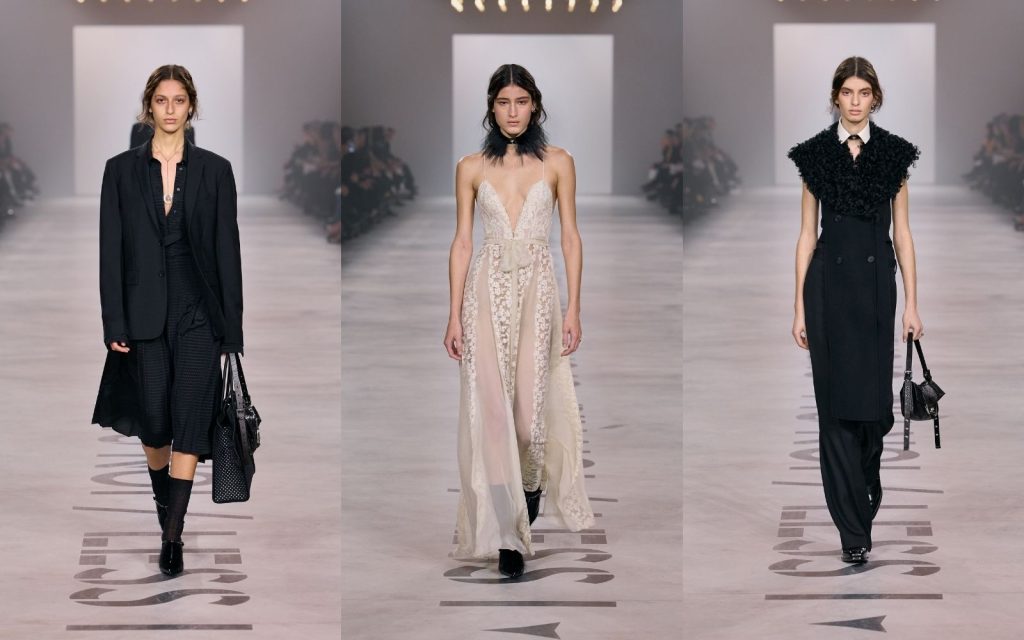
The first thing the audience noticed was color, or more precisely, the disappearance of it. Much of the collection was built from an intentionally restrained palette: black, ivory, beige, with a single red dress. For a brand long associated with playful Italian glamour, the dominance of black felt like a quiet yet deliberate shift. Chiuri explained it with characteristic pragmatism: “The color people really use is black. Blue, ivory, maybe a touch of red. That’s the reality. We have to be pragmatic if we want to move this industry toward the future.” The restrained palette effectively reduced visual noise, allowing what she truly wanted to highlight to emerge more clearly: silhouette.
Searching for the Shape of Fendi
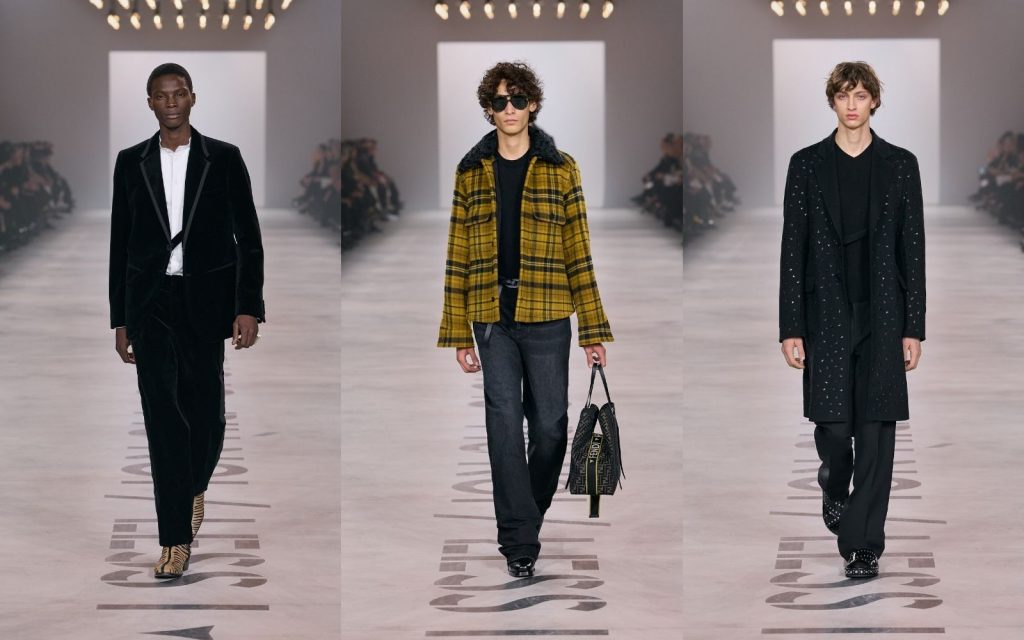
Fendi has always possessed a powerful language of materials fur, leather, intarsia craftsmanship, the heritage of selleria leatherwork. Yet what Chiuri believes has never been fully defined is the silhouette of the house. Her response was to begin with the most fundamental pieces of a wardrobe: jackets, coats, skirts, trousers. These garments appeared on both men and women, as part of what she described as a shared wardrobe. The same coat. The same jacket. Simply adjusted in proportion. Rather than erasing gender distinctions, the gesture asks a different question: what kind of clothing does everyone desire to wear?
Fur, Memory, and the Emotional Life of Objects
The boldest move in the collection, however, revolves around the material most closely associated with Fendi: fur. In recent years, the brand has softened its emphasis on fur due to shifting public sentiment in certain markets. Chiuri’s response is neither denial nor retreat, but reinterpretation. Through a project titled Echo of Love, clients are invited to bring existing furs to the Fendi atelier, where they can be redesigned into new pieces. The idea is not only about sustainability. It is about what Chiuri calls “emotional durability.” She described it in deeply personal terms: “I have pieces that are very important to me because they remind me of certain moments in my life. The relationship we have with objects is very personal.” In a fashion culture often driven by relentless novelty, the notion reframes luxury itself as something closer to memory.
Conversations with Fendi’s Past
Although Chiuri frequently invokes the word “us,” the house’s history remains present throughout the collection in subtle ways. White leather collars worn like chokers instantly recalled the signature shirts of Karl Lagerfeld. Meanwhile, collaborations with artists such as Mirella Bentivoglio and Sagg Napoli reflect Chiuri’s longstanding belief in dialogue between fashion and contemporary art. Phrases appearing on garments and fur football scarves, such as “Rooted but not stuck”, seemed to speak simultaneously about Rome, about the heritage of the house, and about its future trajectory.
A Beginning Without Urgency
As fashion shows go, this collection may not have delivered the explosive moments that social media tends to crave. There were no dramatic twists. No viral spectacles. Instead, there were impeccably tailored jackets, quietly confident coats, velvet dresses with echoes of the 1920s. Clothes that seemed to speak more to the wearer than to the camera. And perhaps that is precisely what Chiuri intended from the beginning. After the show, she reflected on the start of this new chapter with disarming simplicity: “When people welcome you so warmly, you feel that you want to give something back. I want to celebrate the heritage of this brand and the values I learned here.” It may still be too early to predict where Fendi’s next era will lead. But one thing is clear: Maria Grazia Chiuri has not attempted to begin with noise. Instead, she has begun by quietly rearranging the elements of the house, to see whether, once placed in the right order, the DNA of Fendi might reveal itself again. And perhaps that is the truest meaning of Less I, More Us.