

In an era when travel is no longer defined solely by beautiful rooms, breathtaking views, or premium services, travelers are increasingly seeking experiences with deeper meaning. Global hospitality brand InterContinental, under the IHG umbrella, has therefore elevated its role from a provider of accommodation to a cultural connector—linking travelers with the spirit and stories of each destination. This vision comes to life through its global campaign “Doors Unlocked 2025,” which curates exceptional experiences in major cities around the world, inviting guests to “unlock” new perspectives beyond conventional tourism.
One of the first destinations of this campaign that #legend_TH had the opportunity to experience was InterContinental London Park Lane during London Fashion Week in September 2025. Later that same year, in December, the journey continued to Phuket, Thailand, marking the final destination of the campaign. In collaboration with InterContinental Phuket, we explored Thailand Biennale, Phuket 2025, the country’s fourth international contemporary art biennale, up close.
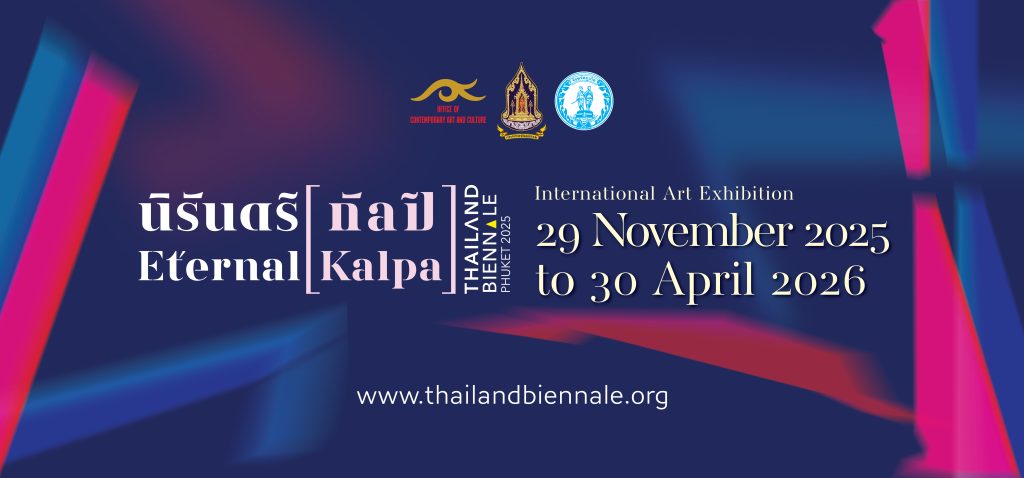
Thailand Biennale, an international contemporary art exhibition held biennially in rotating locations, has this time transformed Phuket from a world-renowned tourist destination into a new artistic landmark of Asia. Featuring works by more than 65 leading artists from 25 countries, the biennale unfolds under the theme “Eternal [Kalpa]”, turning the island into a space for art, inquiry, and reflection on “coexistence” amid global crises—environmental and social alike—toward discovering new pathways for survival.
During a half-day art tour, teams from the hotel, PR representatives, and the Thailand Biennale guided us to four major exhibition venues across Phuket, allowing us to closely experience more than ten highlight works. In this article, we share selected pieces, beginning at Pearl Cinema, Phuket’s first movie theater, now transformed into a three-dimensional museum.
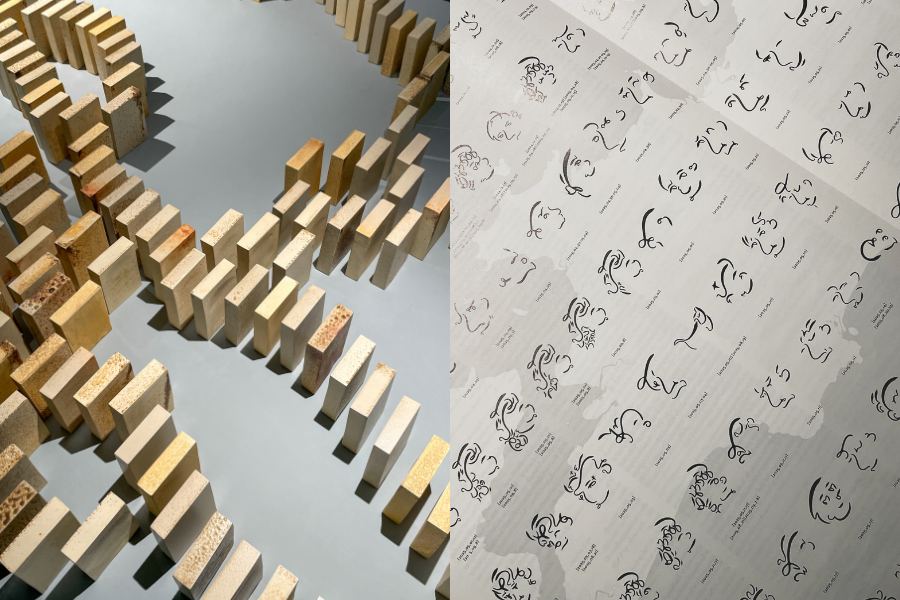
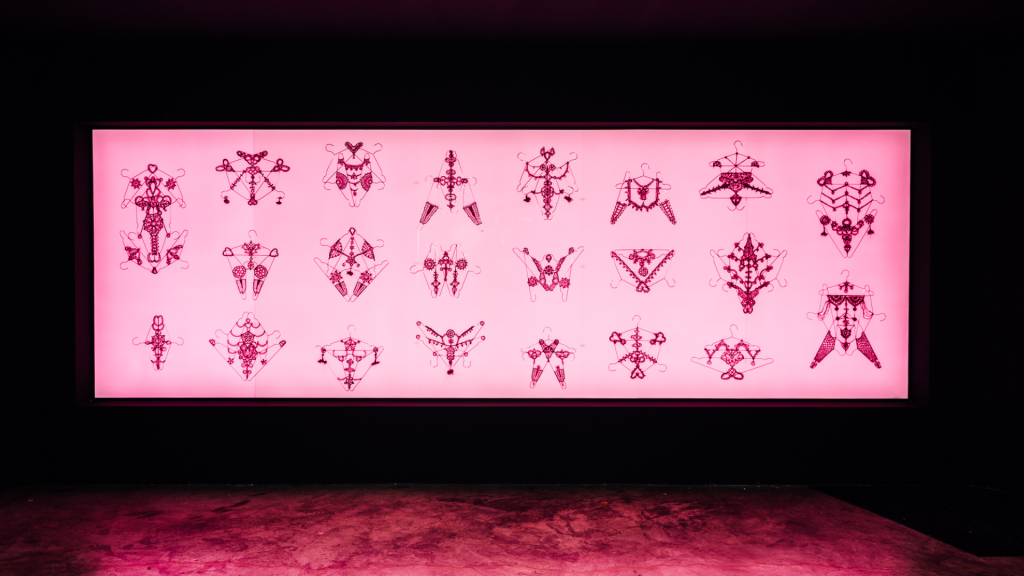
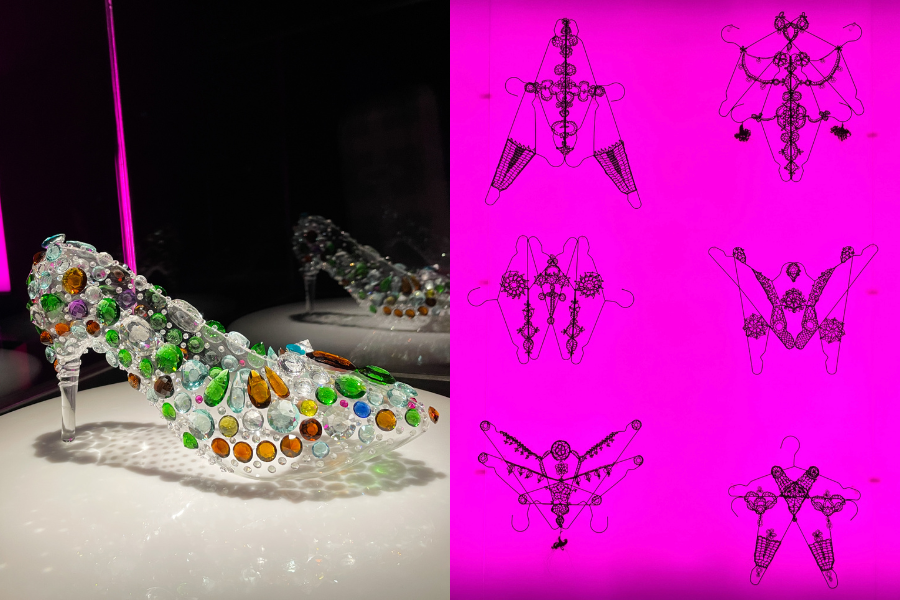
We were welcomed by the first artwork, “Phuket, Nice to Meet You,” by artist Santi Lawrachawee, who personally greeted us and shared the story behind the work. Comprising ceramics, printed matter, and video tapes, the piece serves as a travelogue documenting Phuket’s diverse lifestyles and cultures. We then moved on to works by Imhathai Suwatthanasilp, including “Ella Petchara Dazzling Miracle Heel,” a sparkling glass slipper crafted from marine waste, and “Foxy Diva Hot Pink Lacegina Queen,” a textile work made from wigs. These pieces convey the lives of transgender show performers in a dazzling world of lights—revealing the vulnerability that remains once the curtain falls, within the constraints of societal norms.
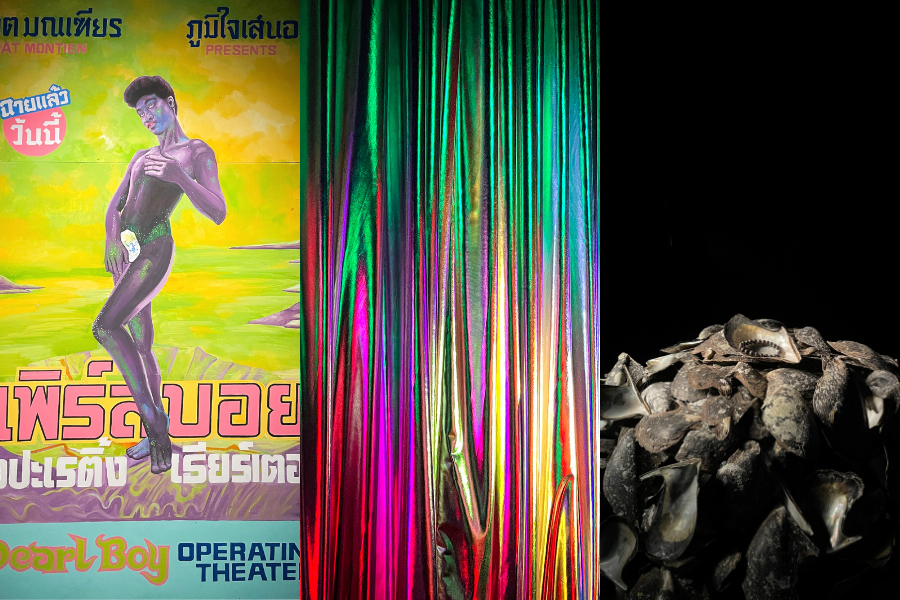
Next was “Pearl Boy Operating Theatre” by Oat Montien, a queer artist and founder of an LGBTQ+ art space in Thailand. His work explores Phuket through the lens of nightlife entertainment venues and pearl farms, exposing the stark contrast between pleasure and pain within the entertainment industry.
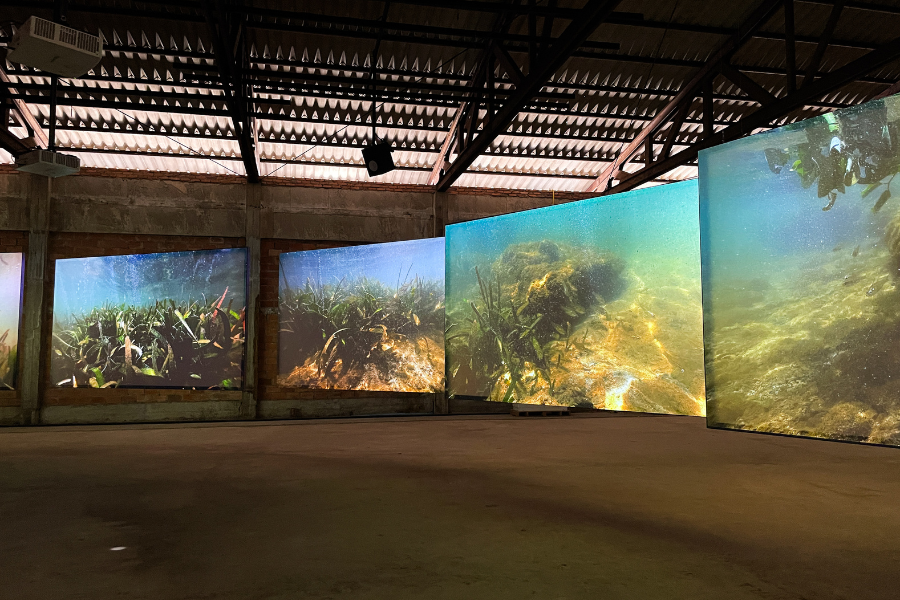
Just a few steps away lies Pearl Bowl, Phuket’s first bowling alley and once a central hub of entertainment. This second venue housed “Cherishing the Sea Forests,” a collaborative work by Alex Monteith, Maree Sheehan and Apiwat Thongyoun. Through imagery and sound recorded around Phuket, the Surin Islands, and the Similan Islands, the piece reflects on the relationship between humans and the sea. It immerses viewers in the beauty of nature while questioning the threats posed to marine ecosystems by human-driven capitalist structures.
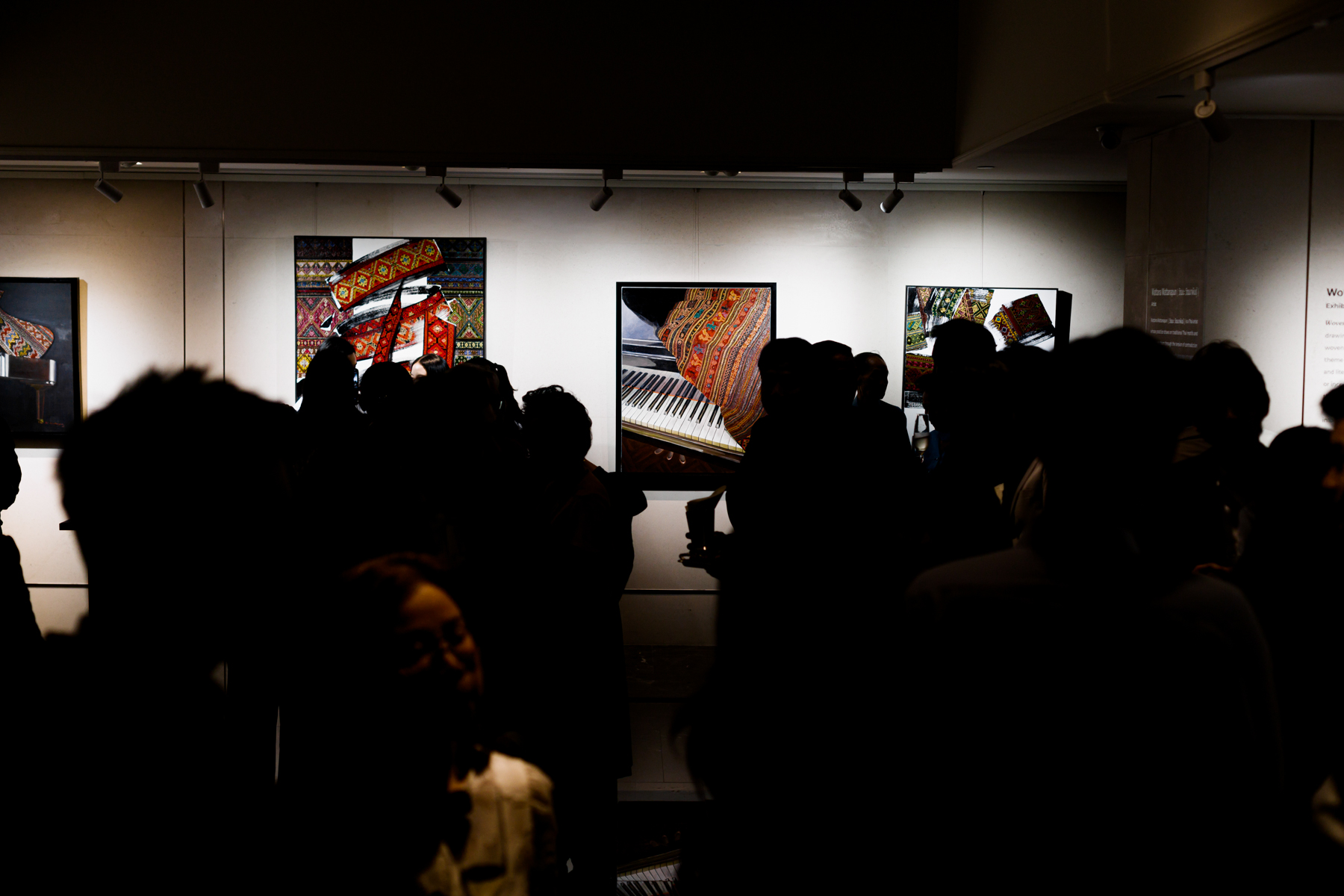
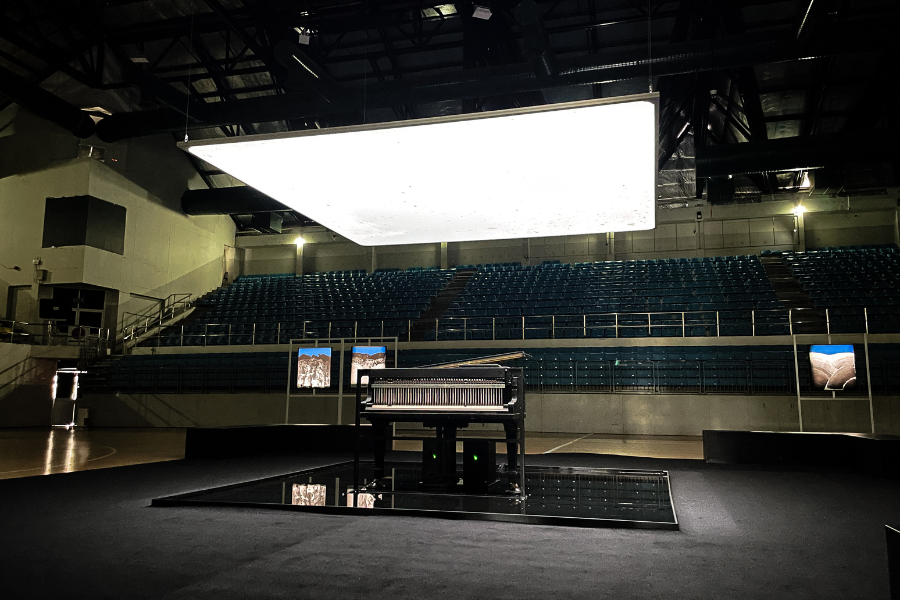
Leaving Phuket Old Town, we traveled onward to the 4,000-seat Gymnasium at Saphan Hin Sports Center to encounter “IS YOUR TIME” by Ryuichi Sakamoto and Shiro Takatani. The installation surrounds viewers with rhythms of sound, light, and a piano standing solemnly at the center of the vast hall. It is considered one of the most powerful works of the biennale. The piano was discovered by the late, world-renowned Japanese composer Ryuichi Sakamoto in a school gymnasium following the Great East Japan Earthquake in 2011, and was later connected to memories of the 2004 tsunami in Thailand—transforming the instrument into a vessel that weaves together memory, loss, and time.
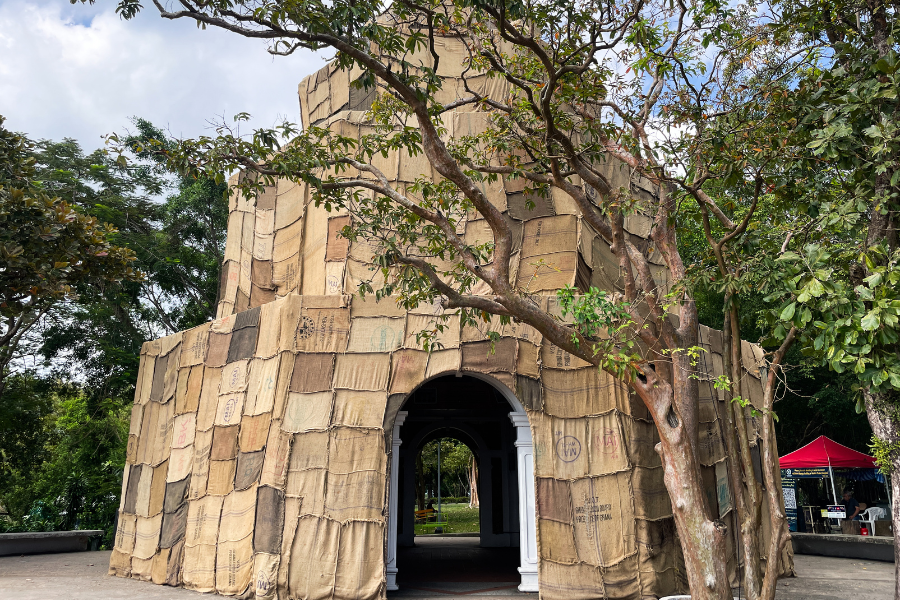
The final destination of the day was Khao Rang Viewpoint, overlooking the expansive cityscape of Phuket, where “Silent Memories” by Ibrahim Mahama stands. Mahama transformed ordinary burlap sacks into a monumental surface that envelops the 100-Year Memorial Hall, turning it into an archive of collective labor memory. Each piece bears traces of use—stamps, stains, and frayed seams—each telling stories of the past. Installed in front of countless visitors, a space once symbolizing authority is reimagined as a landscape of healing and remembrance.