

D(io)R. Strange How Jonathan Anderson Made Dior Curious Again
Reported by Manit Maneephantakun
If Dior Winter 2026 were to be explained in the simplest possible way, it would be this: Dior has stopped standing at a distance from history—and has chosen instead to walk straight into it. Under the direction of Jonathan Anderson, history is no longer a sacred monument to be preserved behind glass. It becomes raw material—something to be tested, questioned, played with, and reinterpreted through contemporary instinct.
“I don’t want normality,” Anderson said before the show. This was not a headline-friendly slogan, but a precise description of his method. He is not rejecting the past, not dismantling structure, and not chasing novelty for novelty’s sake. Instead, he uses “abnormality” as a generative force—to make fashion feel alive again: with character, emotion, and forward momentum.
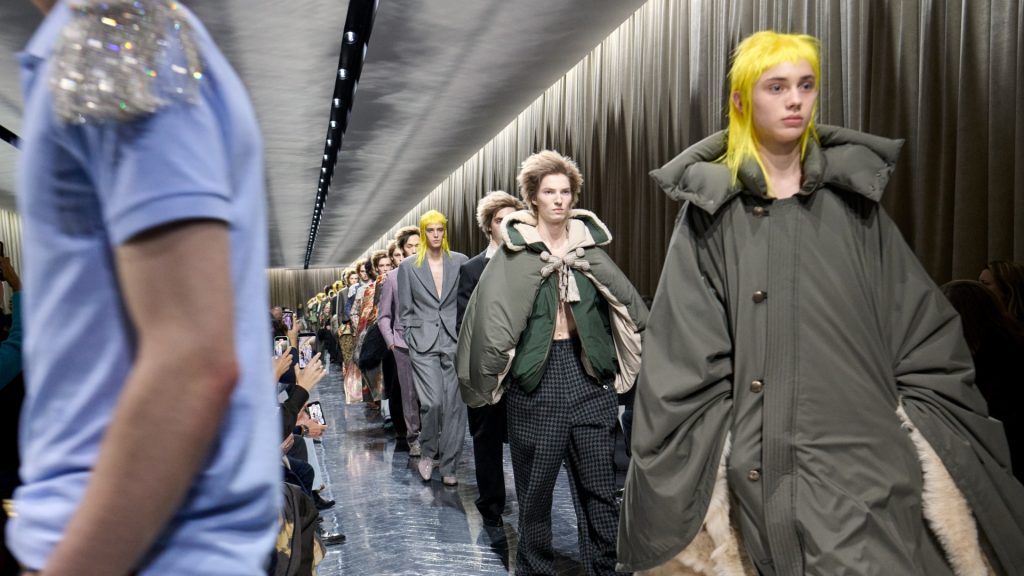
The signal was already clear before the first model stepped onto the runway. The electric yellow wigs and deliberately disheveled short hair created by Guido Palau, and the behind-the-scenes visuals captured by filmmaker Luca Guadagnino, made one thing obvious: Dior in this era would not repeat formulas that once worked. It would question them—openly, confidently, and without deference to expectation.
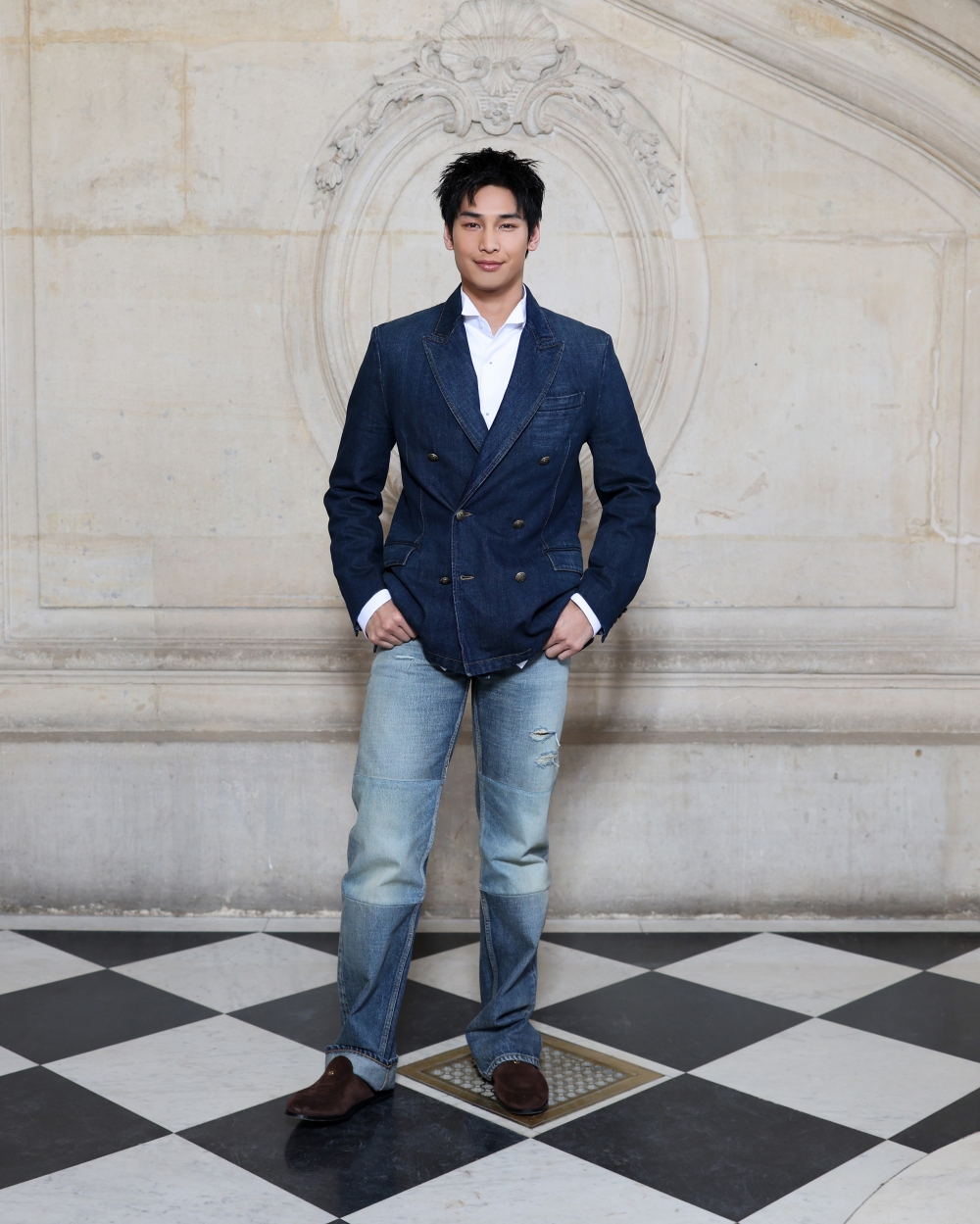
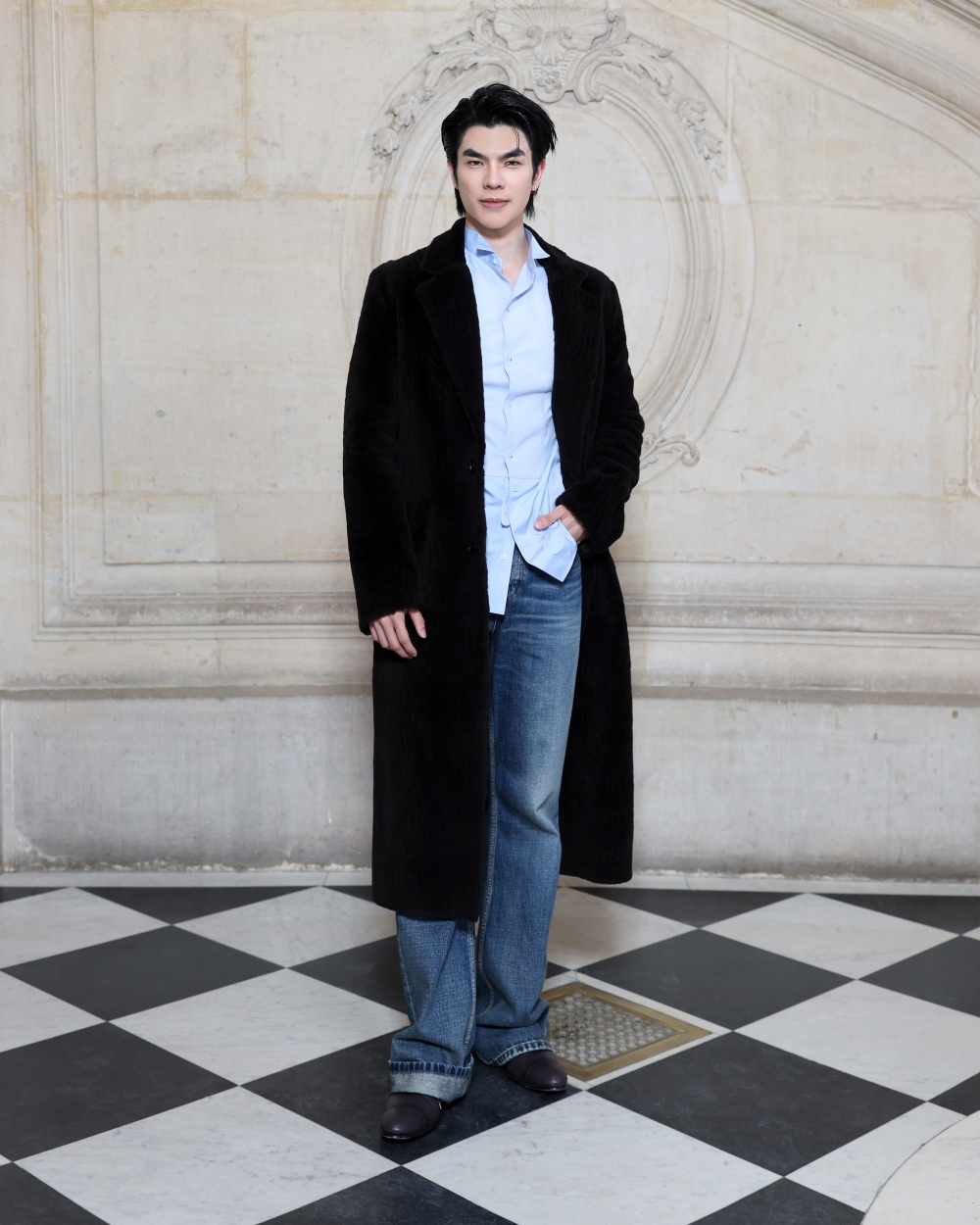
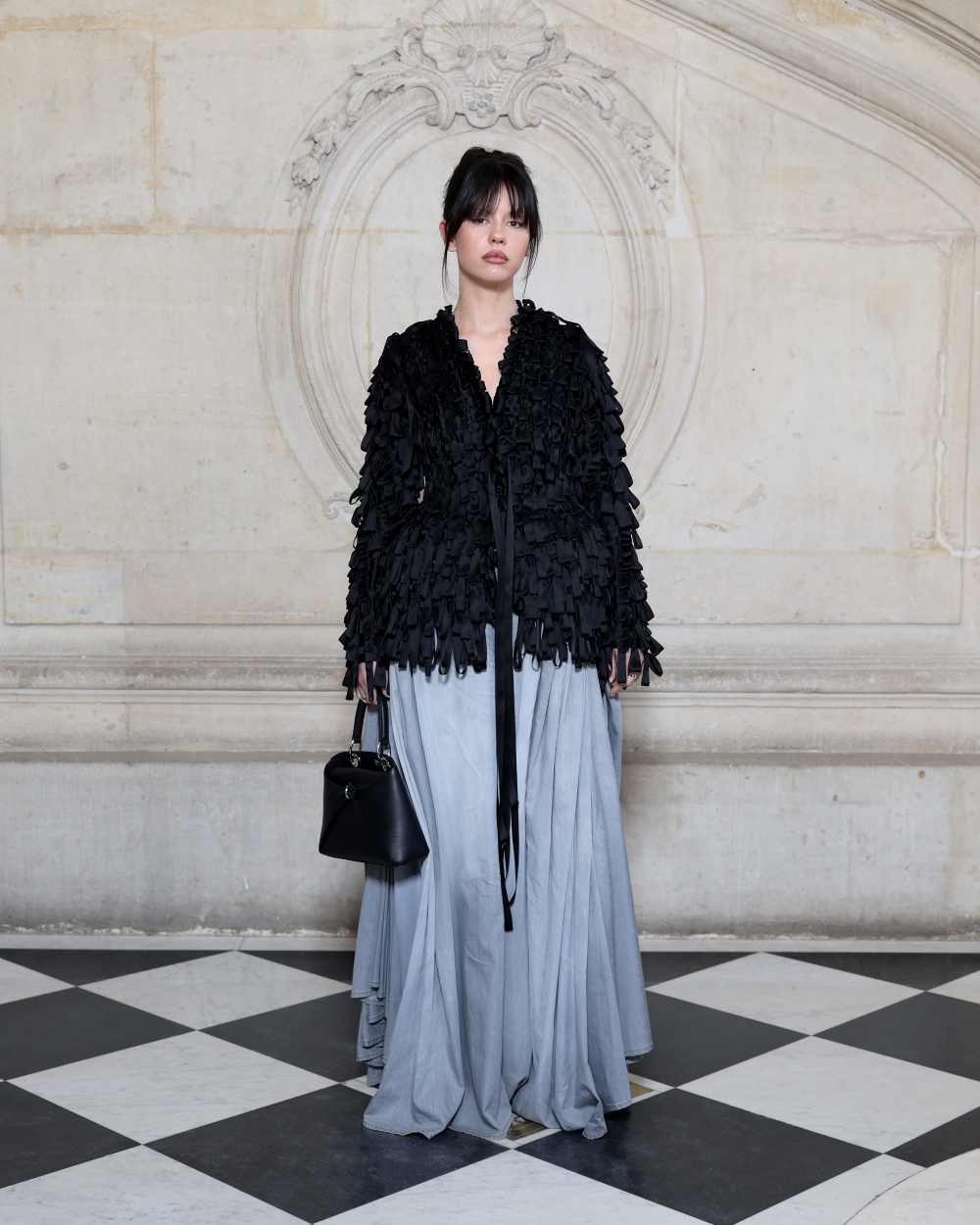
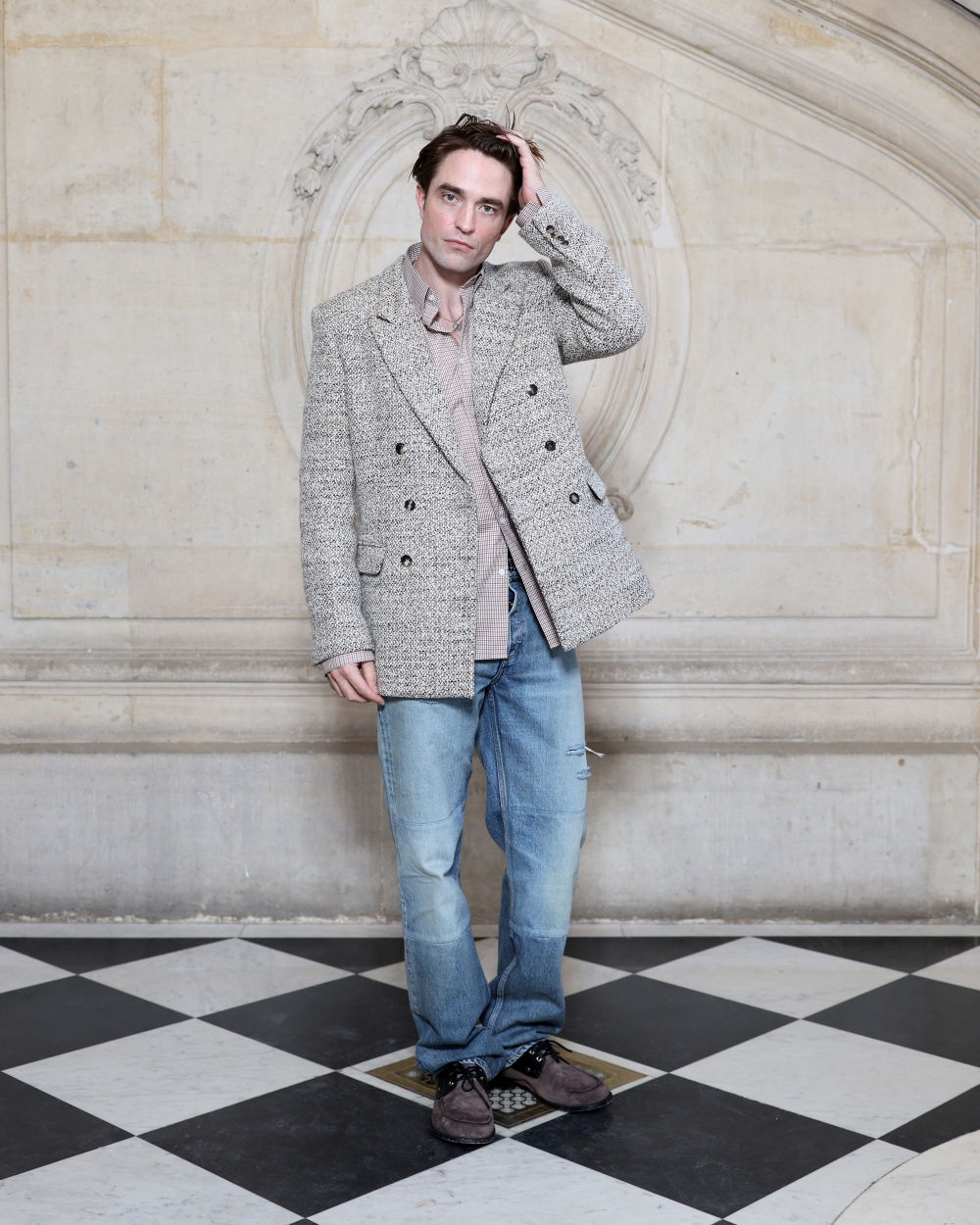
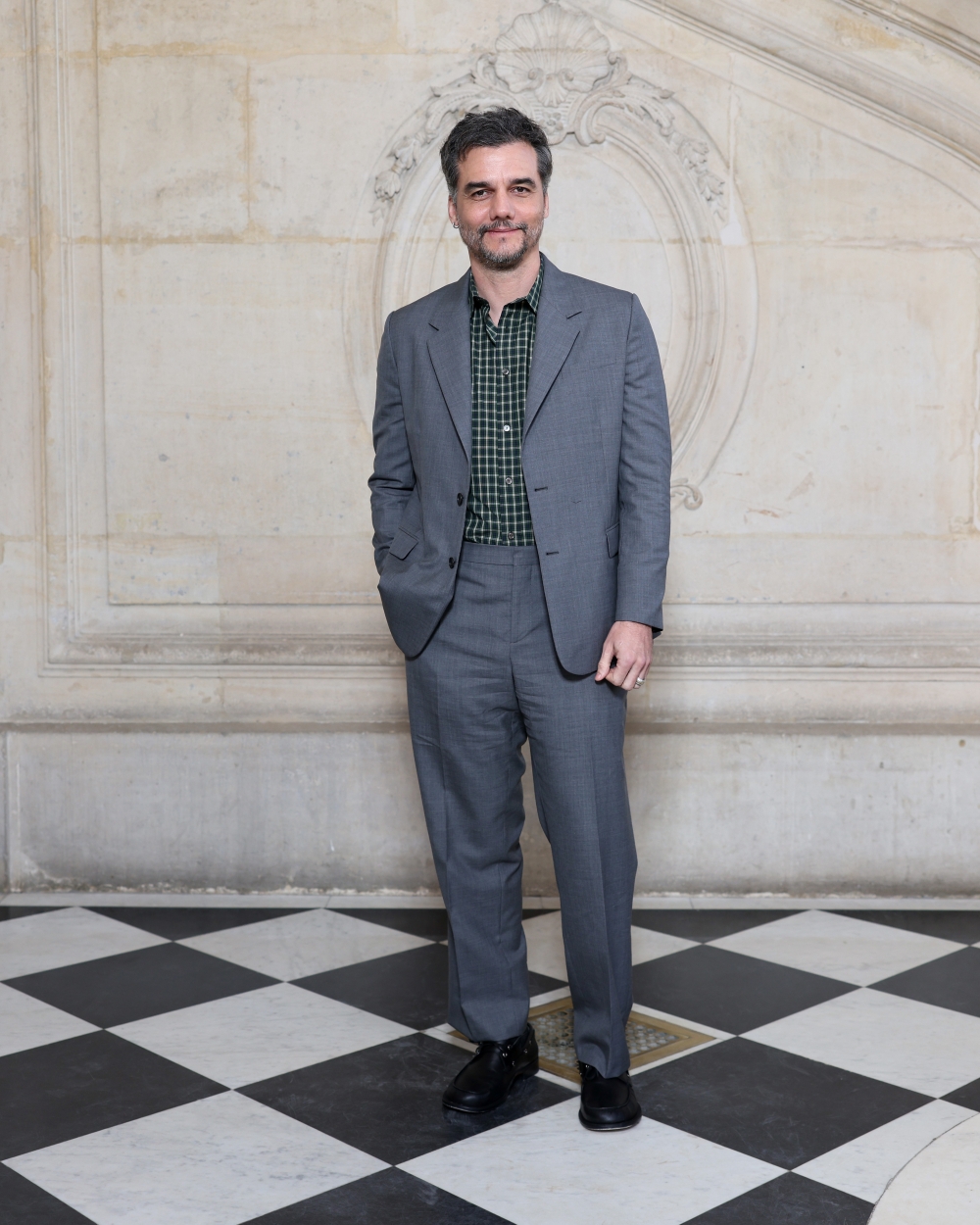
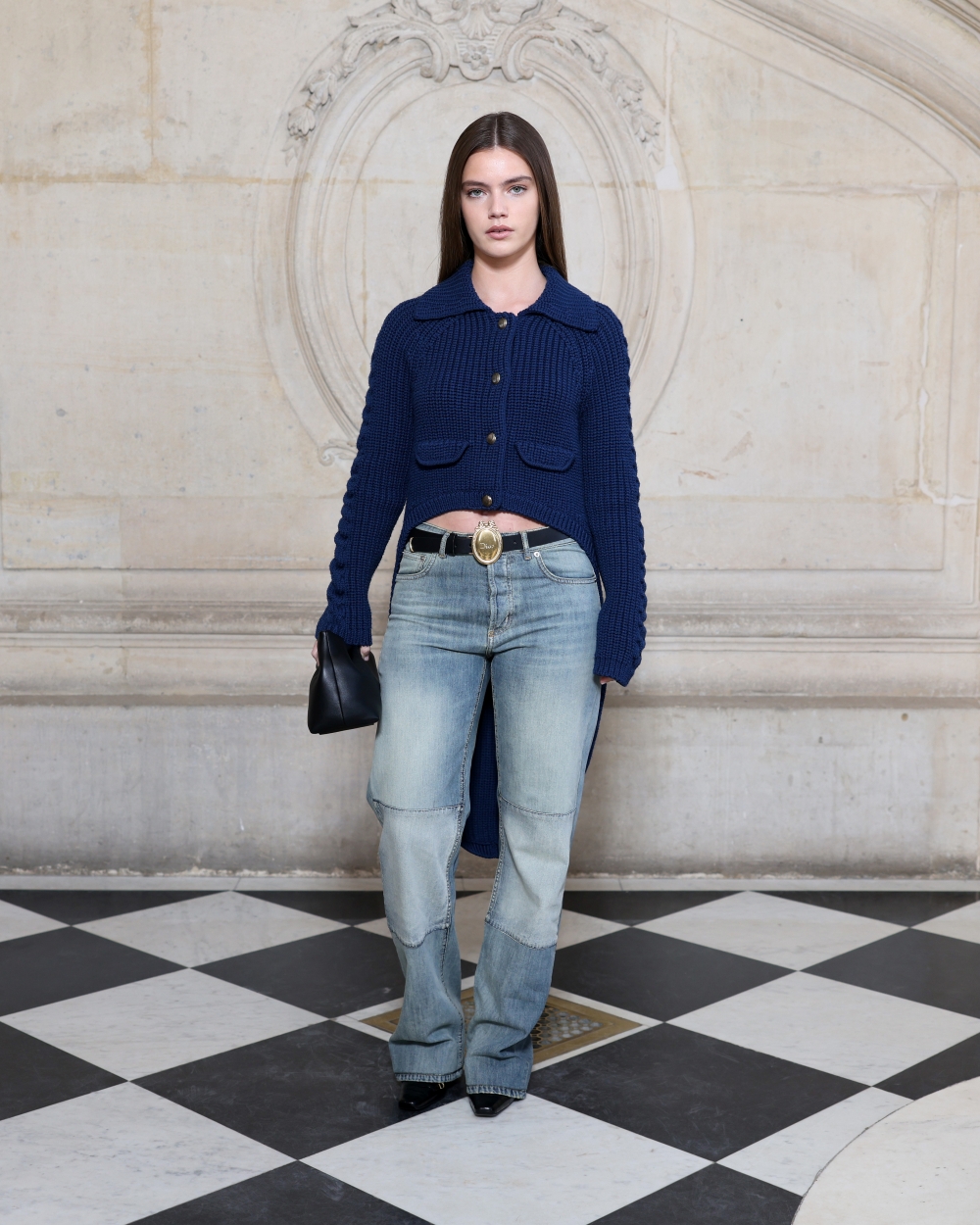
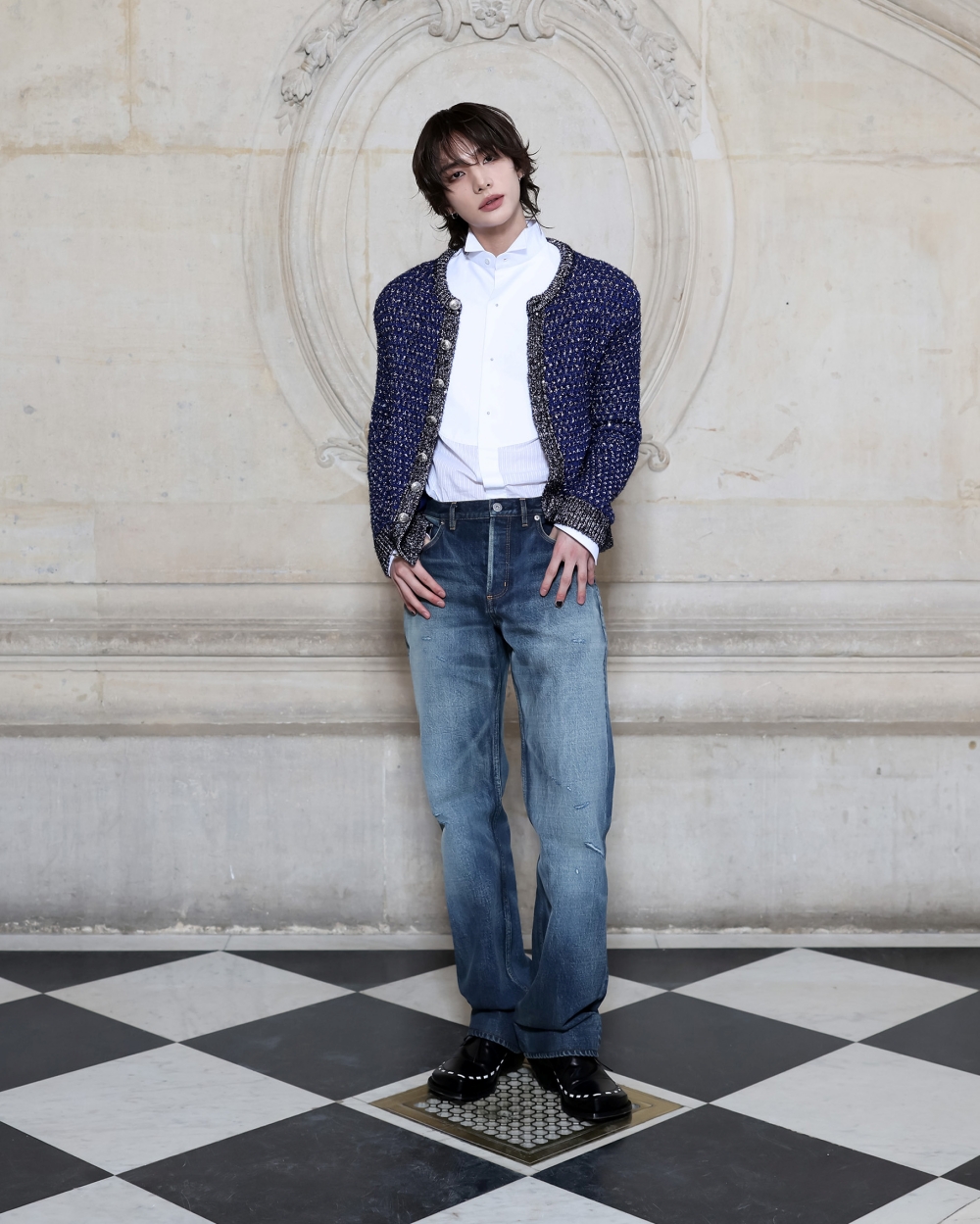
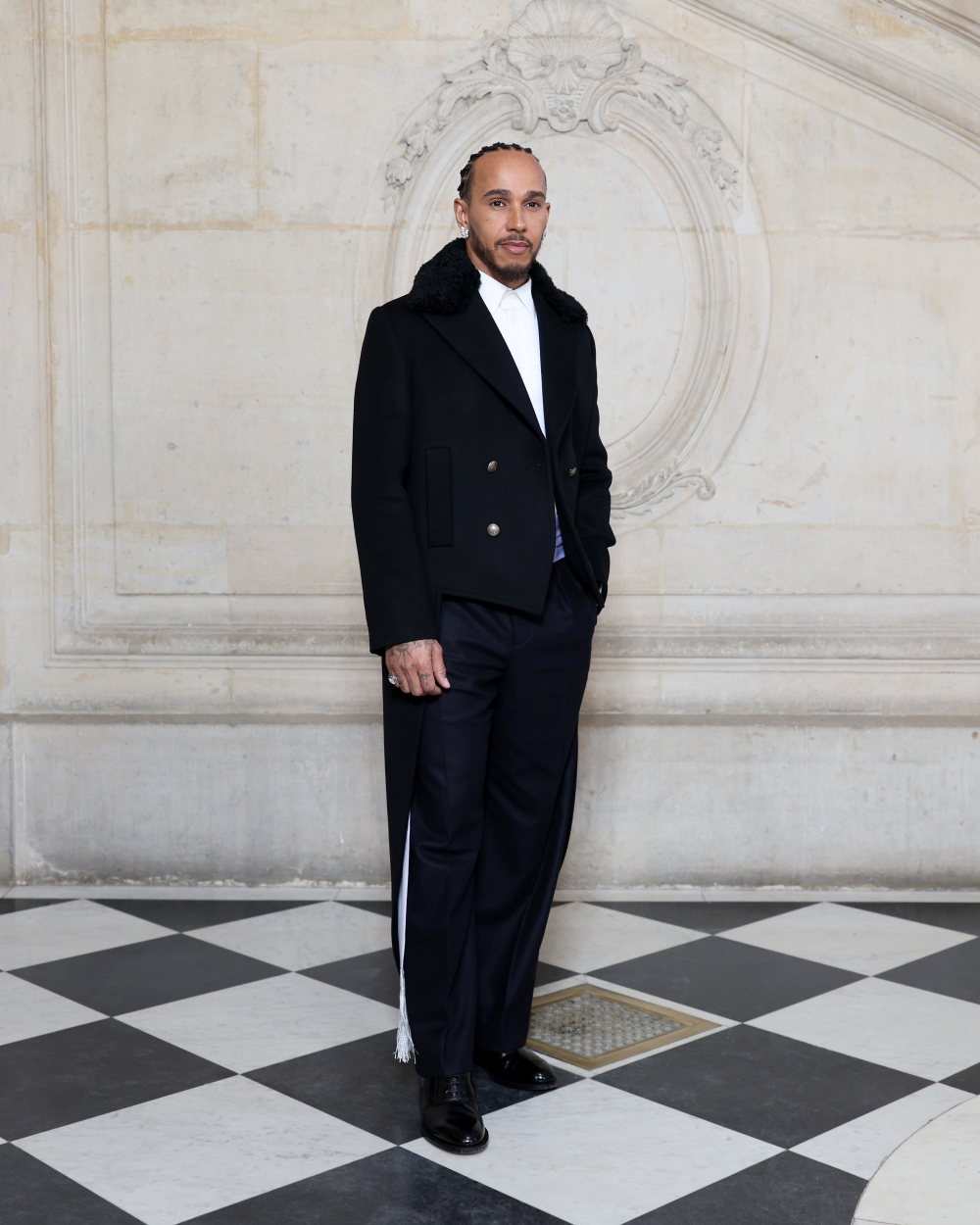
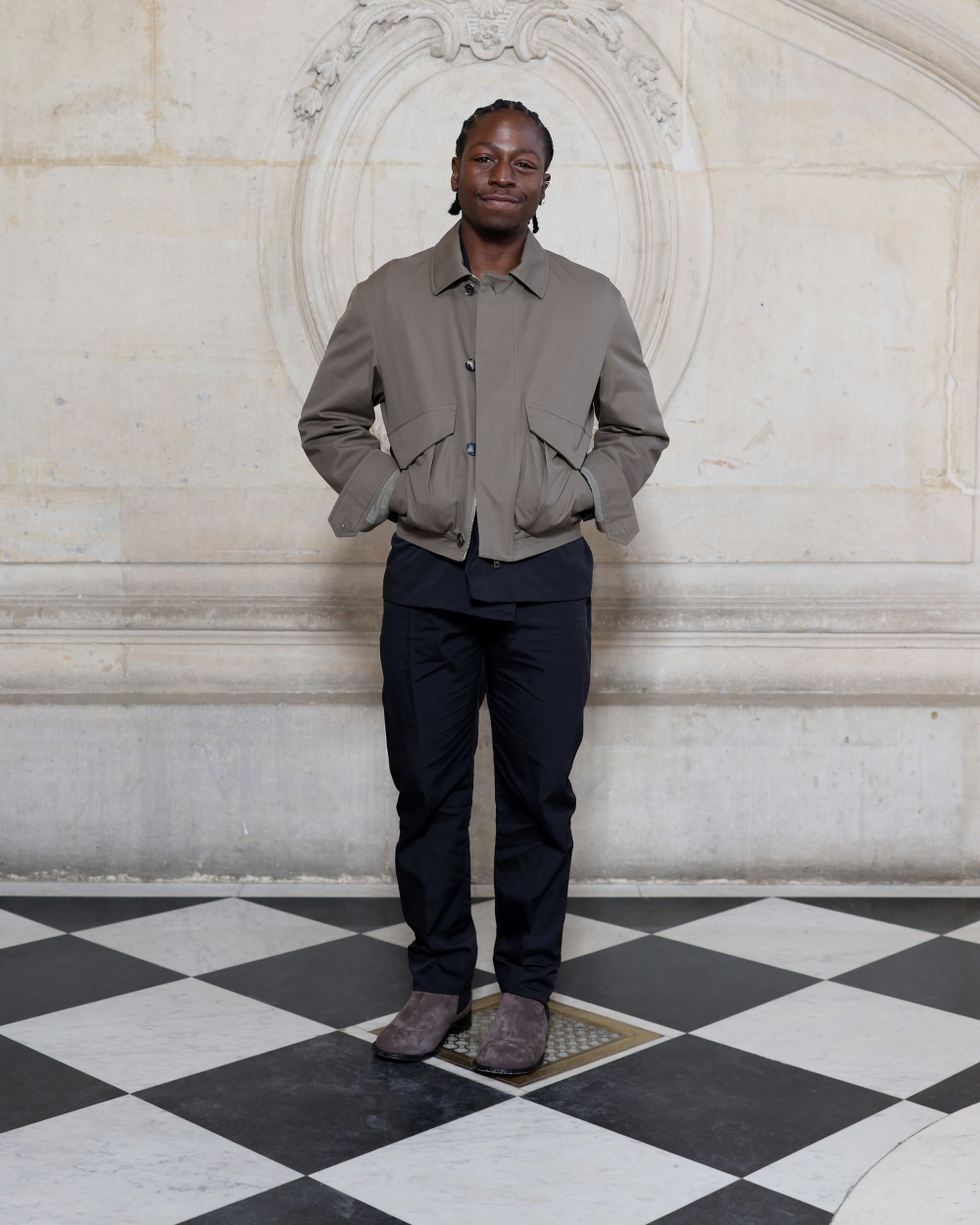
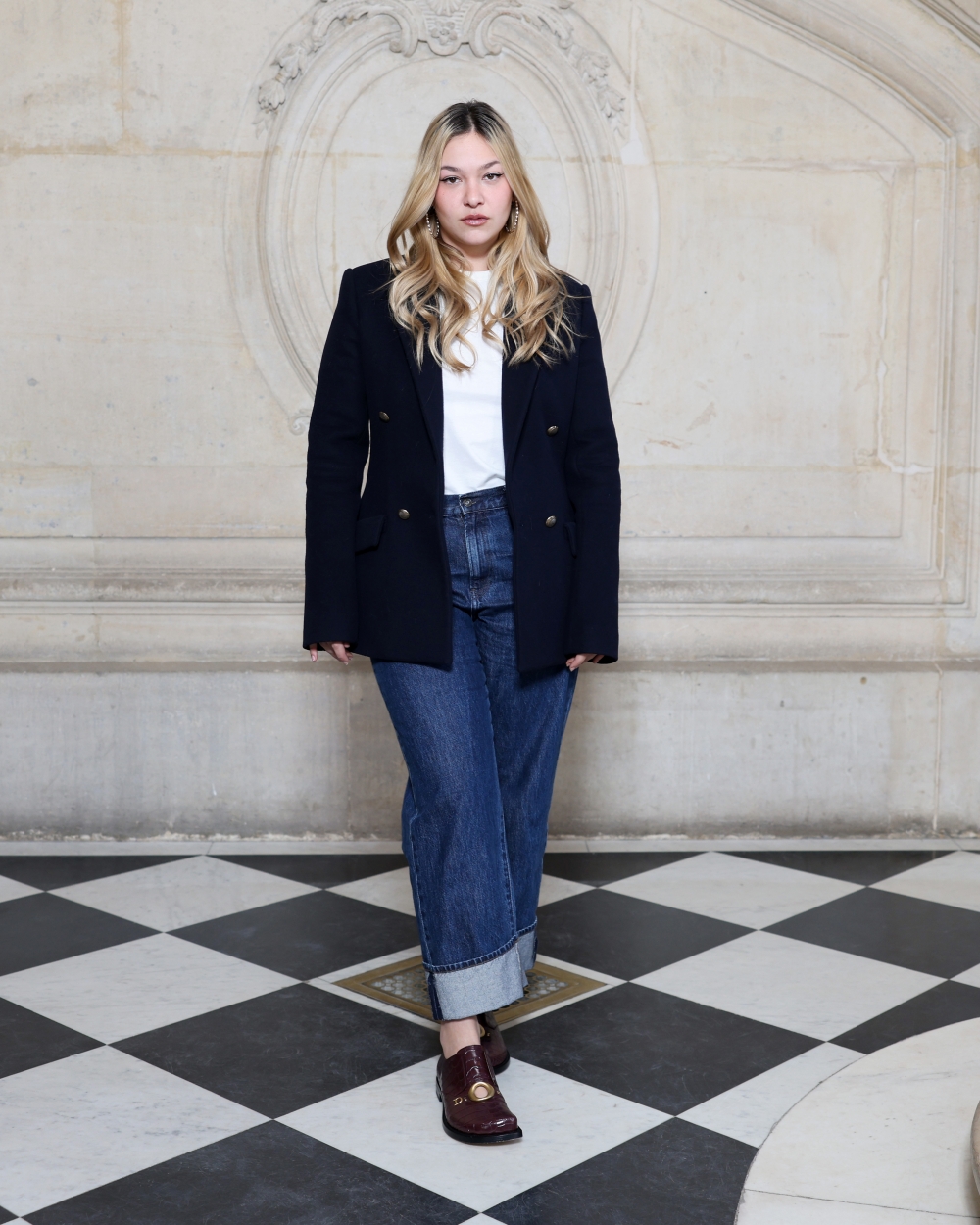
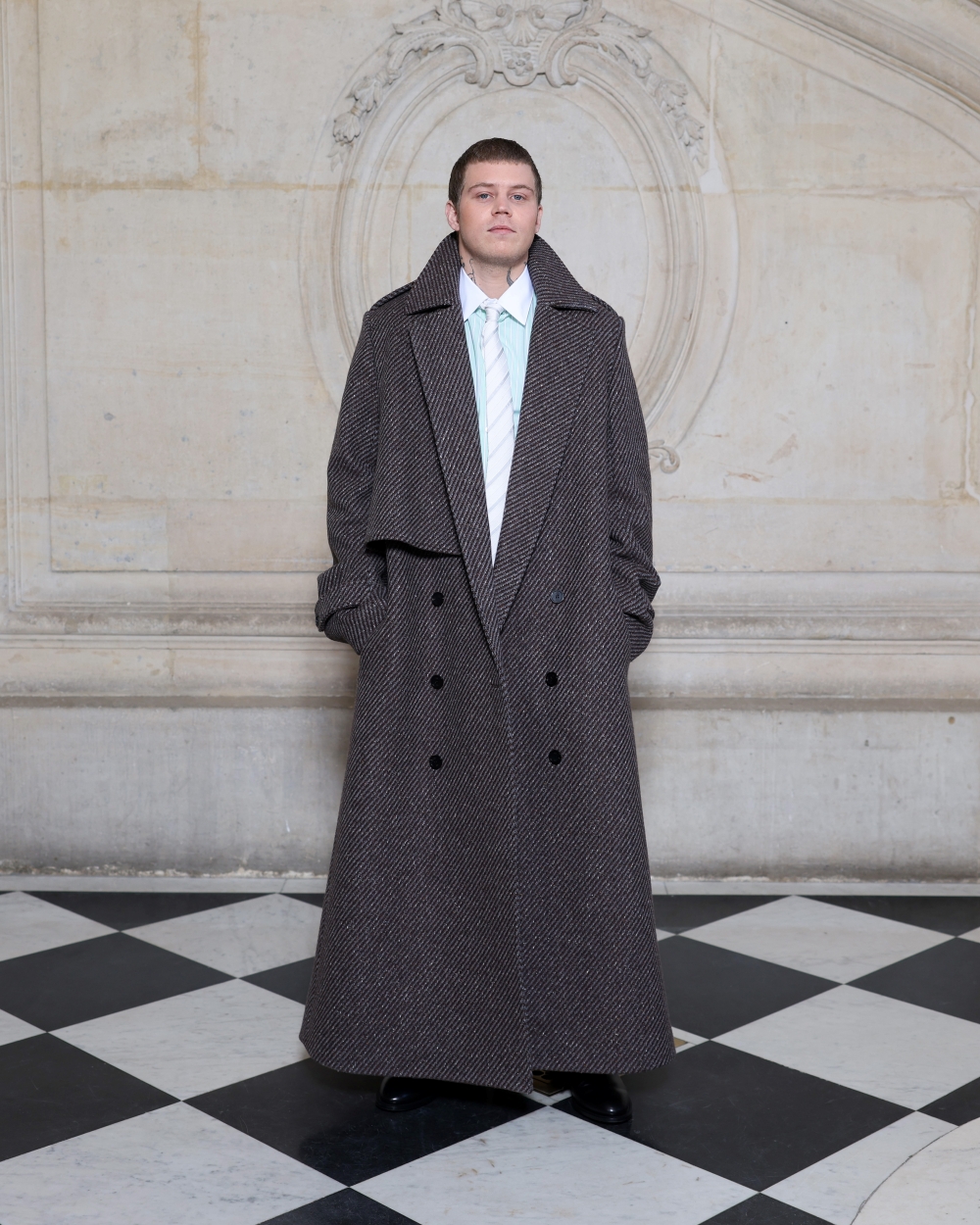
At the core of Winter 2026 lies a process of “collecting.” As Anderson explains:
“My way of working is collecting things or experiences along the way, and then letting them slowly infiltrate the design process.”
This is why the collection does not operate around a single theme. Instead, it feels like an assembly of fragments—elements that seem incompatible at first, yet form a coherent cast of characters with their own internal logic.
The story begins quietly on the pavement outside 30 Avenue Montaigne. Anderson noticed a small mosaic plaque set into the ground—an image of a woman in a yellow dress, bearing the name Paul Poiret. Poiret once had his boutique just steps away and was instrumental in establishing the area as the epicenter of haute couture. He was the designer who freed women’s bodies from corsetry, believed in fluid silhouettes, and fused influences from North Africa, the Middle East, and East Asia into early 20th-century Parisian fashion.
That small discovery became a conceptual spark. From it emerged a new Dior archetype—the “aristo-youth” imagined by Anderson. These characters move through Paris like modern-day flâneurs: unhurried, purposeless, guided by instinct rather than destination. Their styling—spiked yellow hair, embroidered epaulettes, and an air of disordered luxury—does not resemble museum-like heritage. It becomes a living form of eclectic opulence, breathing on the streets of contemporary Paris.
In concrete terms, Anderson posed a simple question:
“What would happen if all of this met Christian Dior?”
He answered it by acquiring an unworn Paul Poiret dress from 1922. That garment became the conceptual anchor for the opening three looks. The upper portions were reinterpreted by the Dior ateliers and paired with contemporary slim-fit jeans, Dior-buckled belts, and D-toed Cuban-heeled reptile boots. The result was not nostalgia, but historical continuity made present—history reactivated rather than reproduced.
Another major current in the collection comes from Anderson’s engagement with contemporary culture. He speaks of meeting the musician Mk.gee, which led him to think about youth, identity, and “character.”
“I was trying to work out how these people would exist together, as a new kind of radical,” he said.
That thinking materialized as collisions of eras: double-breasted jackets referencing the 1940s but cropped to disruptive proportions; early-1960s tailoring shrunken to expose the hipbone; tailcoats transformed into knitwear; ordinary crewneck sweaters stretched to ankle length. These are not historical quotes—they are temporal distortions.
“For me, Dior menswear is about tailoring,” Anderson explains.
“But the question is how to play with it to find new shapes. I don’t want mechanical repetition. Not seventy looks that are all the same.”
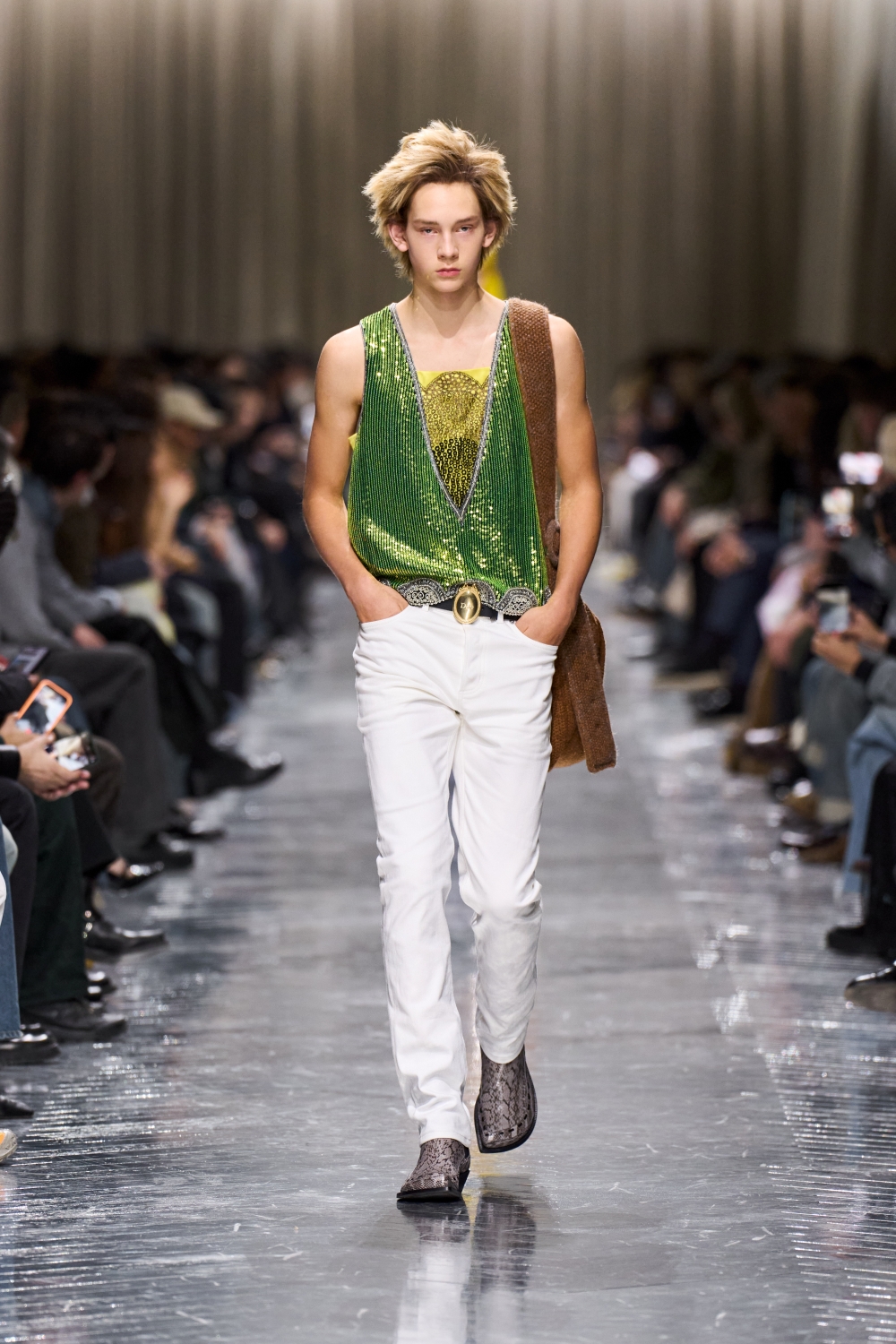
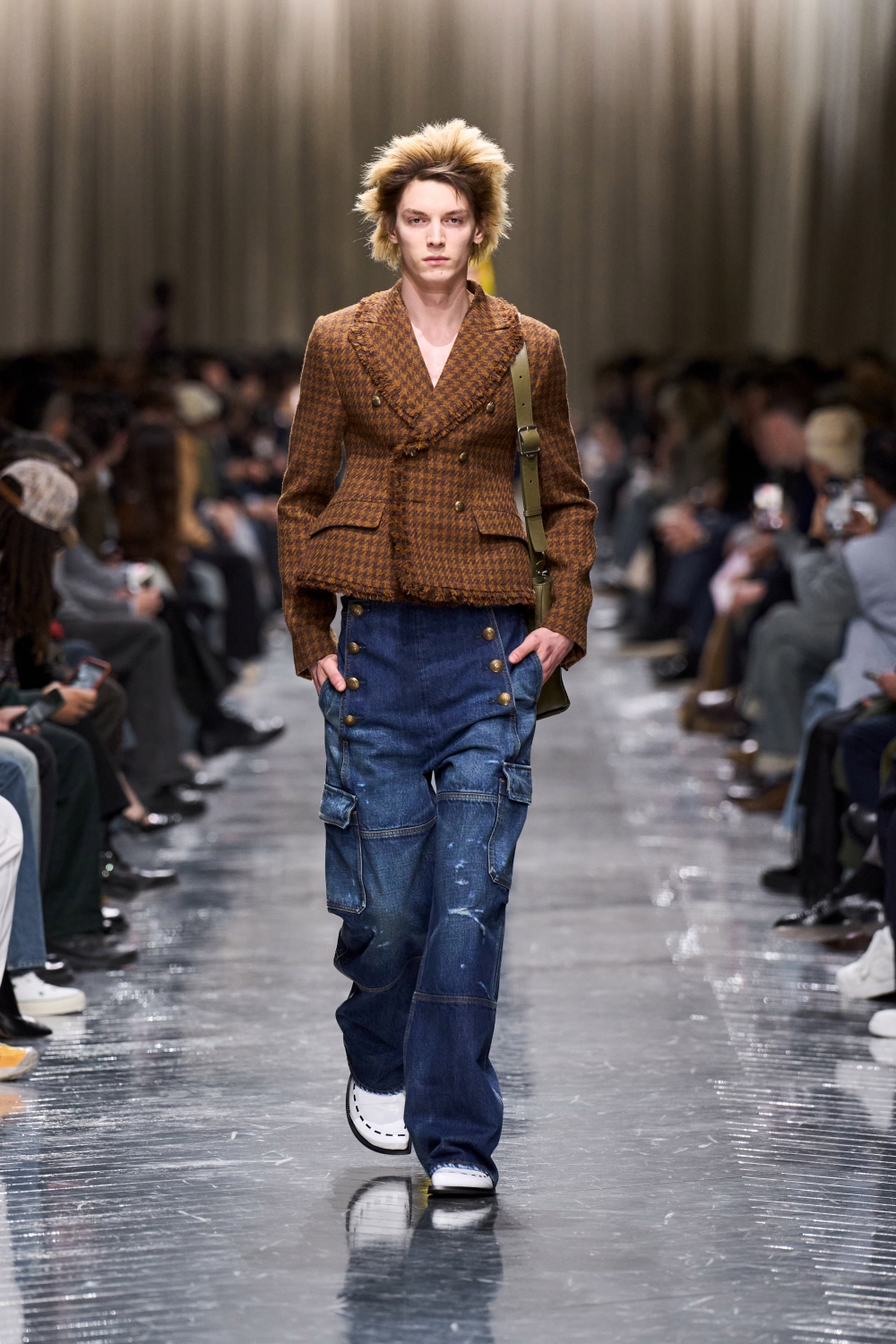
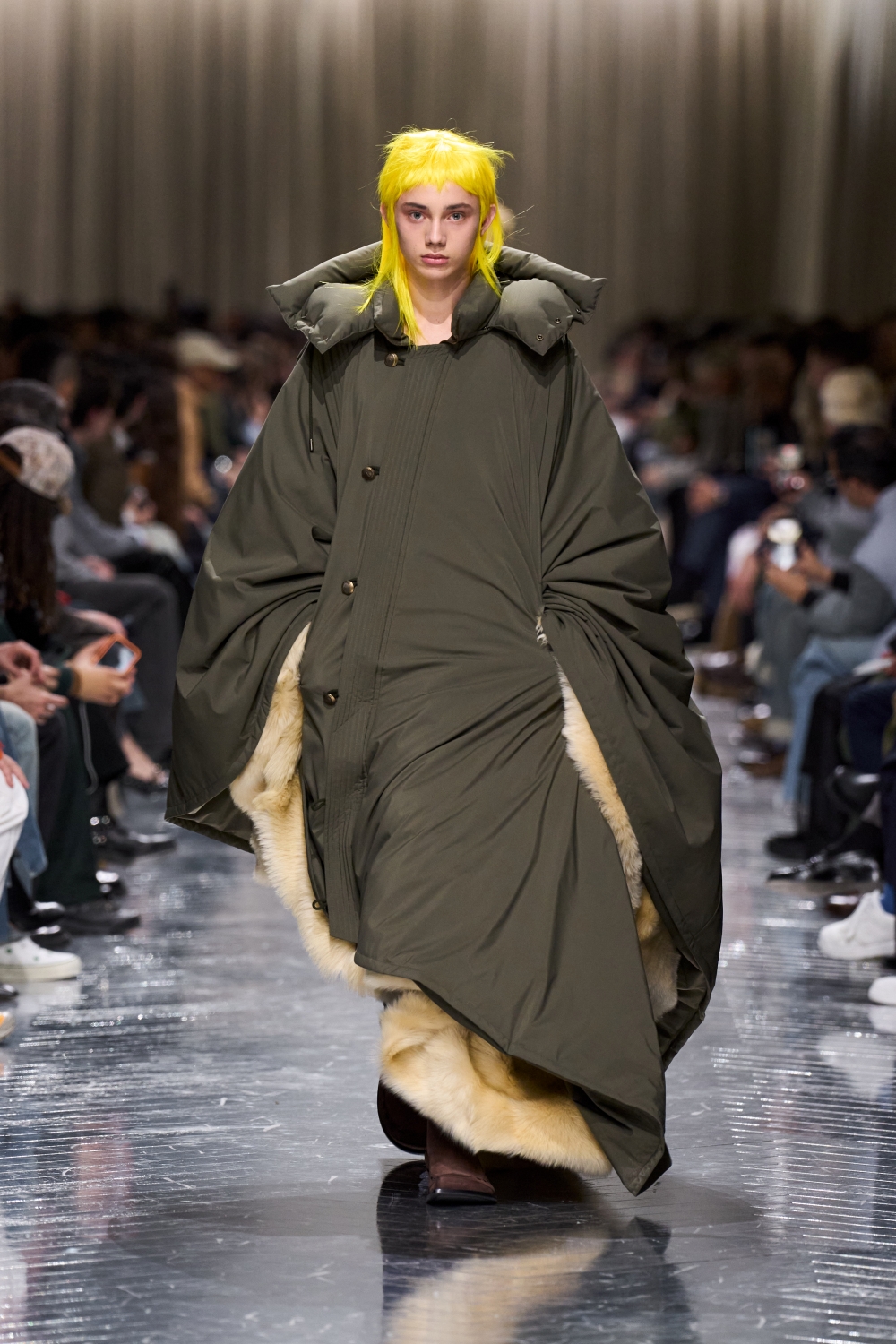
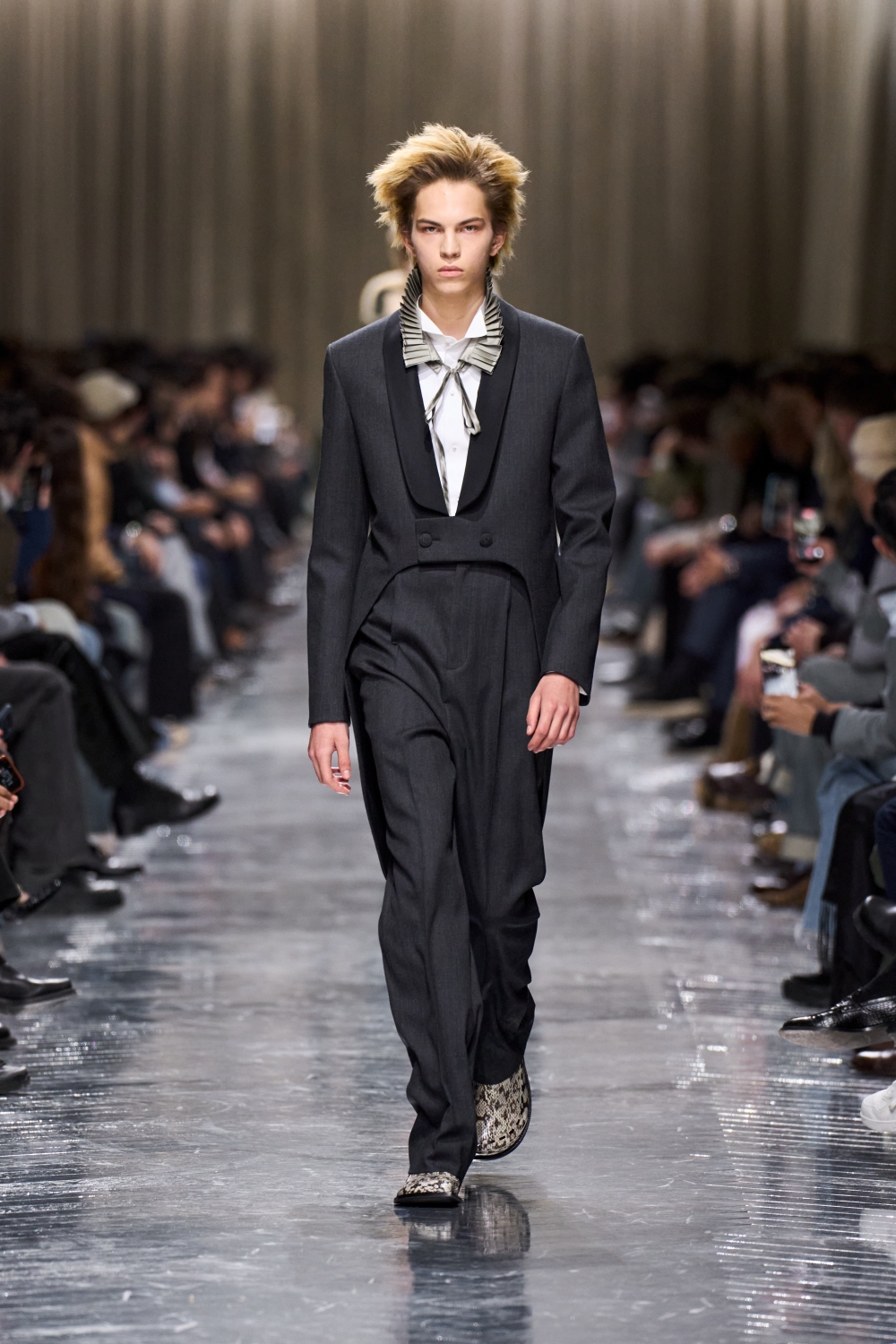
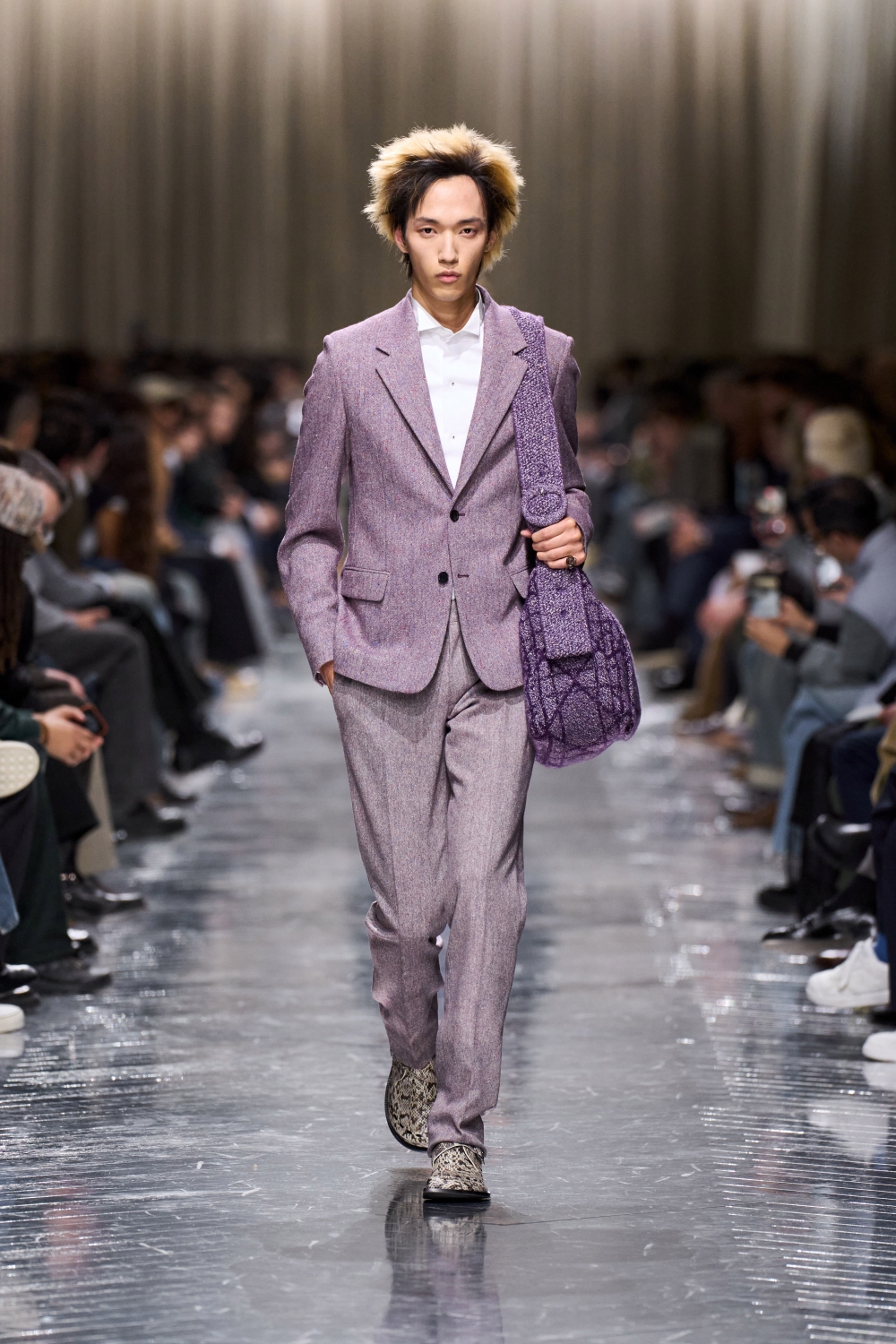
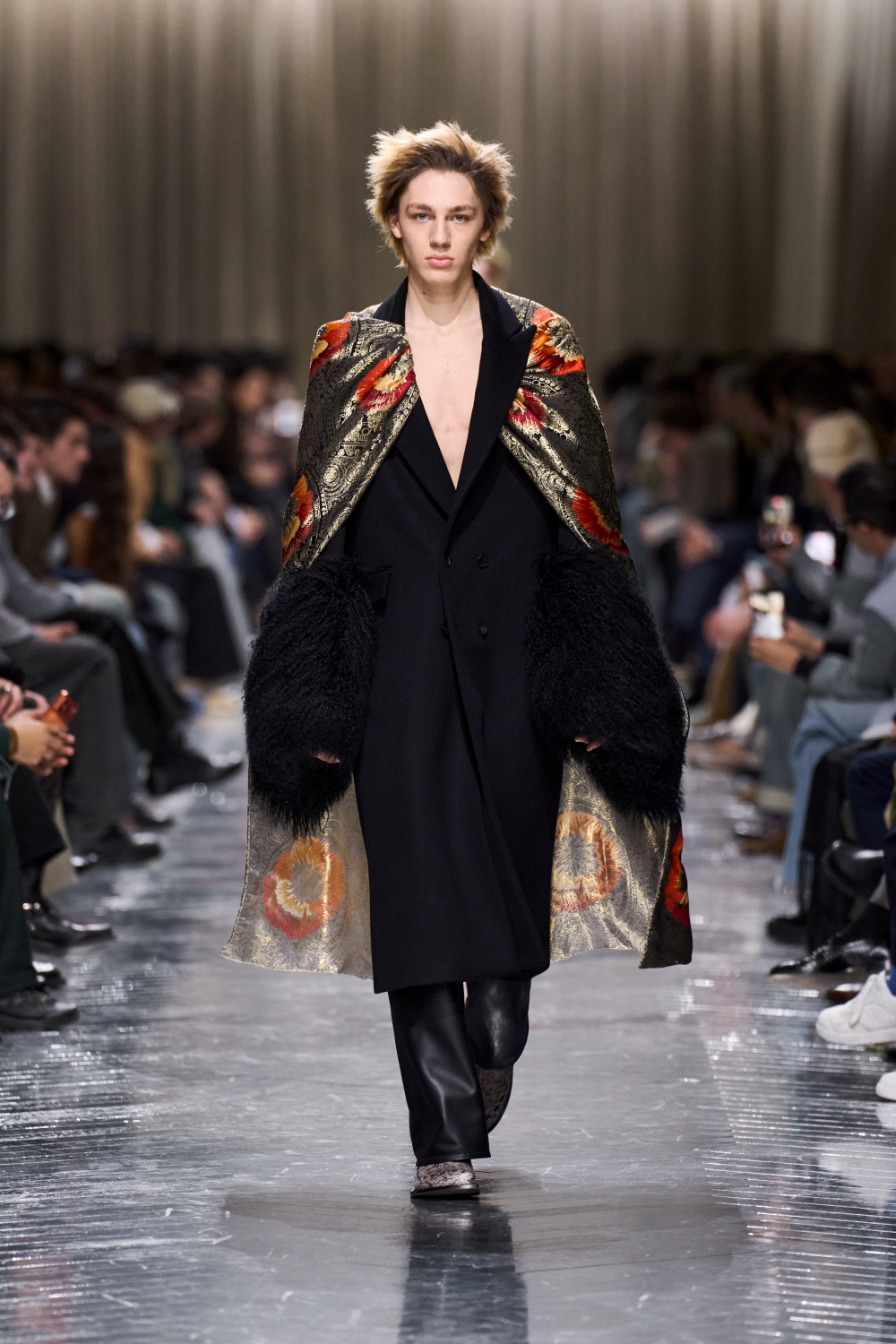
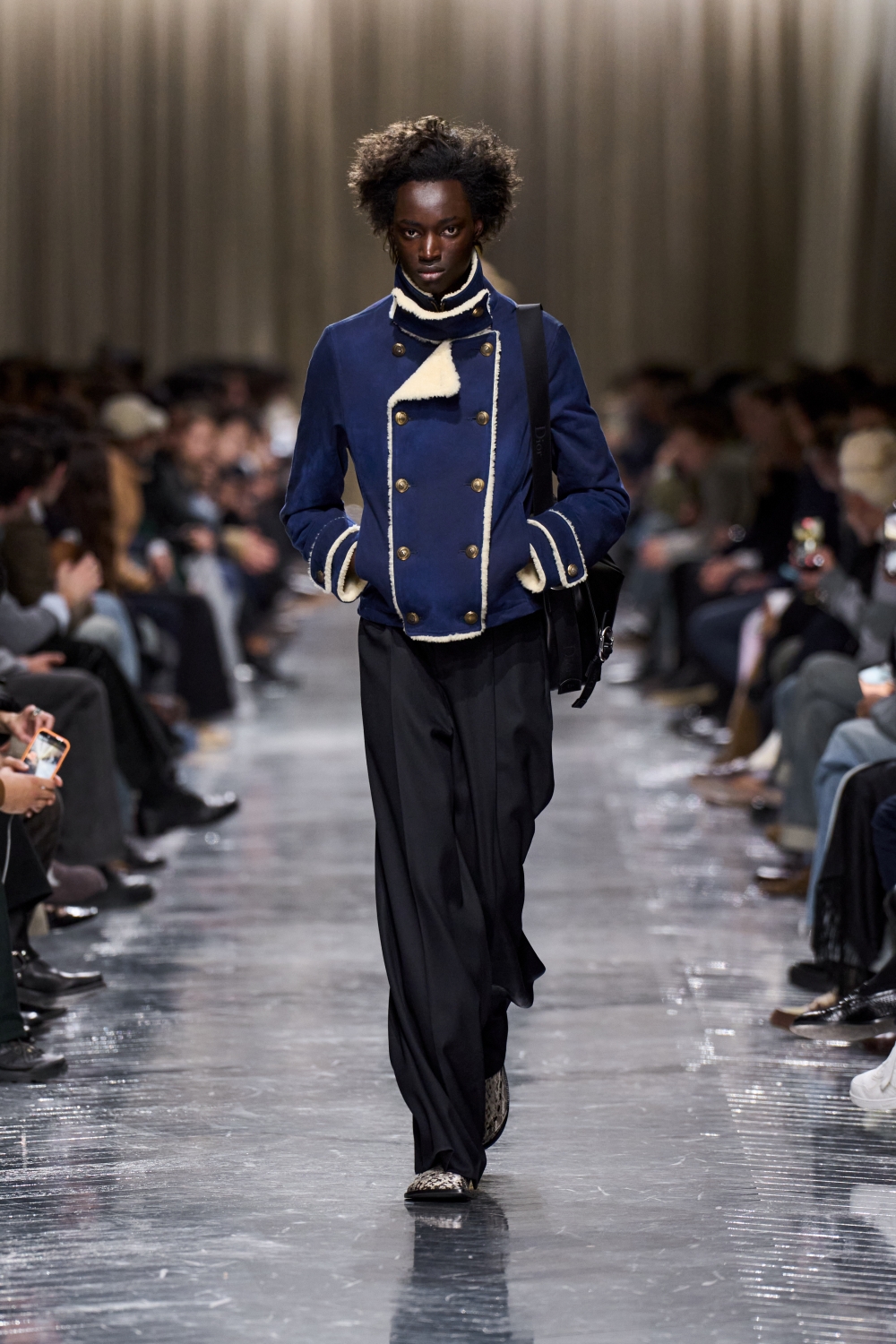
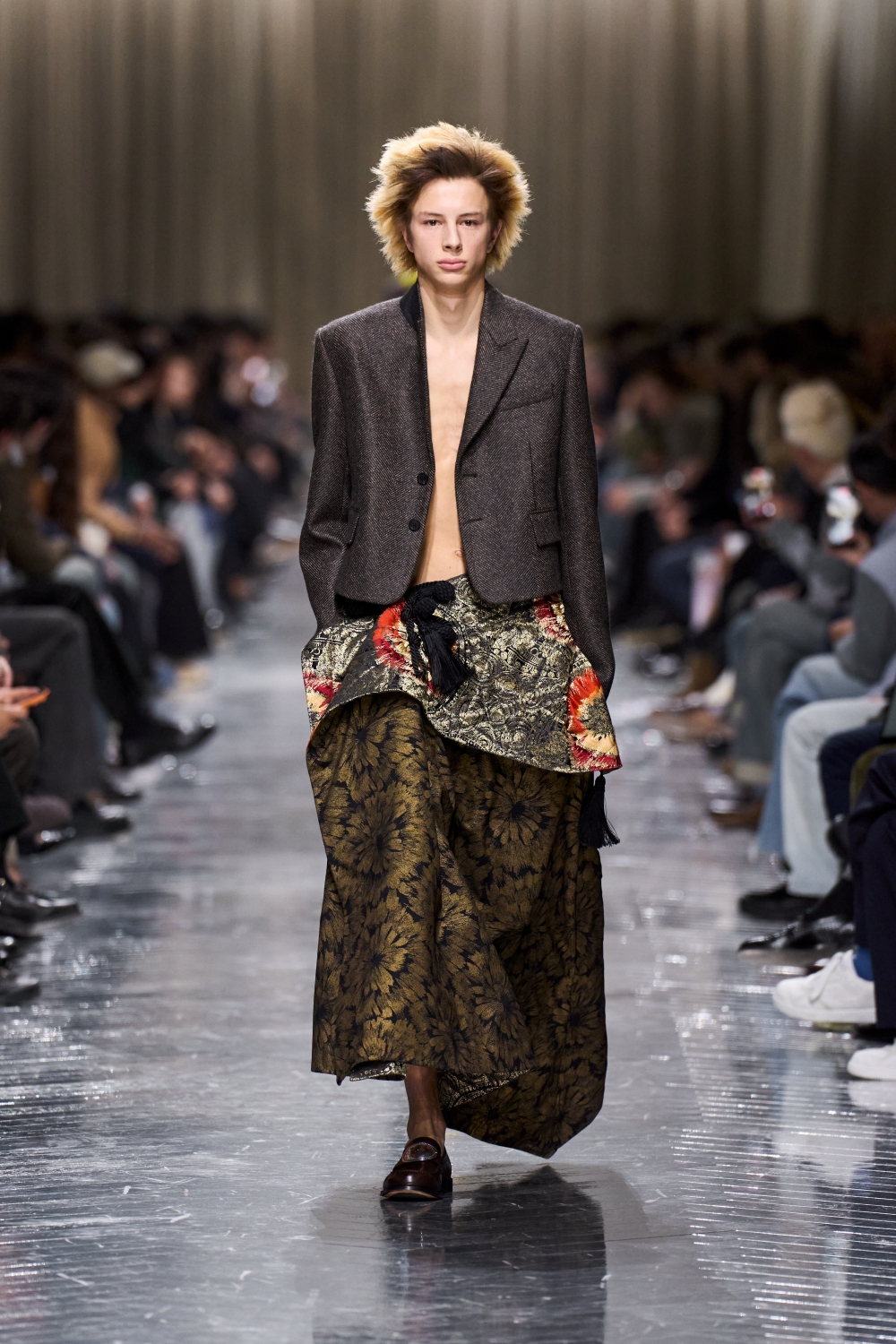
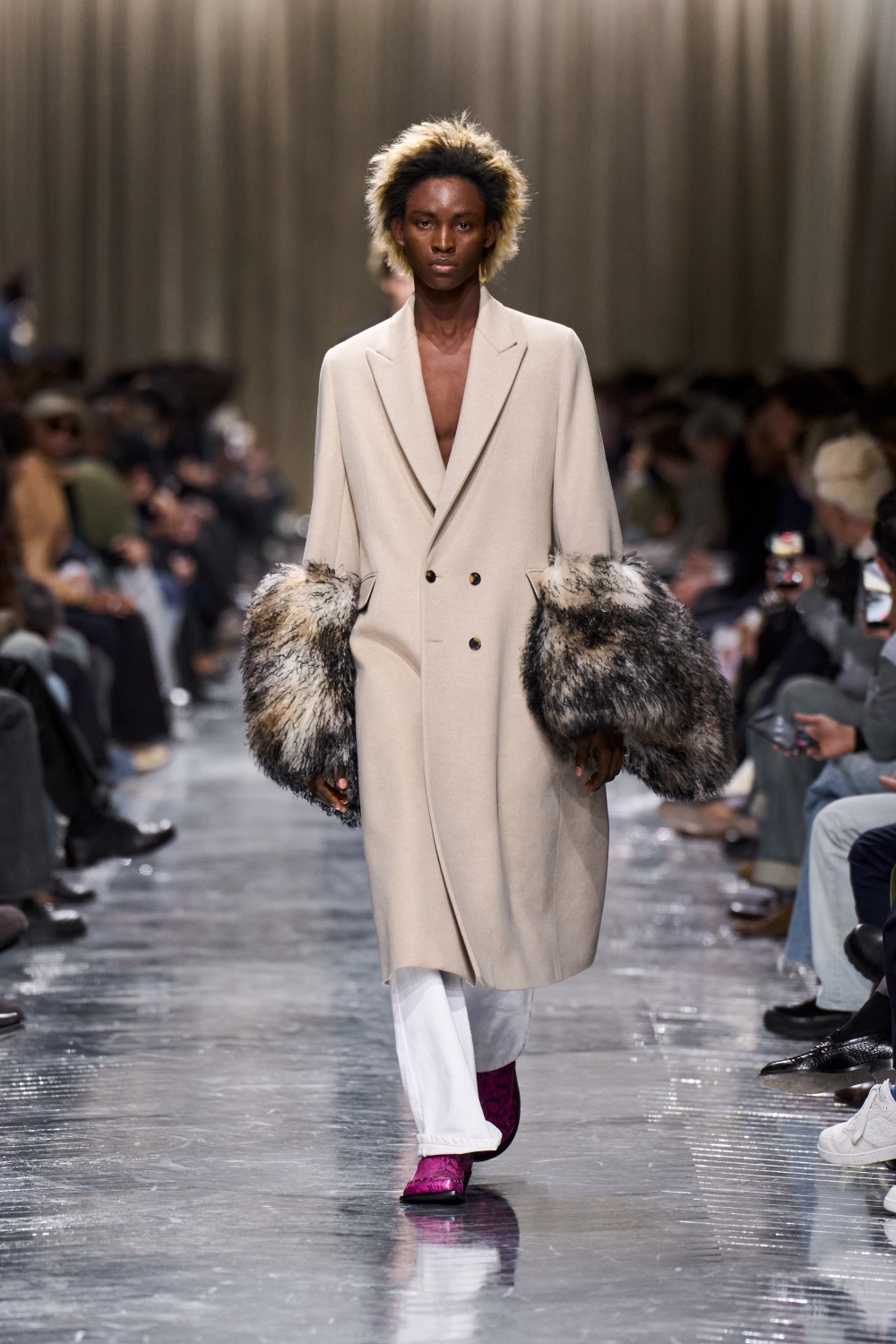
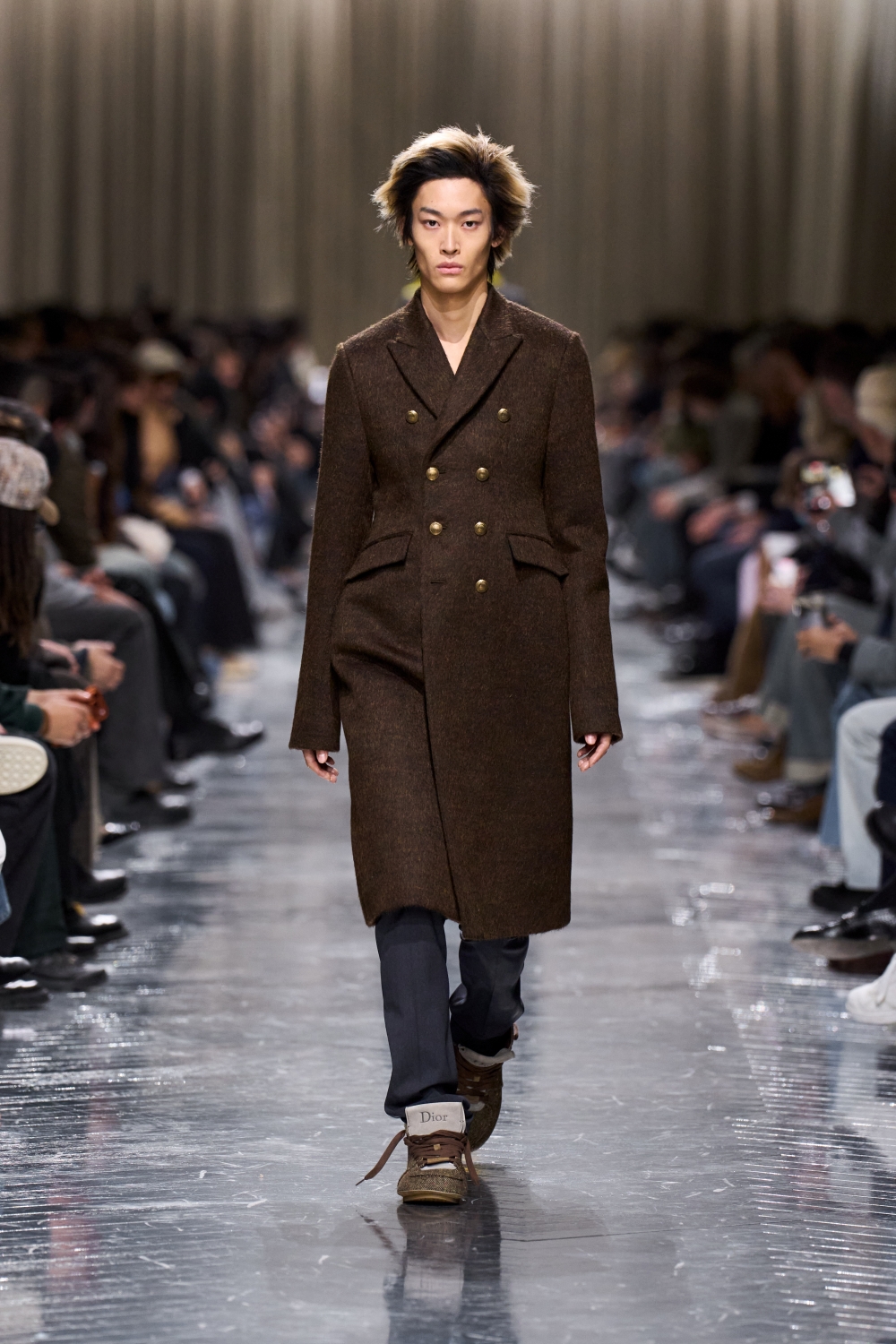
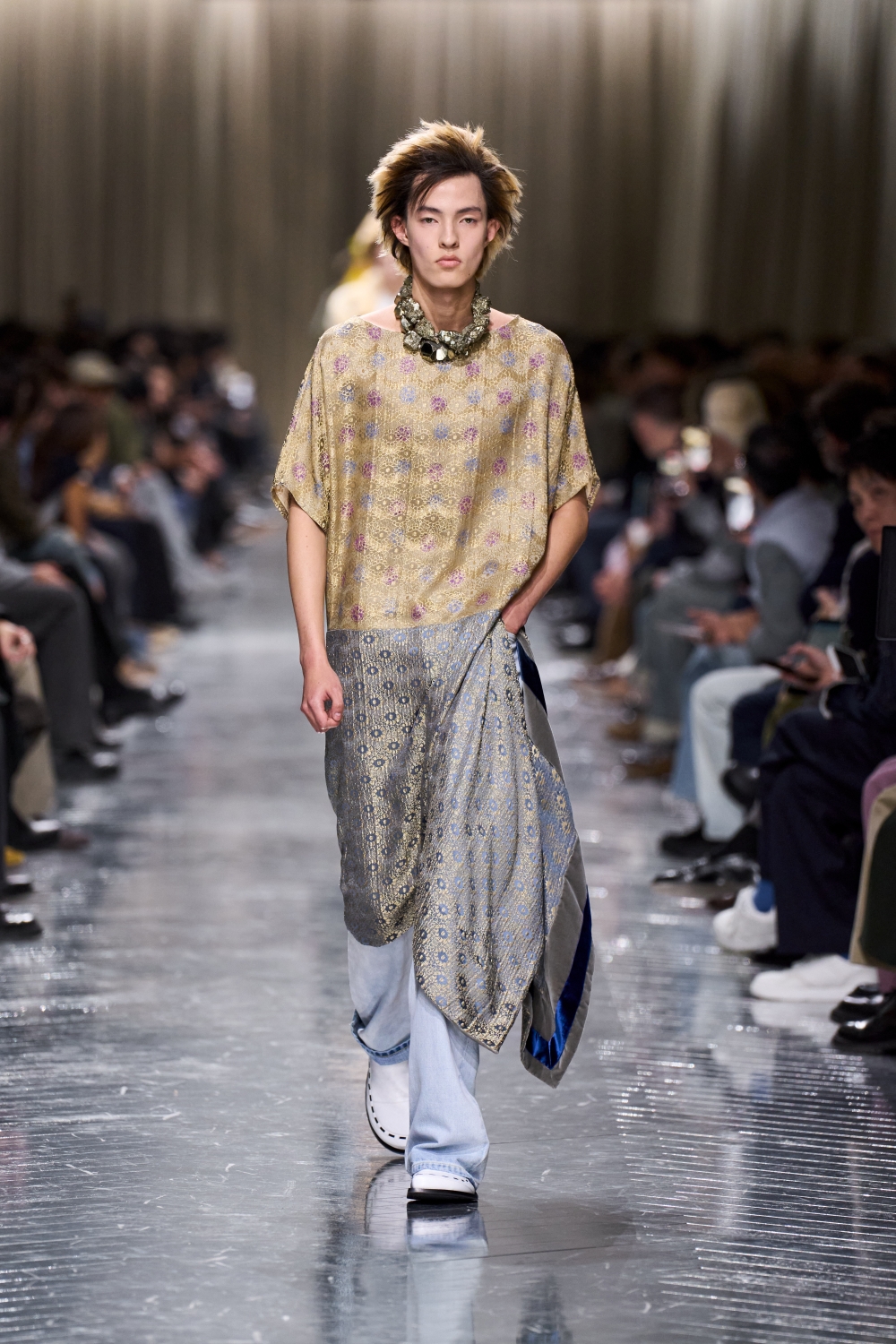
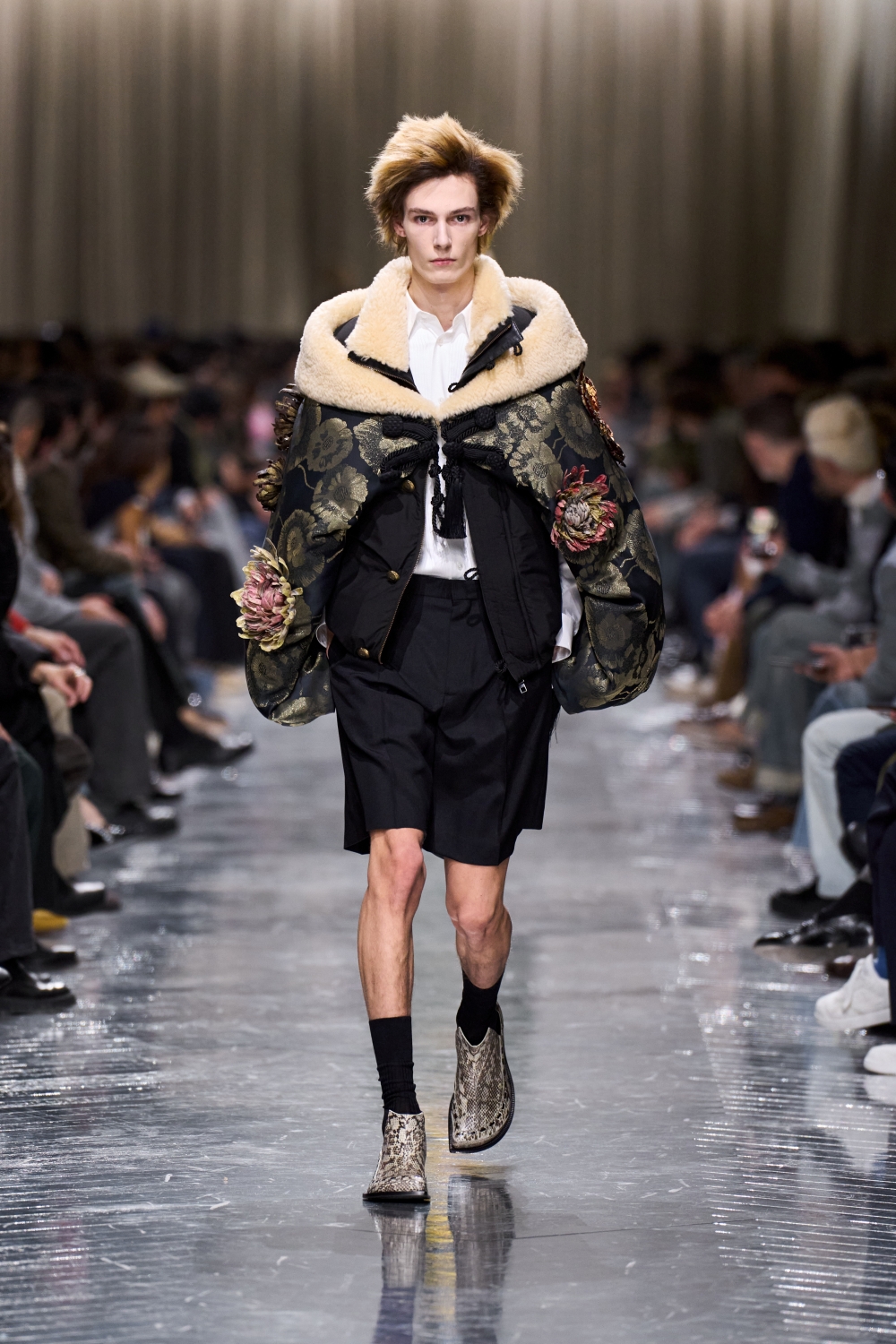
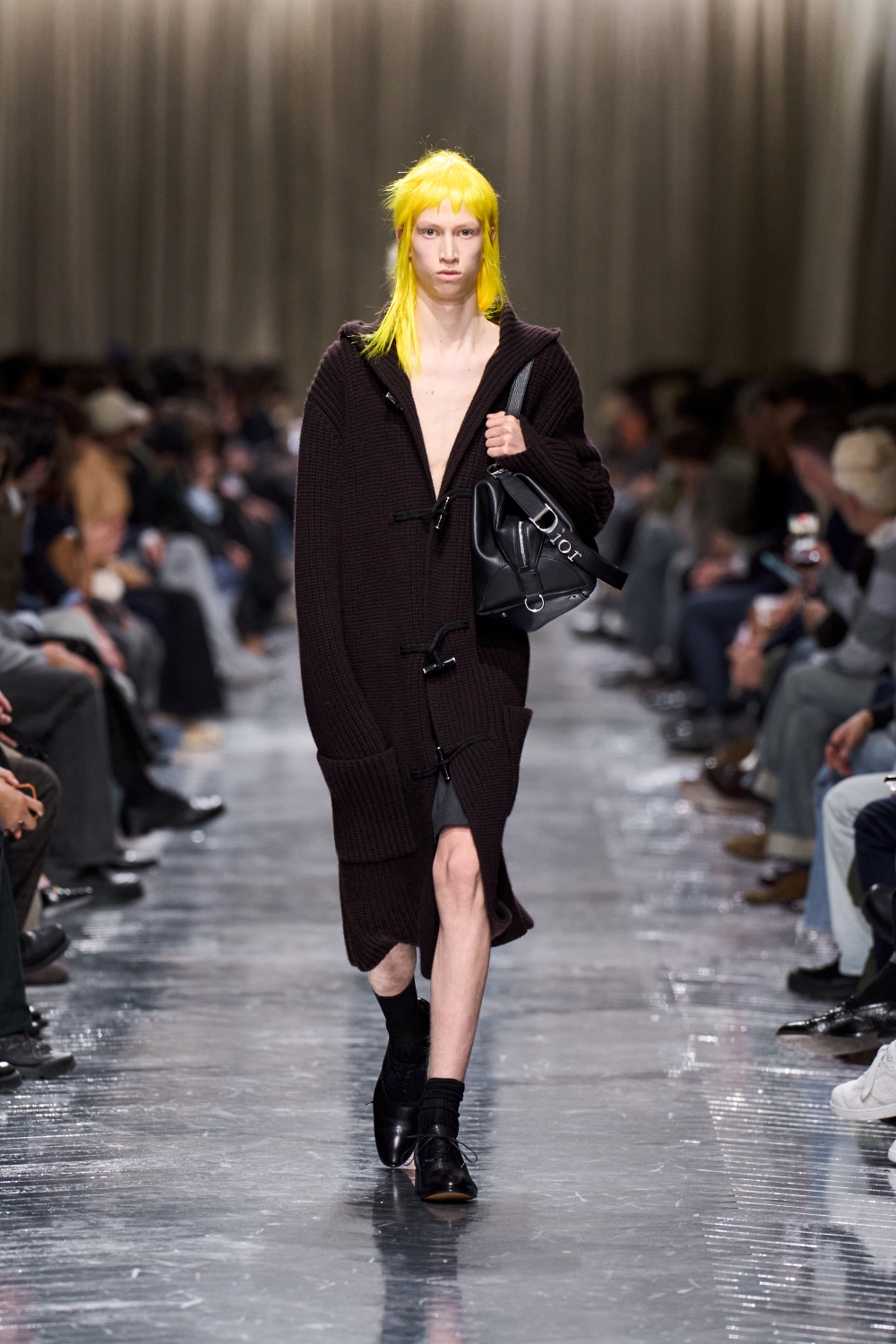
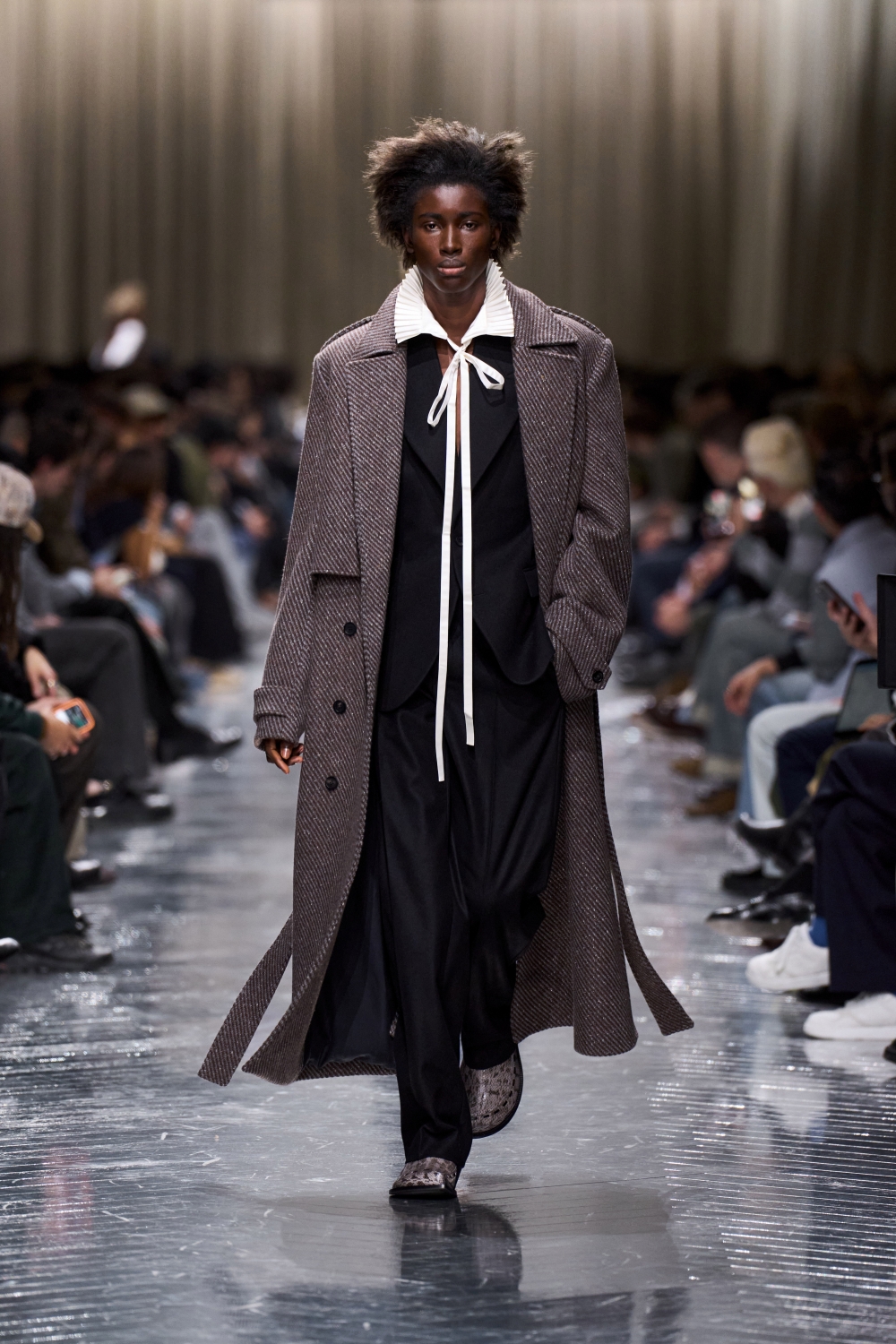
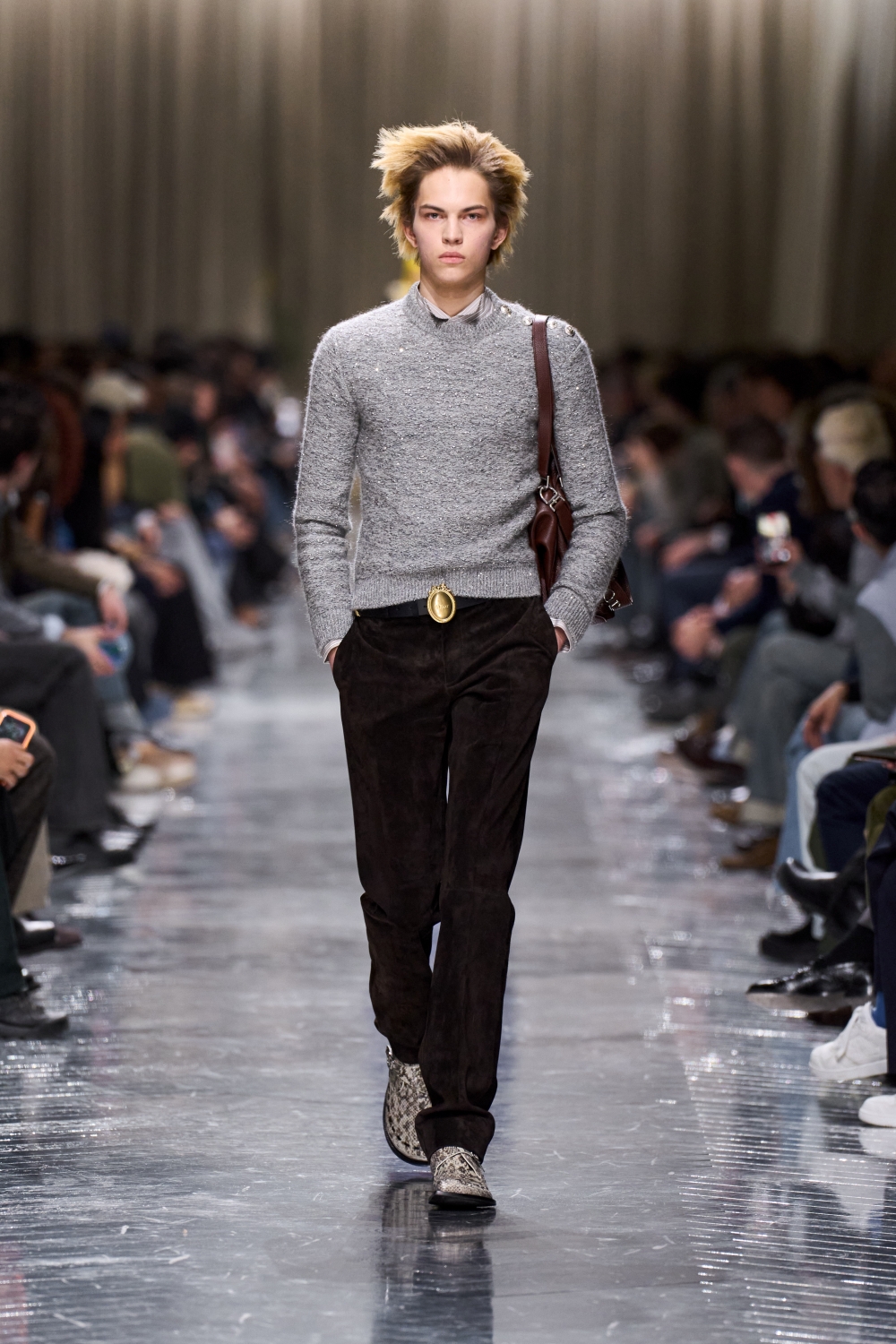
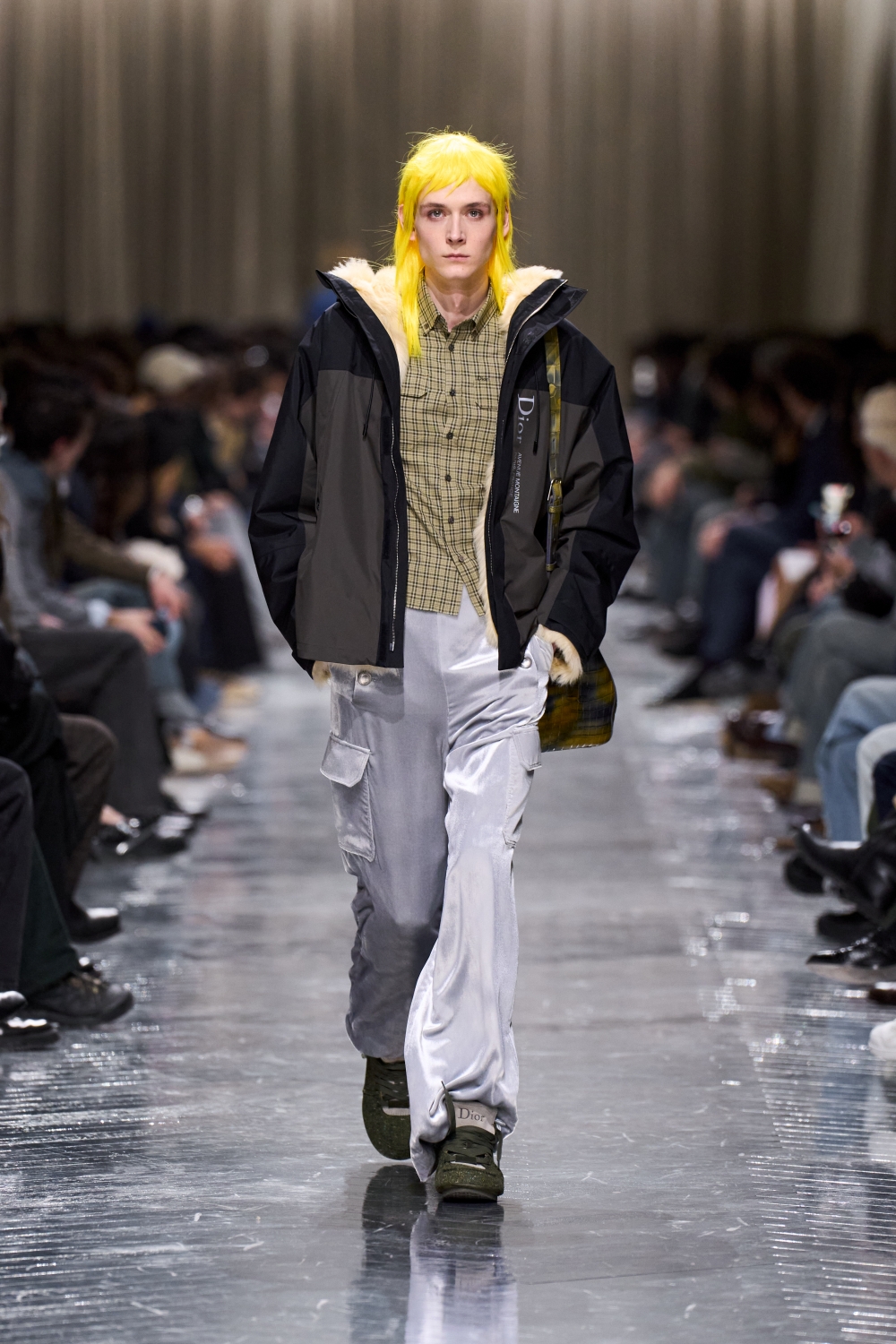
Structure remains the foundation, but it is bent, stretched, and re-engineered. Jackets lengthen, blazers shorten, Bar jackets tilt and crop, while trousers remain lean and precise. Tailoring becomes elastic rather than rigid.
Outerwear is where this philosophy expands most dramatically. Technical and opulent elements merge: bomber jackets flowing into brocade capes, balloon-backed field jackets, cocooning coats that wrap the body in sculptural volume. Dior’s historic craftsmanship transforms functional garments into dreamlike forms—wearable fantasy rather than theatrical costume.
The collection also deliberately blurs the masculine and feminine divide. Full dress collides with hints of undress: suits with lavallière shirts, waistcoats paired with long johns instead of trousers. Gender is not a category—character is.
Materially, Winter 2026 speaks in texture: Donegal tweeds, glossy velvets, luminous jacquards, dense fringe, intricate passementerie, and shimmering embroidery. The palette remains restrained and somber, but the surfaces are alive. Accessories—lace-ups with small heels, D-shaped loafers, and soft leather messenger bags—anchor the fantasy in real-world wearability.
Even small details become symbolic. The white ruff collars—appearing on both the runway and invited guests—reinforce Anderson’s belief that fashion is a language of identity.
“For me, fashion shows are about showing ideas. It’s not a formula. I just want to have fun with it.”
Ultimately, Dior Winter 2026 becomes dressing as a game of free association—old and new, formality and ease, heritage and disruption colliding without apology. Anderson is not trying to make Dior younger. He is making Dior curious again.
And that may be the true meaning of this recoding of the House: not erasing the past, but moving forward while still hearing the footsteps of previous generations echoing across the pavement of Avenue Montaigne.