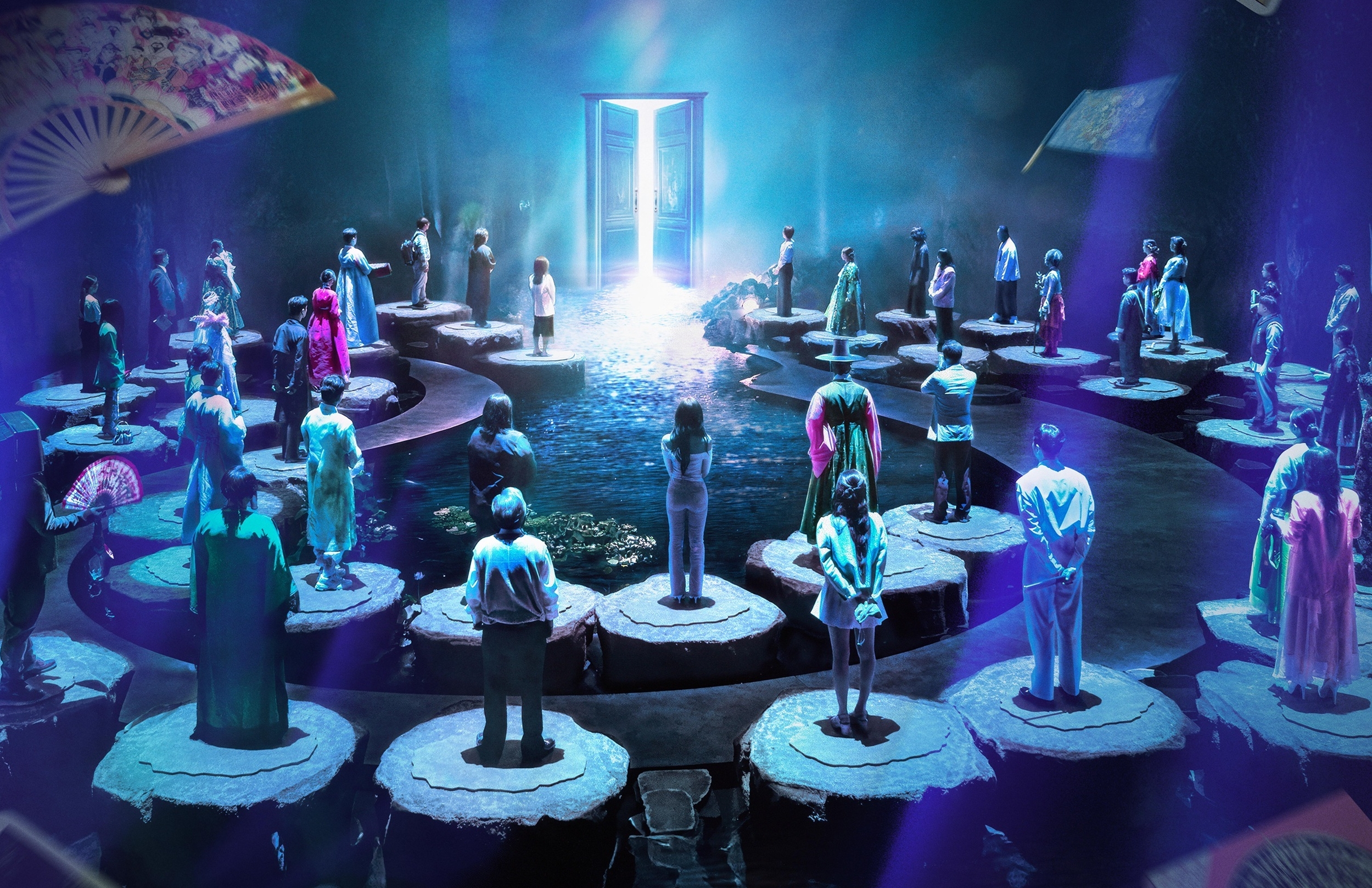

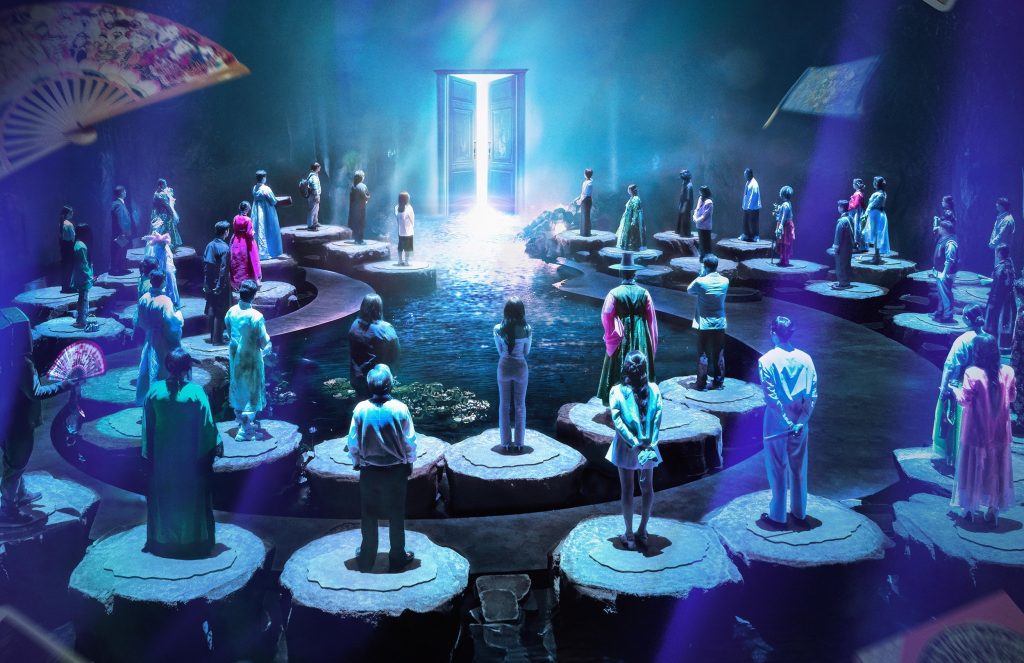

At a moment when Disney+’s large-scale reality programme The Battle of Fates is generating a wave of popularity, sending ripples through audiences with its striking narratives of destiny, many viewers may have found themselves quietly exclaiming, “How did they know?” more than once while watching. As a result, the concepts of “fortune” and “fate” have returned to the centre of public conversation with renewed intensity.
In truth, belief systems and fortune-telling have never been merely matters of the mystical. They form part of the cultural structures that are meaningfully intertwined with society. Beyond the divinatory practices with which many are familiar, such as tarot cards, numerology, physiognomy, or feng shui, there exist numerous other traditions embedded within the contexts of different cultures. In South Korea in particular, the arts of interpreting both future and past have been developed with remarkable sophistication and social nuance.
Today, #Legend_th invites readers to delve more deeply into the world of Korean divination traditions, enriching both understanding and appreciation of the series currently captivating audiences.
Saju
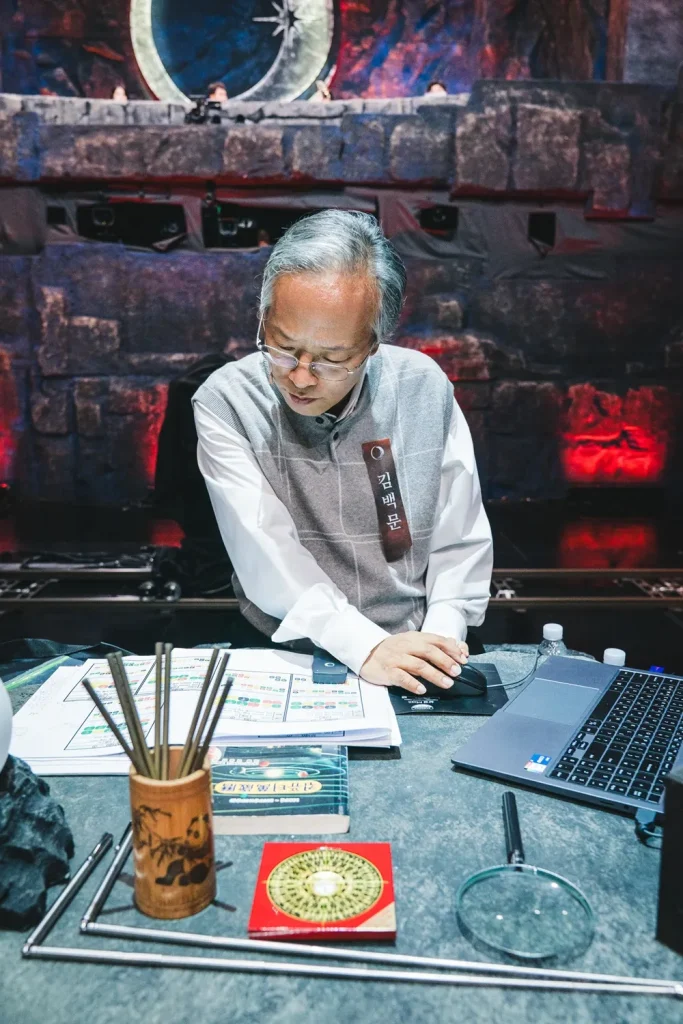
In Korean society, Saju (사주), or the Four Pillars of Destiny, may be likened to a personal cosmic blueprint written at the very moment of one’s birth. Originating from China’s BaZi system during the Tang–Song dynasties, it spread to the Korean peninsula during the Goryeo and Joseon periods. The system analyses the year, month, day, and hour of birth to calculate the balance of the five elements: wood, fire, earth, metal, and water.
Although it may sound similar to Chinese astrology, what distinguishes the Korean interpretation of Saju is its emphasis on Confucian values in the Joseon context and its adaptation to modern society, focusing less on predicting fixed outcomes and more on strategic self-understanding. Many Koreans consult Saju before signing contracts, planning new businesses, selecting debut dates for artists, or assessing when to advance and when to withdraw. The essential question is not merely what the future holds, but how one should position oneself within the personal current of energy one has carried since birth.
Gung-hap
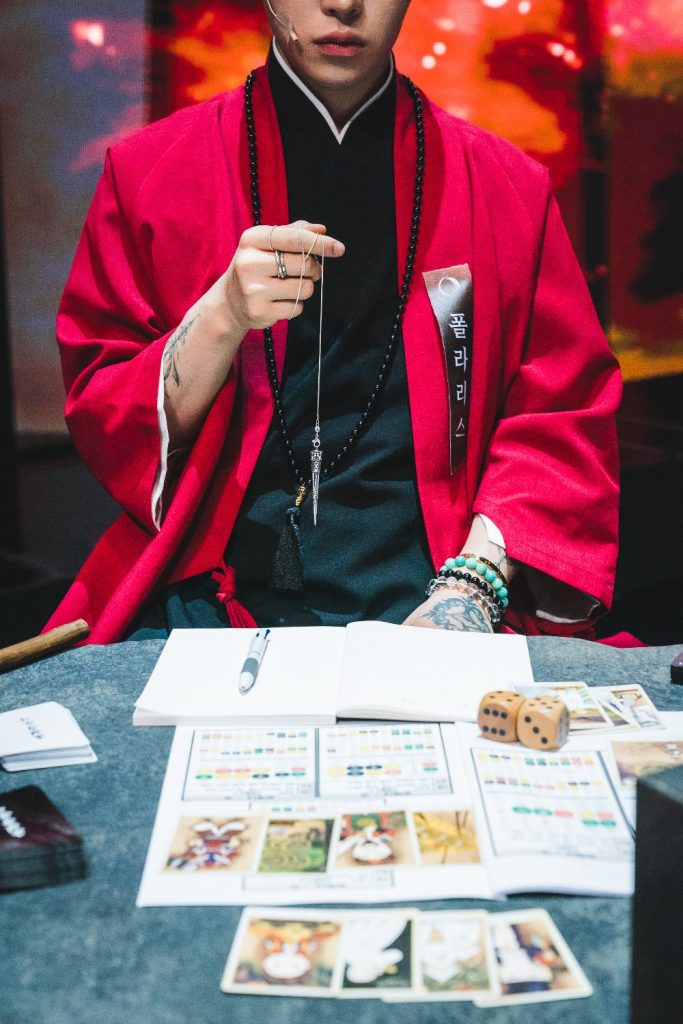
If destiny in the series manifests as clashing forces, in real life love, too, is often viewed as a meeting, or collision, of energies. This is reflected in Gung-hap (궁합), the practice of analysing compatibility between individuals’ fortunes. It extends beyond romance to encompass marital stability, professional synergy, and the long-term potential for conflict.
During the Joseon period, particularly among the yangban elite, Gung-hap played a crucial role prior to marriage. Marriage was not regarded simply as a union between two individuals, but as a connection between lineages, status, and social power. Examining astrological compatibility was therefore akin to assessing the long-term security of both families’ futures.
In modern urban society, however, perspectives have shifted. Many younger people now approach Gung-hap with cultural curiosity rather than strict adherence, using it as a conversation that fosters mutual understanding rather than as a decisive judgement. Yet among certain business leaders and figures of influence, analysing the alignment or opposition of personal energies still occasionally appears as a strategic consideration within professional spheres.
Sinjeom
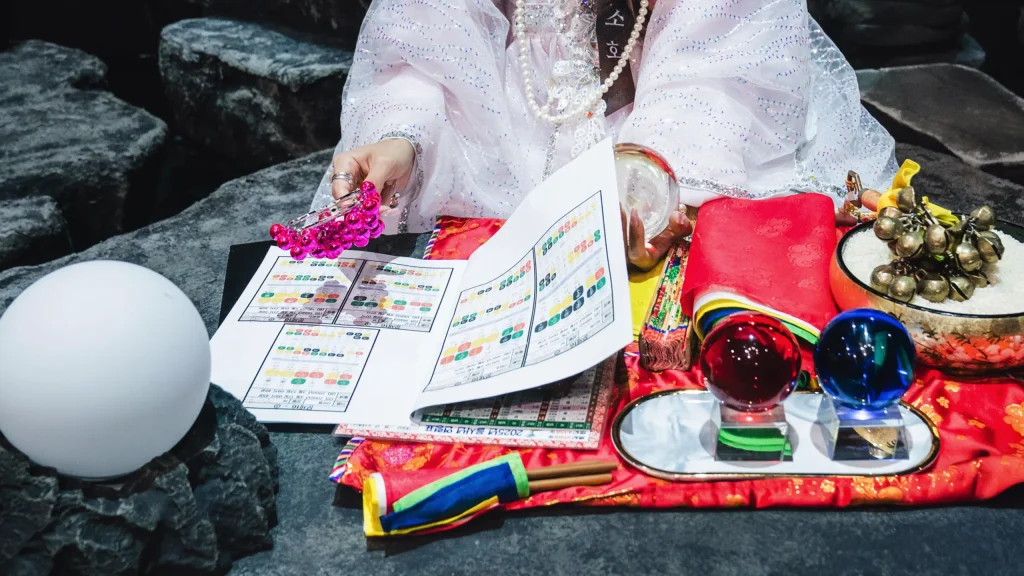
If any practice most vividly reflects the otherworldly atmosphere portrayed in The Battle of Fates, it is Sinjeom (신점), or spirit-medium divination. This form belongs to the broader system of Korean shamanistic belief known as Musok (무속). Distinguished by its direct spiritual communication with deities or spirits through ritual, Sinjeom is often sought when individuals confront hardships that seem beyond rational explanation or burdens too heavy to bear. In such moments, many step into sacred spaces to seek answers.
During the Joseon era, when the state was strongly influenced by Confucian ideology, shamanistic beliefs were regarded as outside the bounds of official order and were frequently suppressed. Nevertheless, communal faith never disappeared. It endured in society’s margins and continually adapted to modern contexts.
Thus, Sinjeom is not merely an esoteric ritual. It reflects a layered history of belief intersecting with state power, religion, and popular faith. It serves as a psychological space for releasing fear, guilt, and uncertainty, a delicate intersection between psychology, faith, and hope within the human heart.
Gwansang
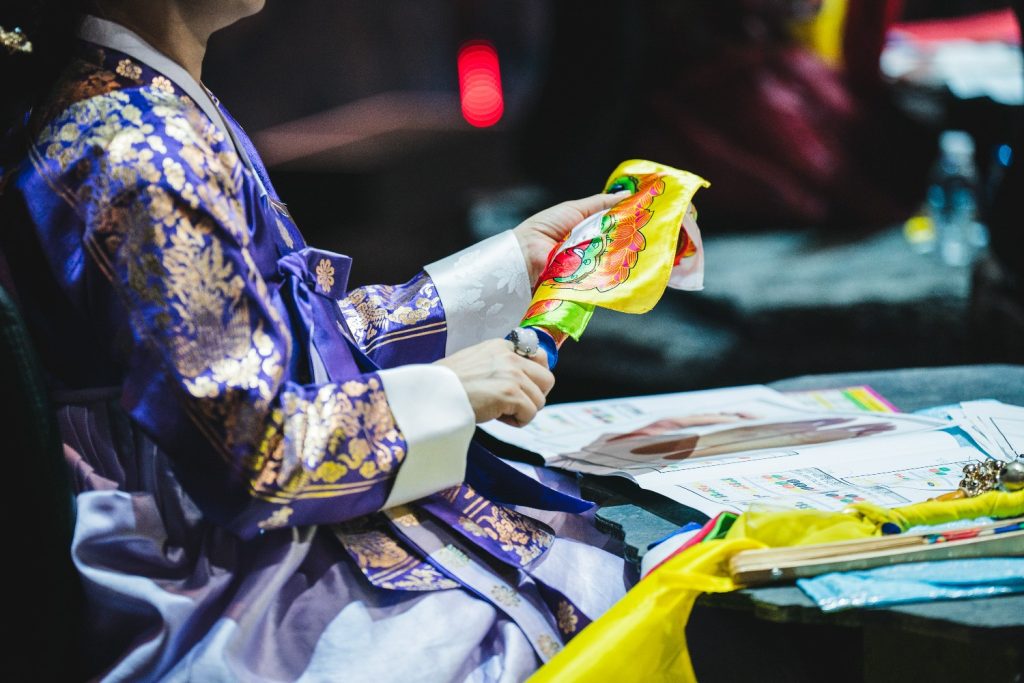
Another intriguing branch is Gwansang (관상), the art of face reading, based on the belief that physical features reveal destiny and potential authority. The area around the eyebrows indicates vitality, the nose relates to wealth; the cheekbones signify power; and the chin suggests later life fortune.
This practice once held significance within the Joseon royal court and was later introduced to younger generations through the 2013 film The Face Reader, which portrayed a physiognomist who discerned political intrigue and betrayal from a single glance. In contemporary Korean society, where appearance exerts unprecedented influence through media power, the notion that one’s face reflects destiny has gained renewed resonance. Gwansang therefore remains a popular form of divination.
Tojeong Bigyeol
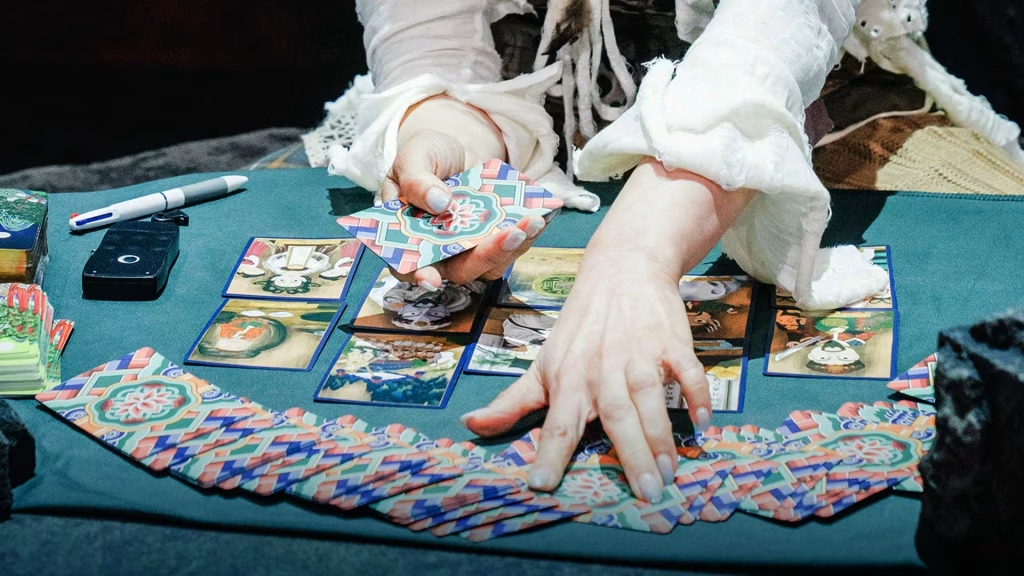
At the beginning of each year, many Koreans continue a deeply rooted cultural custom, consulting Tojeong Bigyeol (토정비결), an ancient annual fortune text outlining life trends in detail, from career direction and finances to health and relationships. Although this practice is now more accessible through online platforms and digital services, its core essence remains unchanged.
Rather than delivering a fixed prediction, Tojeong Bigyeol functions as a guide to understanding the “rhythm” of the coming year, an evaluation of life’s ebbs and flows to inform careful planning. In this sense, opening its pages resembles beginning a new chapter of one’s life series, not as a rigid script, but as an awareness of the possible turns along the way.
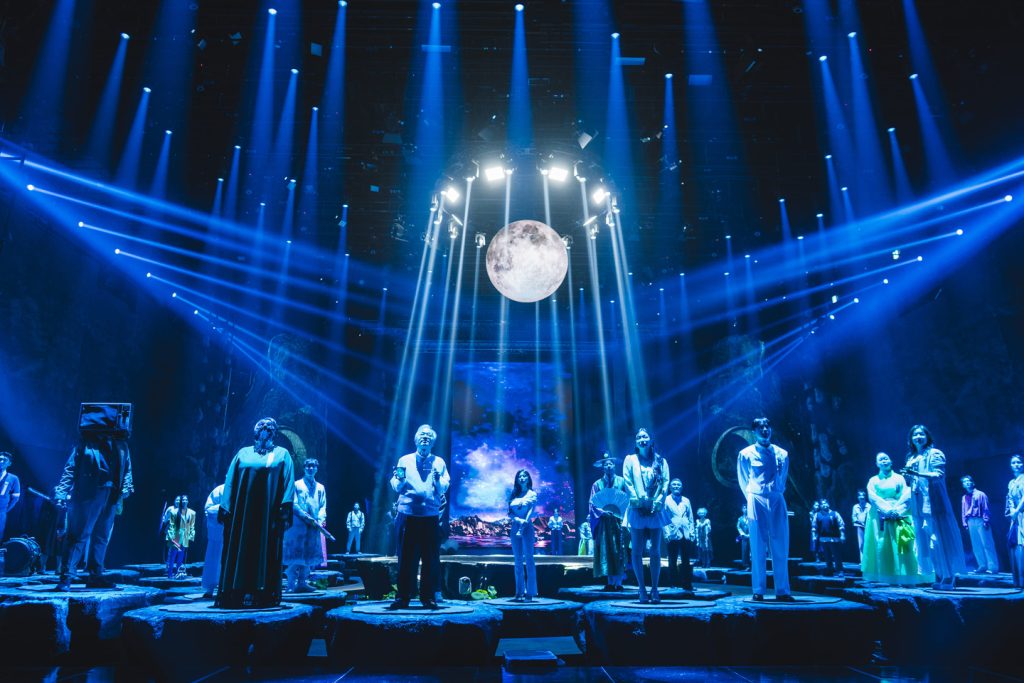
Ultimately, whether on the screen of Disney+ or in the realities of everyday life, fate in the Korean context is not regarded as an immutable verdict. Instead, it is understood as a symbolic force that enables individuals to read, interpret, and arrange their own narratives with mindfulness. Divination, then, is not solely about foreseeing the future, but about deepening one’s understanding of the present, an acknowledgement that while we cannot control every variable in life, we still seek frameworks of meaning to steady ourselves amid uncertainty.
In this light, The Battle of Fates is not merely a reality programme dramatising clashes of destiny for entertainment. It may well serve as a significant catalyst for global conversations about belief, opening space for new forms of content that explore faith, psychology, and the human condition with greater seriousness and depth.
Picture credit: Disney+