

Reported by Manit Maneephantakun
On a winter night when the wind sweeping off the Thames feels sharp enough to cut through every layer of fabric, Burberry chose not to escape that atmosphere, but to embrace it as the emotional core of its Winter 2026 narrative. This was not a show designed to transport us to some distant fantasy. Instead, it placed us firmly back in “the real London”, a city where darkness falls early, streets remain slick with rain, and nightlife continues to pulse without pause.
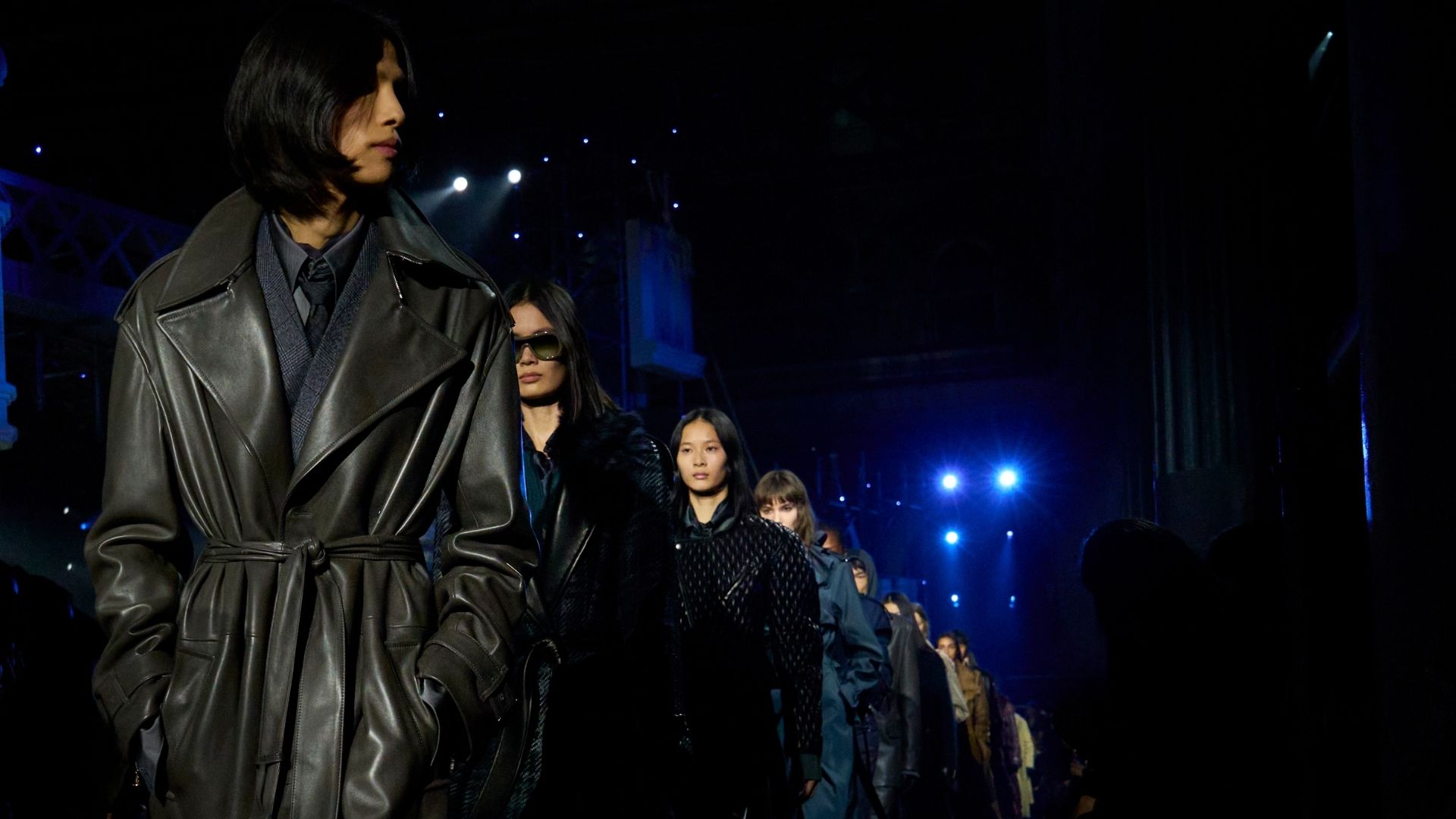
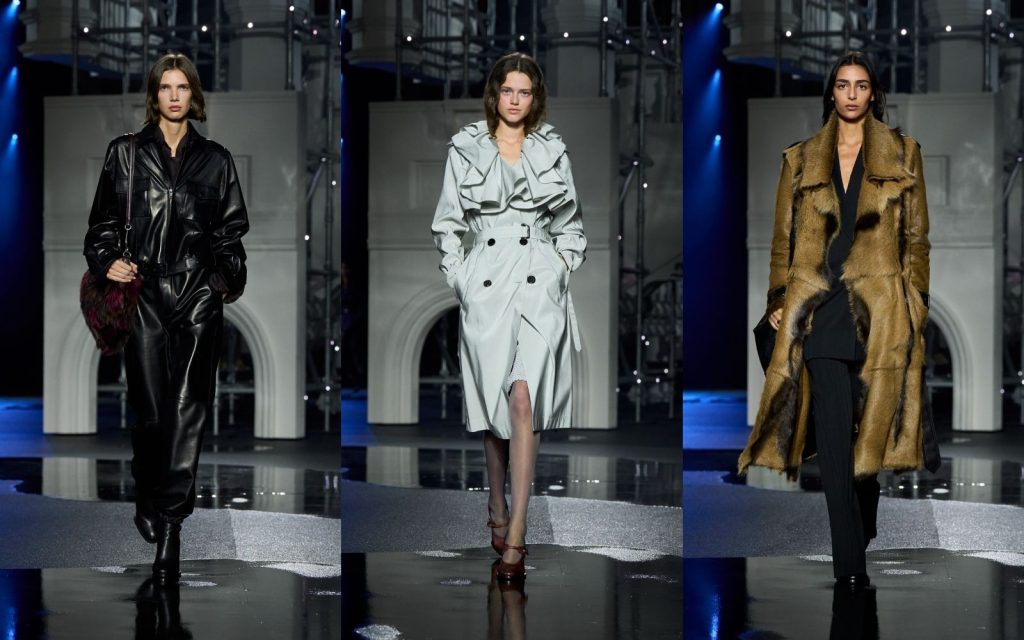
After last season, when Daniel Lee led Burberry into the romance of the British countryside and the spirit of midsummer festivals, he deliberately pivoted toward the metropolis, as if zooming a lens from a sweeping landscape into the intimate textures of urban life. The show took place at Old Billingsgate along the Thames, where a replica of Tower Bridge was constructed inside the venue itself. Its pulsing lights appeared almost more theatrical than those of the real bridge standing just across the river. Meanwhile, the runway was dotted with glossy black latex “puddles,” reflecting light like rain-soaked streets moments after a downpour.
This was not merely staging; it was an attempt to recreate a feeling, a city at once romantic, lonely, electric, and endlessly in motion.
Daniel Lee recalled his early days in London as a student:
“When I first moved to London, I lived in Whitechapel. I would often feel quite homesick, so I’d walk down the river to Tower Bridge and the Tower of London, and it would make me feel better. Because I was excited just to be here.”
That tension between homesickness and exhilaration quietly reverberated through every piece in the collection.
At the heart of Burberry still beats the trench coat, a garment born from World War I military function that evolved into a global fashion symbol. Yet Lee did not revisit it nostalgically; he expanded its meaning for the present. As he explained, “The mission was to create a very Burberry day-to-night wardrobe… it could be a film premiere, or a charity gala; it might be a nightclub. London offers such a breadth of life at night, and that was really what we wanted to celebrate.”
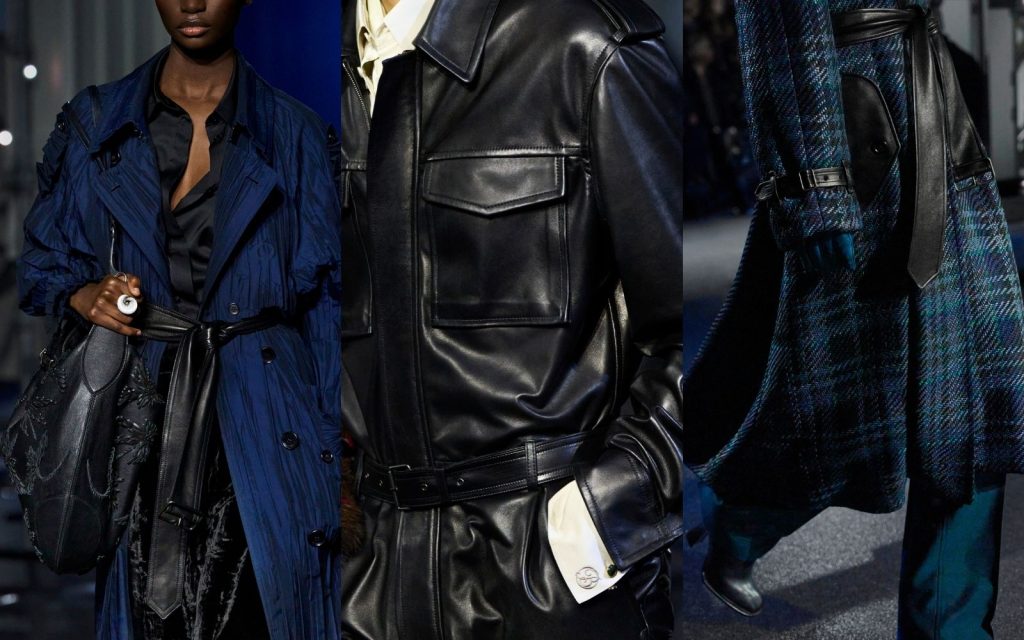
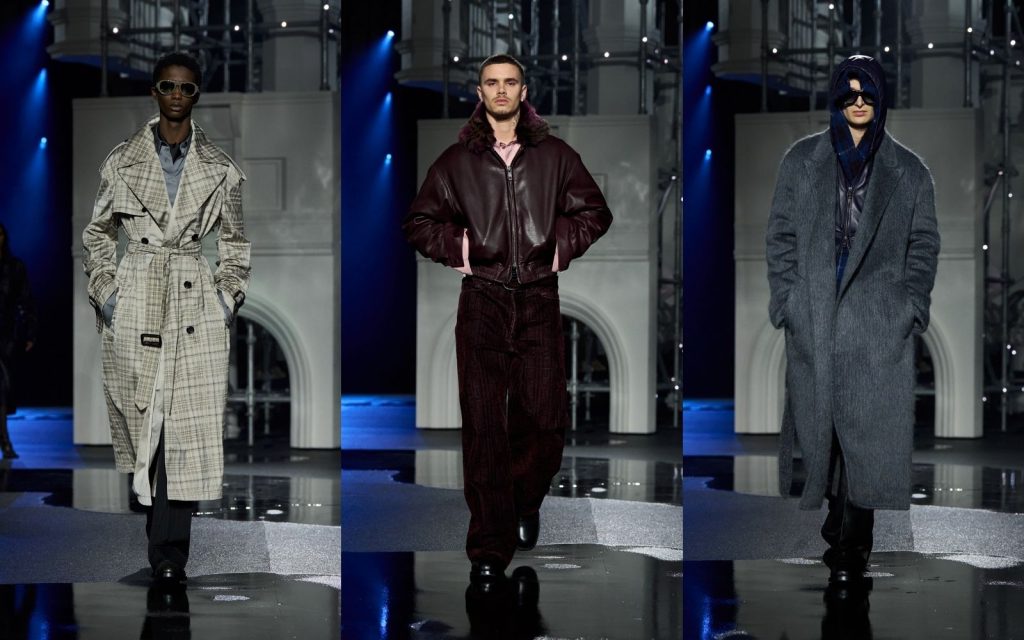
The trench appeared in personalities never seen before: ivory versions whose storm flaps exploded into ruffles like gusts of wind; glossy leather trenches reflecting light like wet asphalt; crumpled silk styles that felt lived-in after a long night out; weighty oxblood shearling pieces resembling protective armor against the cold; and pristine white wool trenches with ceremonial elegance. Many were cut oversized, with dropped ’80s-style epaulettes, suggesting garments worn in motion rather than preserved in perfection.
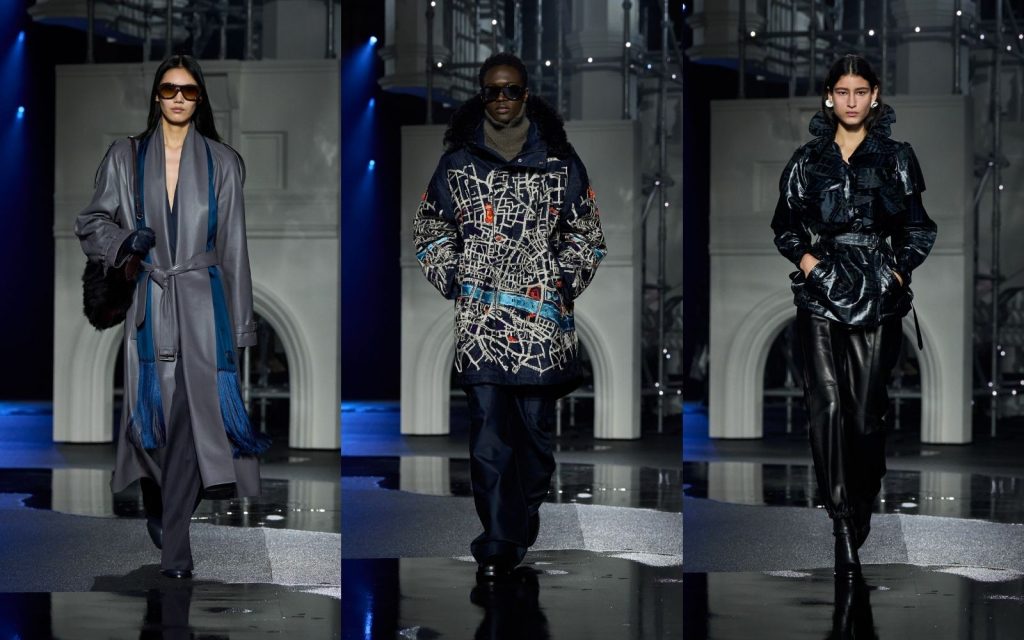
Among the most evocative pieces was a trench woven with an antique map of London, Lee’s personal favorite, transforming the city itself into material. The same map appeared on invitations, scarves, and other show elements, reinforcing that Burberry was not simply referencing London; it was constructing identity through it.
Though the overall tone remained polished British luxury, the collection subtly introduced the “flirty and dirty” reality of London after dark: a hip flask peeking from a back pocket, shimmering knitwear paired with tights and a slipping leather jacket as if leaving a pub at closing time, outerwear that felt made for crossing the city past midnight. These gestures were not acts of rebellion, but acknowledgments that real life, imperfect, unscripted, is inseparable from modern luxury.
As Burberry marks its 170th anniversary, the celebration was not inflated into spectacle. Instead, it returned to what the house does best: trenches, scarves, outerwear, and craftsmanship rooted in utility. This direction aligns with a broader business strategy centered on authenticity as the foundation of growth, both culturally and commercially.
Daniel Lee is not trying to reinvent Burberry. He is clarifying it, sharpening its voice, streamlining its message, making it more direct. Much like the Nova Check that once defined the brand, Burberry is being translated into a new visual language that feels graphic, confident, and grounded.
Lee has spoken simply of his daily inspiration: working at Horseferry House, where windows and skylights allow him to hear the rain falling all day. That sound became the rhythm of this collection.
Burberry Winter 2026 was not a show seeking spectacle. It was a reminder that fashion can still connect to place, to time, and to weather. In a world moving too fast, Lee chose to pause, listen to the rain, and translate it into clothing.
And perhaps the most contemporary thing Burberry can do today is not simply move forward, but walk through a rain-soaked city, and take the time to understand it all over again.