

Fifty years ago, computers were far removed from everyday life – expensive, complex systems used by institutions rather than individuals. When Apple Inc. was founded in 1976 by Steve Jobs and Steve Wozniak, it approached computing differently, guided by a simple idea: to make it accessible, intuitive and part of daily life. That focus on usability and design set it apart. Below is a look at the key milestones that shaped Apple’s evolution over the past five decades
Apple II (1977)
Apple’s story began in 1976 with the Apple I, a limited-run, hobbyist machine that laid the groundwork for what followed. The real shift came just a year later with the arrival of the Apple II. Unlike earlier machines, it was fully assembled and designed for everyday use, with a moulded plastic case, a built-in keyboard and colour graphics. It felt like a complete product rather than a technical kit.
The release of VisiCalc in 1979, widely considered the first electronic spreadsheet, gave it real business value, while its adoption in schools introduced a generation to computing. At such an early stage, the Apple II helped move computers from hobbyist tools into practical devices for homes, schools and small businesses.
Macintosh (1984)
Less than a decade later, Apple shifted its focus from access to experience. The Macintosh, released in 1984, introduced a graphical user interface that allowed users to navigate through icons, windows and folders using a mouse, replacing the need for typed commands. Despite its limited memory, it quickly found its place in areas like desktop publishing, where design and layout work could now be done digitally on a single machine. More importantly, it set a new expectation: computers should be intuitive to use. That idea would go on to shape the entire industry.
iMac (1998)
By the late 1990s, Apple was close to collapse after years of decline following Steve Jobs’ being forced out in 1985 amid internal conflicts and disappointing Macintosh sales. His return in 1997 marked a reset, but it was in 1998, with the launch of the iMac G3, that the turnaround became visible.
Breaking away from the standard “beige box” PCs, the iMac introduced an all-in-one design with its translucent Bondi Blue casing, making computers feel more approachable and visually distinct. It also moved the industry forward by replacing the floppy disk with USB. Built for simplicity, it offered an easy setup that made getting online straightforward for first-time users, helping stabilise Apple and setting a new direction centred on design and usability.
iPod (2001)
As Apple moved into the 2000s, its focus extended beyond computers. The iPod, introduced in 2001, redefined portable music with the promise of “1,000 songs in your pocket.” Its 5GB storage allowed users to carry an entire music library at a time when most devices could only hold a few tracks.
Navigation was simple and fast through the click wheel, while its integration with iTunes created a seamless way to organise and purchase music. Together, they accelerated the shift from physical albums to digital libraries, turning music into something fully portable and on demand.
iPhone (2007)
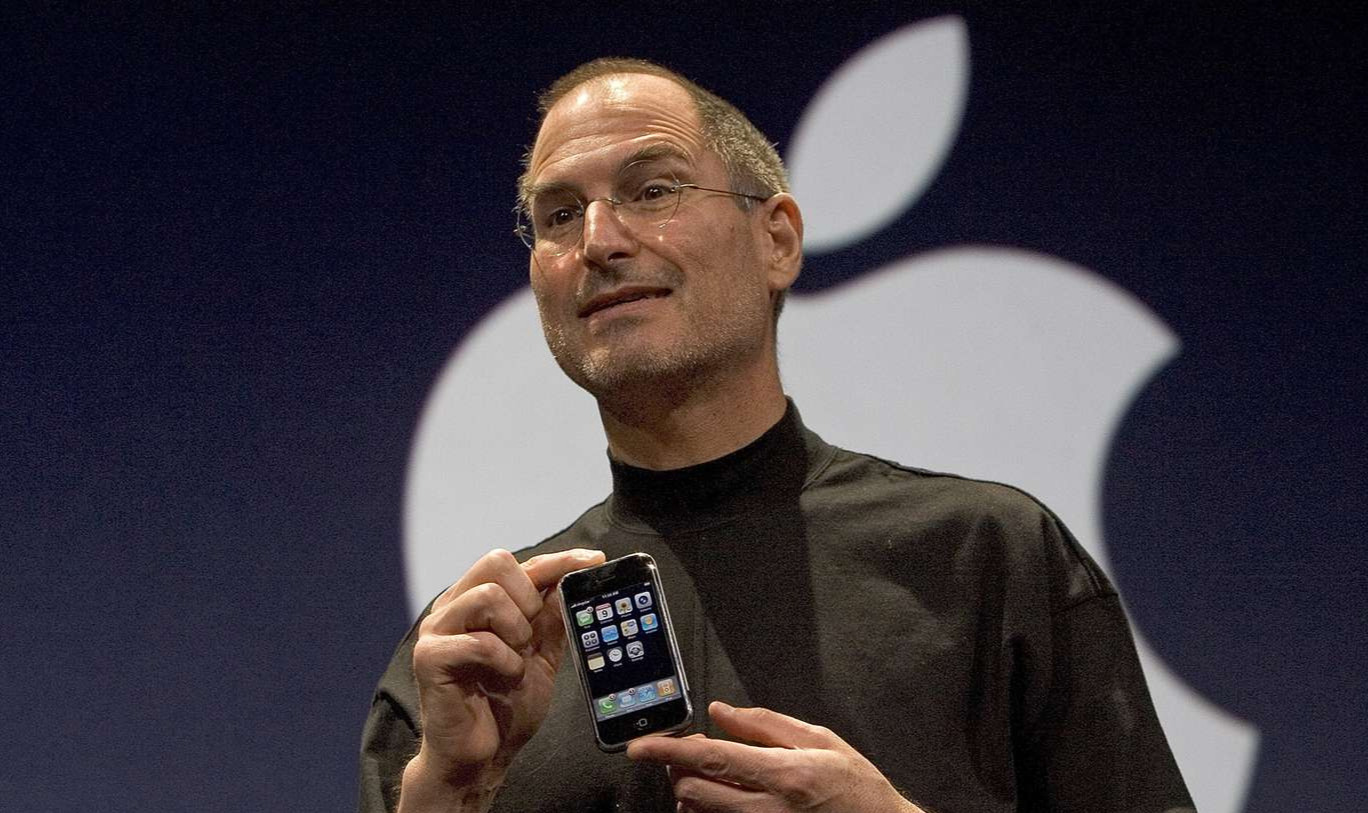
That ecosystem thinking came together in 2007, when Steve Jobs unveiled the iPhone. By combining a phone, iPod and internet browser into a single device, it redefined what a phone could be. Its multi-touch interface replaced physical keyboards and styluses, making interaction more direct and intuitive.
The following year, the launch of the App Store in 2008 turned it into a platform that could continuously evolve. Phones were no longer just for calls or messages – they became the primary way people browse the internet, consume media and stay connected. From streaming and social media to mobile payments and on-demand services, the smartphone – an idea brought into the mainstream by the iPhone – has since become an essential part of everyday life.
Also see: 100 Takes: Same same but different