

All the things your watch can do, besides tell the time
Date window
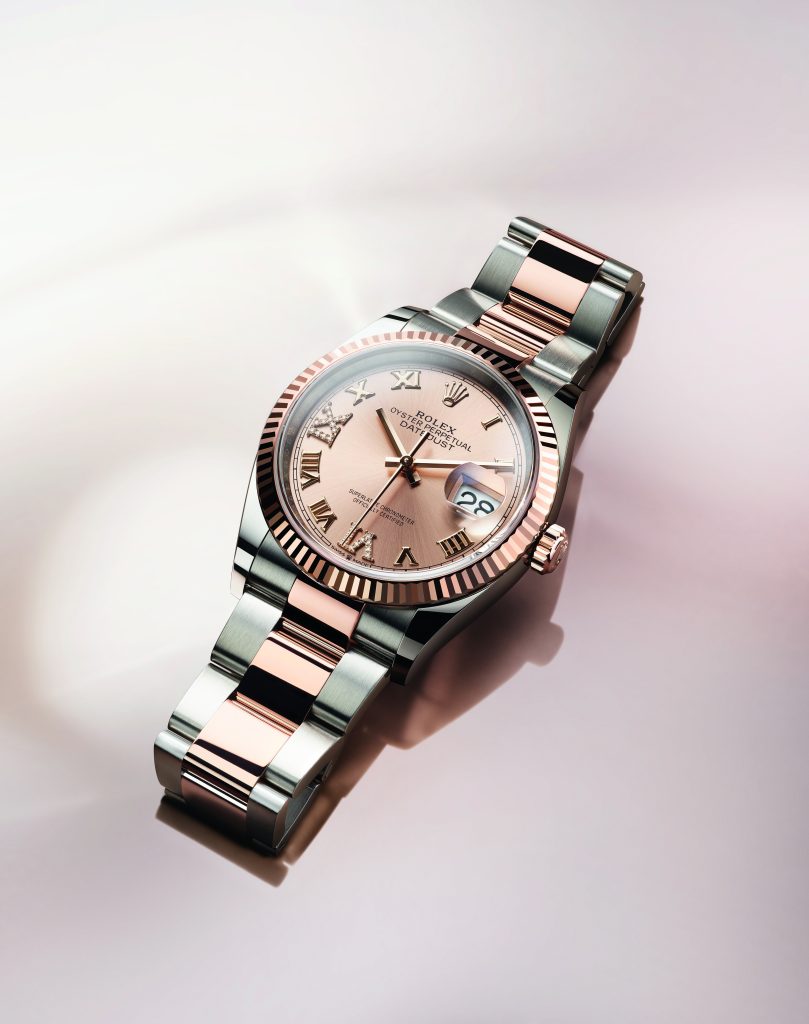
As far as complications go, the date window is fairly simple and universal. As the name suggests, it displays the date via a numbered disk that passes under an aperture in the dial, usually positioned at 3 o’clock, 4:30, or 6 o’clock.
Perpetual calendar
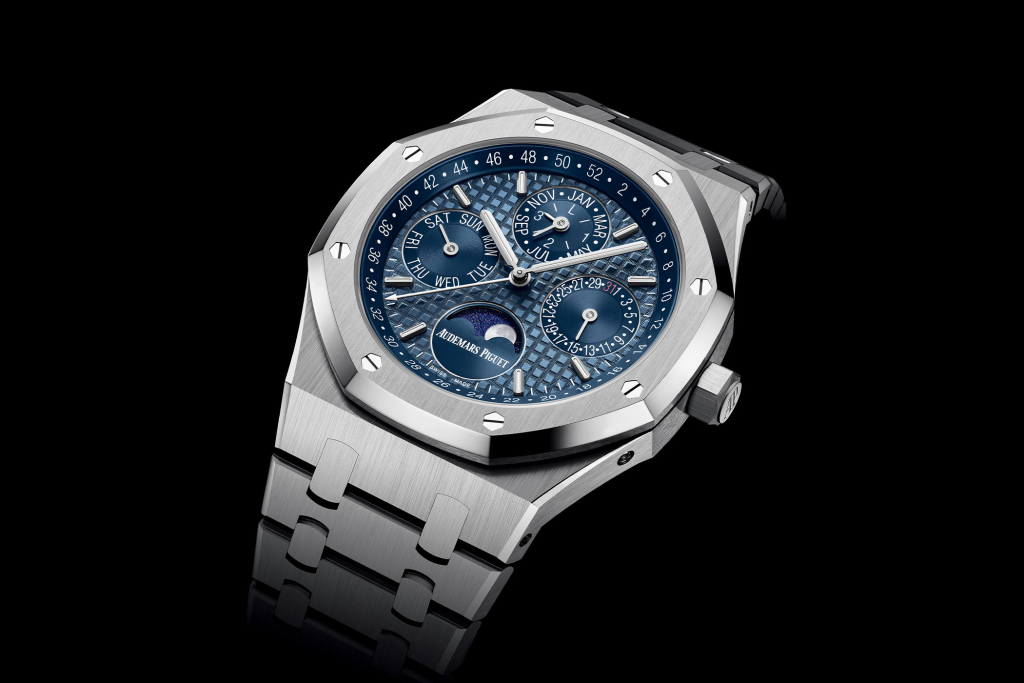
The invention of the first pocket watch with a perpetual calendar is attributed to the English watchmaker Thomas Mudge in 1764, as an answer to the complex system of the Gregorian calendar, which has months of 28, 30 and 31 days, with an extra day in February during leap years, which occur every four years. The exceptional mechanical memory of 1,461 days (four years) offered by the complication takes all these variables into account, enabling it to display the time, day, date, month, and often the moon-phase, accurately until the year 2100.
Jump hour
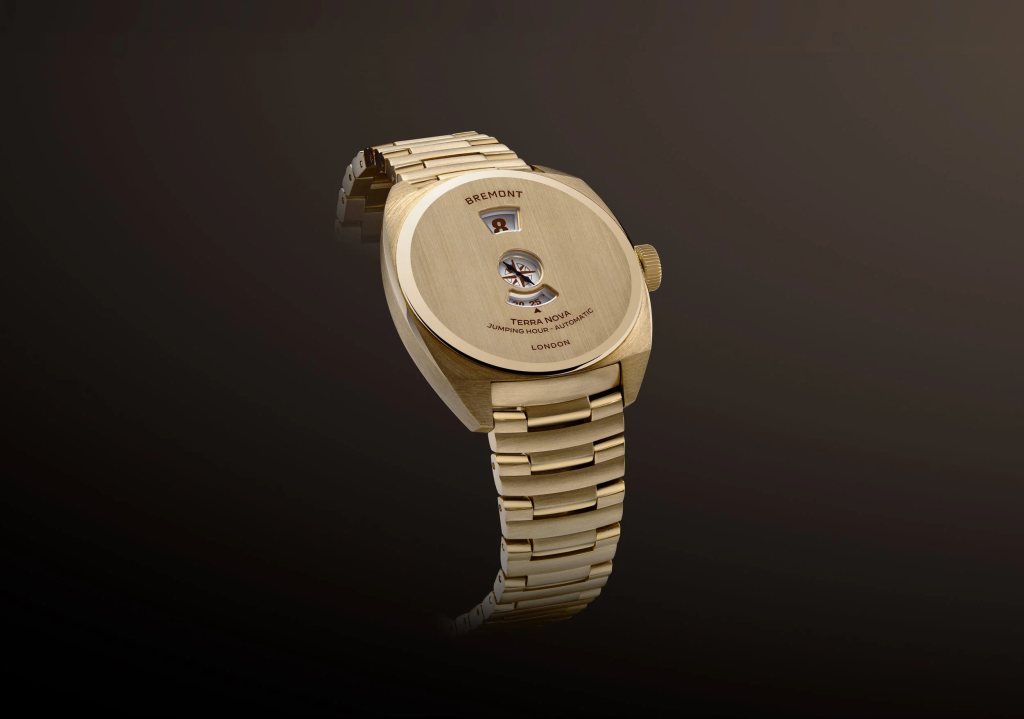
Rather than display the time with a slowly sweeping hour hand, the jump hour watch uses a window and a rotating disc that instantaneously “jumps” to the following hour at the appointed time. Developed in the 19th century, jump hour watches came to prominence during the 1920s.
Moon phase
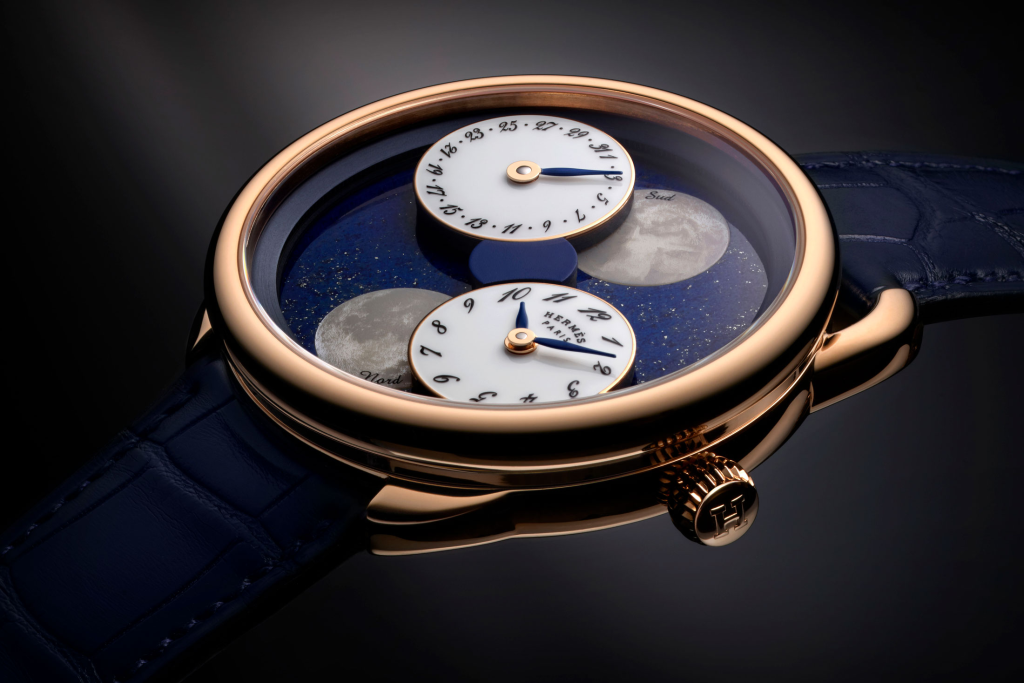
This complication tracks the phase of the moon with a moon replica on the watch displaying its position lit by the sun from the earth’s vantage point. It’s essentially a reminder to look up when you look down. Within the mechanism is a disc with 59 teeth that will advance the moon phase via the hour hand one full phase per day, aligning with the 29.5-ish-day moon cycle. This poetic feature is a nod to ancient times, when lunar cycles were essential for timekeeping.
Chronograph
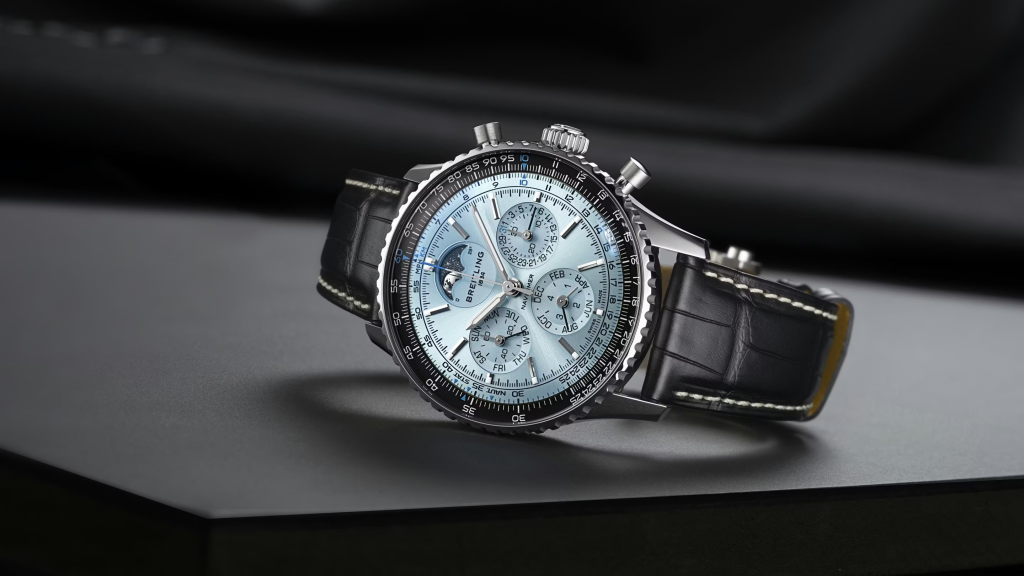
At its core, a chronograph is simply a stopwatch built into your timepiece, allowing the user to track the length of elapsed time of an event or occurrence. Some chronographs use a single pusher (“monopusher” or “monopoussoir” in French), while others use two buttons.
Flyback chronograph
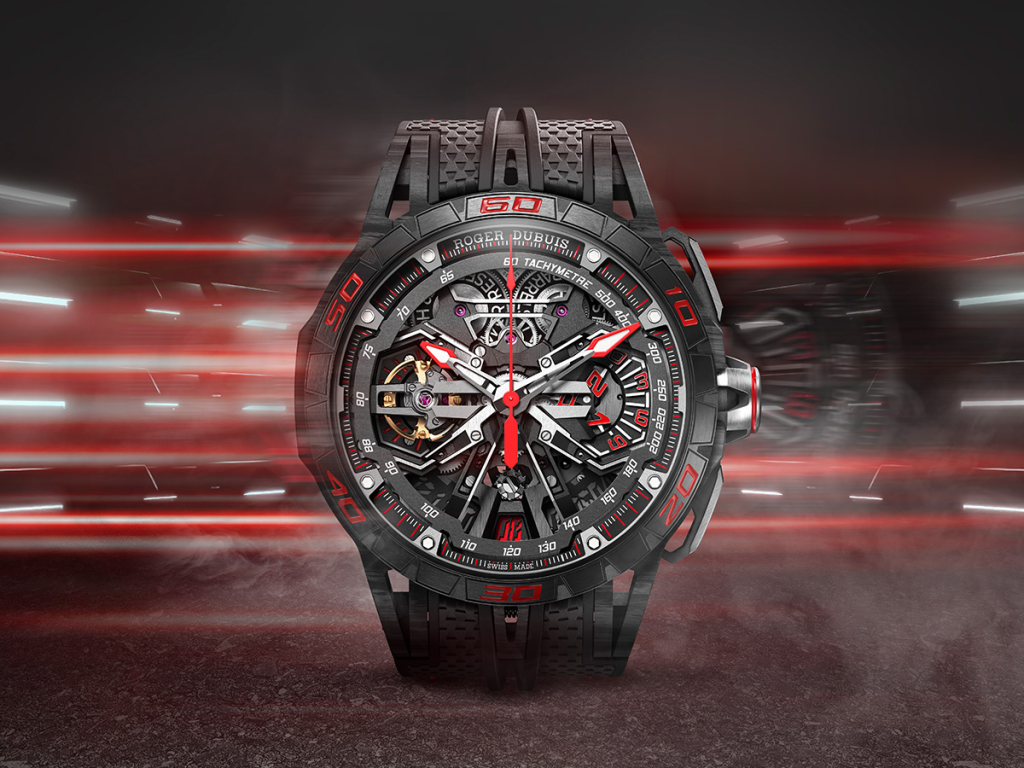
This even more complicated take on the simple chronograph is particularly useful for timing intervals. Rather than needing to stop the chronograph before resetting it, the user simply pushes a single button that returns the hands to to zero and sets them running again. This way, successive events, such as laps, can easily be timed with accuracy. This quick reset feature is essential for achieving split-second accuracy.
Rattrapante
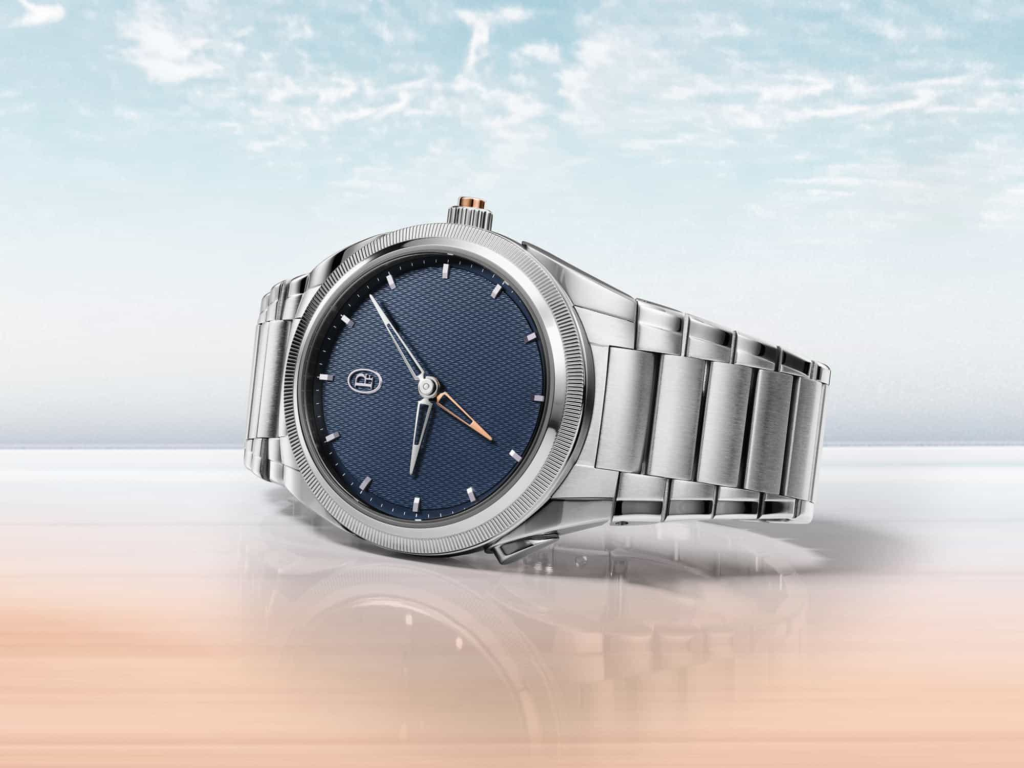
A step up in sophistication from the flyback chronograph, a rattrapante (or split-seconds chronograph) is a complication that incorporates two superimposed seconds hands within a single chronograph movement. Both are started together, after which one can be stopped while the second continues, enabling the precise timing of multiple events or intermediate intervals starting simultaneously.
Minute repeater
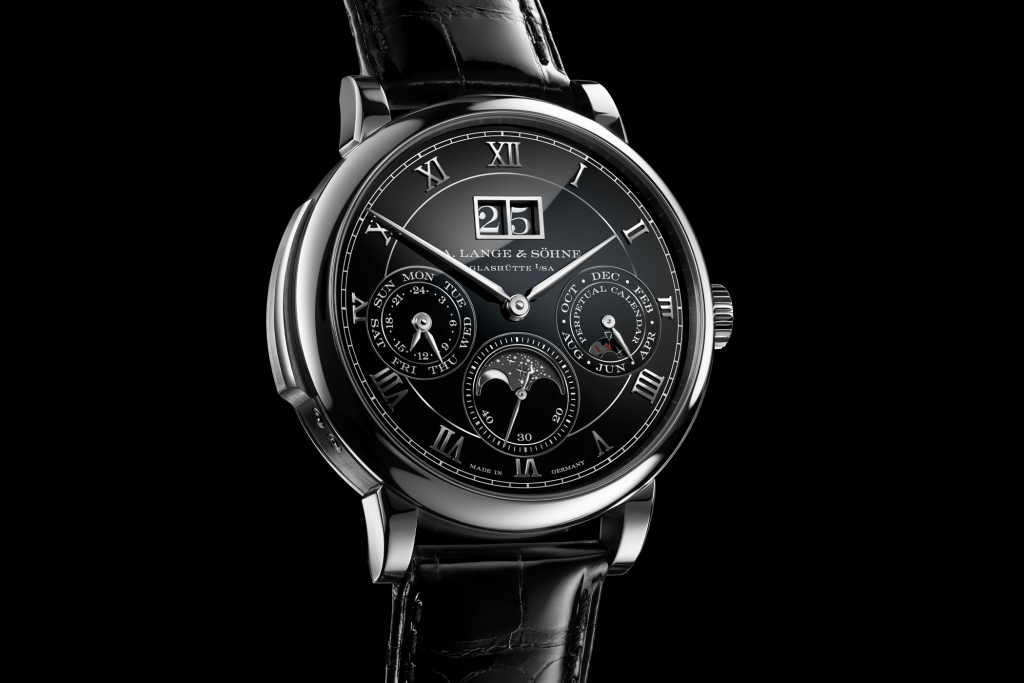
The minute repeater is a highly complex acoustic complication that, on demand, chimes hours, quarter hours and minutes using miniature hammers and gongs, allowing one to know the time without glancing at their watch dial. This masterpiece of precision watchmaking requires the finest mechanics and the utmost precision in sound design.
Tourbillon
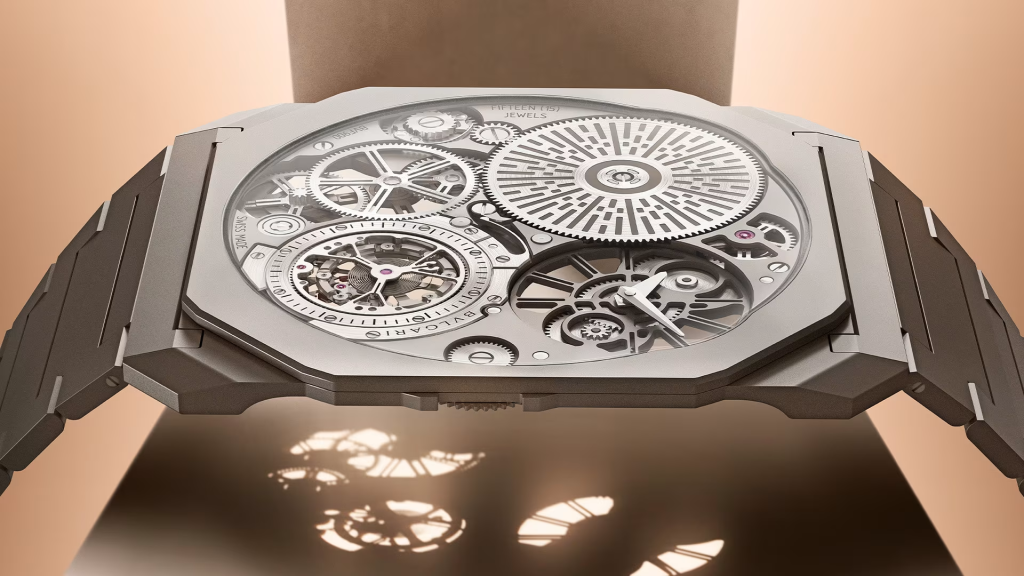
Not really a complication by the strictest meaning of the term, as it doesn’t add an additional function to the timekeeping, a tourbillon is nevertheless held up as an example of elite horological technology and watches equipped with them are highly prized and almost invariably pricey. Patented by Abraham-Louis Breguet in 1801, the tourbillon (French for “whirlwind”) works as a protector to shield the small parts within a timepiece from the effects of gravity. The tourbillon’s balletic motions make a luxury watch come to mesmerising life when it is displayed through a dial aperture, as it is in the vast majority of timepieces that include it today.
GMT
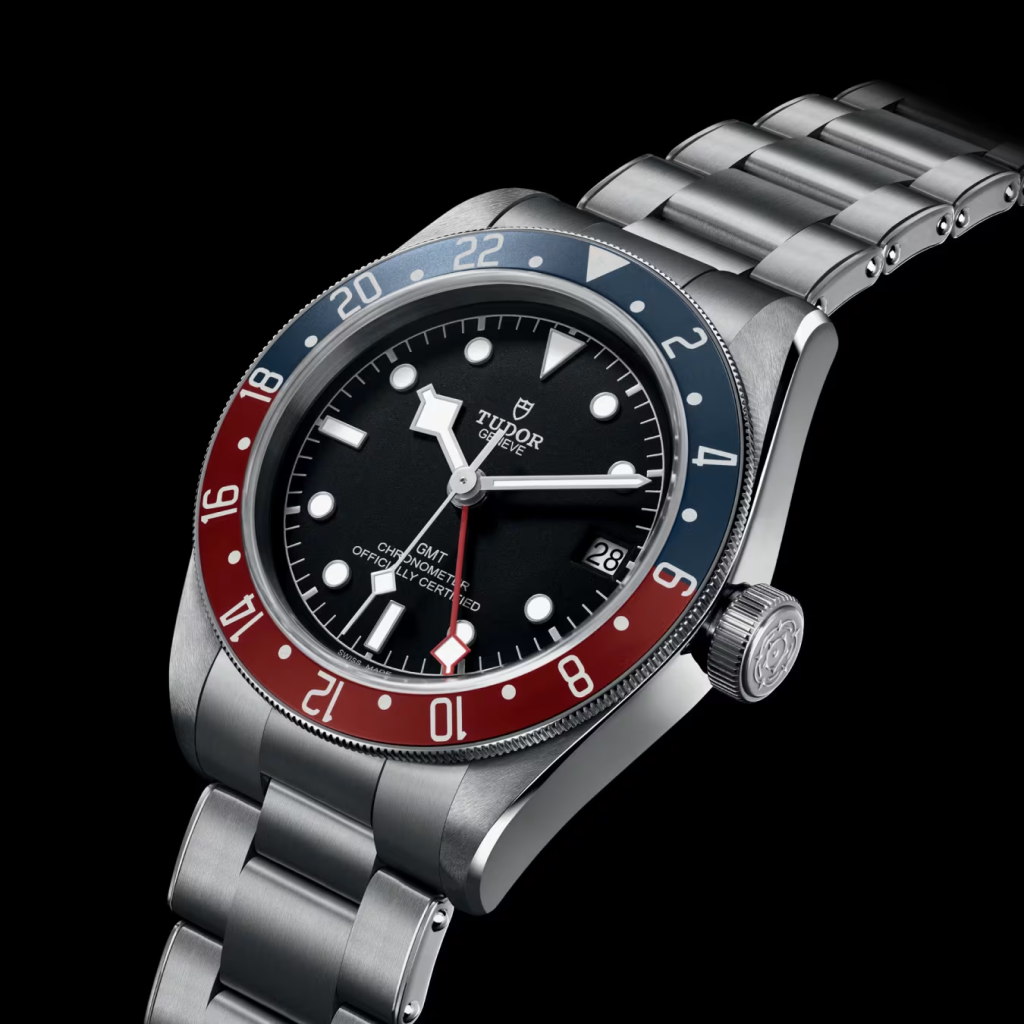
For many modern-day travellers, a display for the time in two different time zones is all that is required: the time at home and the local time of the country they are visiting. In this instance, a GMT watch would suffice, featuring an additional hour hand on the watch dial. This extra hand points towards a 24-hour scale so the wearer can track a second time zone.
World time
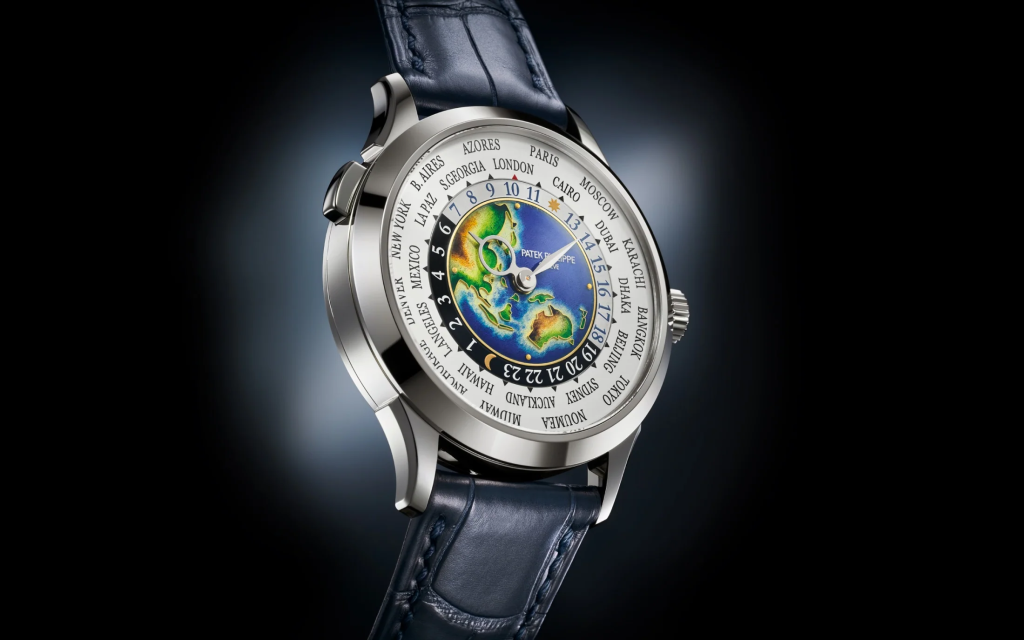
Invented in the 1930’s by Louis Cottier, the world time complication displays all (or most of) the world’s time zones simultaneously. Often this is achieved with the use of a rotating inner 24-hour ring in combination with a city ring and a conventional handset.
See also: Carolina Bucci’s favourite watches