


’Tis the season for root vegetables. While they may not be the most attractive specimens in the produce bin, what these humble roots and tubers – beets, parsnips and carrots, among them – lack in immediate charm, they make up for in character, nutrition and versatility. Chefs Adam Catterall and Romaine Dupeyre talk to Stephenie Gee about these wholly underappreciated stars
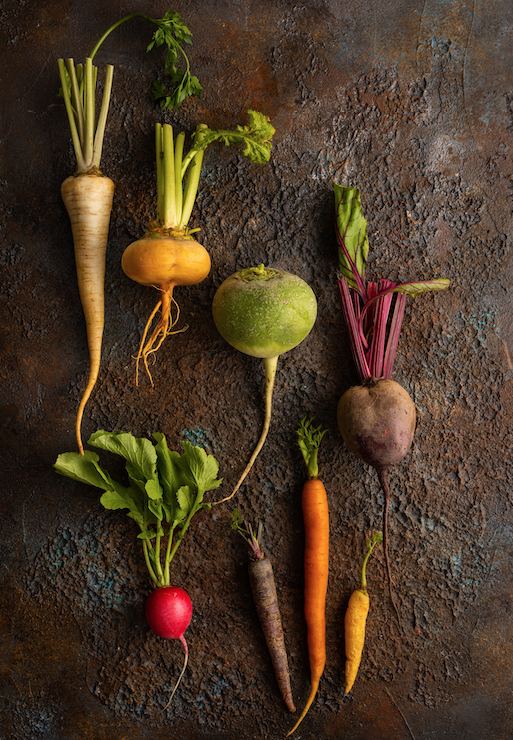
There is no denying they are an ugly bunch – oddly shaped, knobbly and just plain awkward. But if you can see past all of this, root vegetables really are quite endearing.
While most are available year-round, this collection of vegetables – including carrot, beetroot, sweet potato, potato, lotus root, turnip, garlic, ginger, horseradish and turmeric, just to name a few – truly come into their own during the cooler months. Richly flavoured and colourful (some more than others), each of these unique vegetables is packed with goodness, providing a powerhouse of vitamins, minerals and antioxidants.
They have sustained civilisations for millennia. Archaeological evidence suggests that early humans foraged wild roots long before agriculture took hold. By 10,000 BCE, as farming emerged, roots like yams and taro became dietary cornerstones in Africa and Asia. In Europe, turnips and parsnips fueled peasants through cold winters, while beets painted Eastern European cuisine with their ruby hue. Potatoes, introduced to Europe from the Americas in the 16th century, sparked a food revolution and have played an important role in many intervals of history. These vegetables weren’t just sustenance; they carried cultural weight. In medieval Europe, turnips symbolised simplicity and resilience, while beets held mystical allure in folklore, believed to ward off evil.
Even so, root vegetables have long been overlooked in favour of their above-ground counterparts. Carrots are ubiquitous, but often neglected, rarely given a place of prominence on any table. Beets remain divisive at best, and at worst, downright despised. And parsnips, salsify and rutabagas remain a mystery for many. Unlike showier produce, root vegetables have the distinct visual disadvantage of being cultivated underground, far from sight. We humans are visual, and part of the appeal of fruit and vegetables is watching them grow. Roots are grubby little things, bunched together with flecks of dried dirt still stubbornly clinging to them.
“Root vegetables are often seen as quite ‘basic’ or boring compared to more glamorous ingredients like asparagus or globe artichokes. And it’s easy to forget how many varieties there actually are. Most people think only of carrots and potatoes, when in reality the world of root vegetables is far richer,” says Adam Catterall, head chef of Roganic Hong Kong. Consider parsnips, carrots’ sweeter cousins, whose rich, nutty flavour shines in roasted dishes and soups. Or bright and peppery radishes, which add a refreshing crunch to salads or a zesty kick when pickled. Then there are the exotic varieties too. For instance, cassava, a tuber originating in South America, is the foundation of tapioca and a vital carbohydrate source in tropical countries. Native to Mexico, jicama has surprisingly juicy flesh reminiscent of an Asian pear, mostly eaten raw in salads. Meanwhile, taro’s creamy texture and earthy flavour make it a beloved ingredient in Asian and Polynesian cuisines.
“At Roganic we love working with Jerusalem artichoke, celeriac and salsify, to name just a few,” he continues. “Though my favourite must be the celeriac, which is the root of the celery. It’s gnarly and a little awkward-looking from the outside, but inside it’s fragrant, silky and nutty. Its flavour is somewhere between celery and walnut.”
Primarily cultivated in the Mediterranean Basin and northern Europe, celeriac differs from its more commonly used counterpart, green stalk celery. Visually, the bulbous root vegetable can, admittedly, be a little scary-looking for those uninitiated. The outer skin is a mottled beige with flecks of white showing through knobby brown patches, with the occasional dangling root strand here and there. Woefully short on looks and charisma, its hideous appearance may be partly responsible for its general neglect.
Also see: Yong Fu’s head chef on the joys of Ningbo cuisine
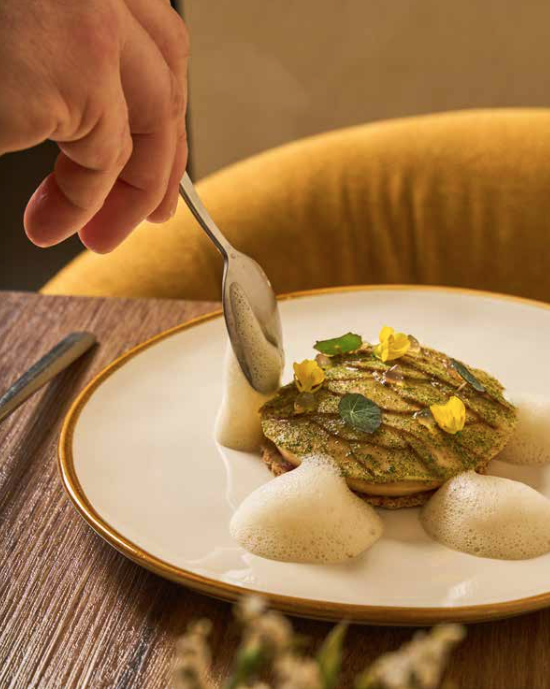
At Roganic this season, Catterall brings this peculiar root to the forefront in a celeriac and yeast creation. “This dish really celebrates celeriac as a centrepiece rather than a side. We roast cylinders of celeriac slowly in foaming butter and aromatics until they’re tender and golden at the edges, then dust them with toasted yeast to enhance their natural sweetness with deep, nutty, savoury notes. The dish is finished with a sauce made from buttermilk and the fermented juice of the celeriac, adding acidity and balance to bring everything together,” he explains.
As with any veggie, the best and most common methods for cooking root vegetables are steaming, sautéing, baking, roasting, braising and grilling. Catterall finds them especially suited to roasting – the high heat caramelises their natural sugars, intensifying their sweetness while adding a crispy edge with soft, tender flesh. “But they’re incredibly versatile, so it’s hard to choose just one method,” he adds. “In the restaurant, we also love to pickle, ferment, purée and slow cook them, with each technique bringing out a different side of the vegetable. Once you’ve mastered a few of these methods, the results are incredibly rewarding.”
Romain Dupeyre, executive chef and co-owner of the one- Michelin-starred Racines, concurs. “What I love most is how versatile they are,” he says. “Root vegetables often have bold, earthy flavours and require a certain level of technique to truly bring out their best qualities. When prepared well, they can be incredibly impressive, but they require thoughtful handling to showcase their depth and complexity. You can infuse them with spices, herbs and other seasonings to elevate their profile. I recommend baking them in the oven, as this avoids diluting their flavors with water that is naturally released and helps concentrate and enhance their natural sweetness and earthiness.”
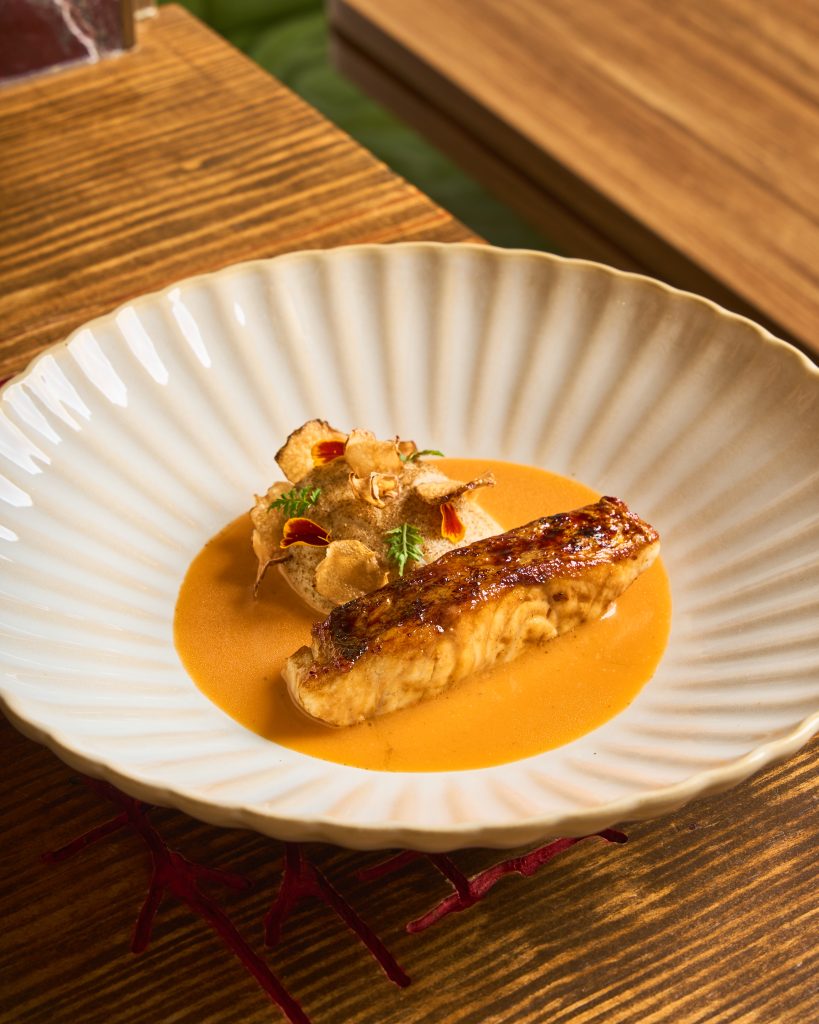
A true showcase of the season, the restaurant’s latest menu features a variety of root vegetables, including Jerusalem artichokes, his personal favourite for their earthy sweetness and unique flavour. Also known as sunchoke, this hardy perennial is paired with a beautiful Japanese Suzuki seabass, air-dried for a few days to develop texture, then cooked over Japanese binchotan charcoal for smoky notes, and finished with a glaze of clementine juice and soy reduction. The artichoke itself is presented in various textures – some are baked and crushed for a crunch, some mixed with sea herbs like samphire and clementine jam for a bittersweet touch, and some transformed into a smoky espuma (foam) for a soft, rich texture that highlights its nuttiness. The dish is brought together with a delicate beurre blanc made from reduced white wine, marigold butter and Hokkaido uni, adding a touch of acidity and elegance.
Then there’s beetroot and chervil root. “For the beetroot, we cook it over charcoal, which intensifies its natural flavour and adds a smoky dimension. We then pair it with wasabi and Gambero shrimp to elevate the sweetness and add layers of umami,” Dupeyre explains. “The chervil root, which is lesser known to guests, is a fun challenge to showcase on our menu. It has a similar flavour to parsnip but slightly sweeter. We serve it with snails and figs to create interesting textures and contrasting flavours in the dish.”
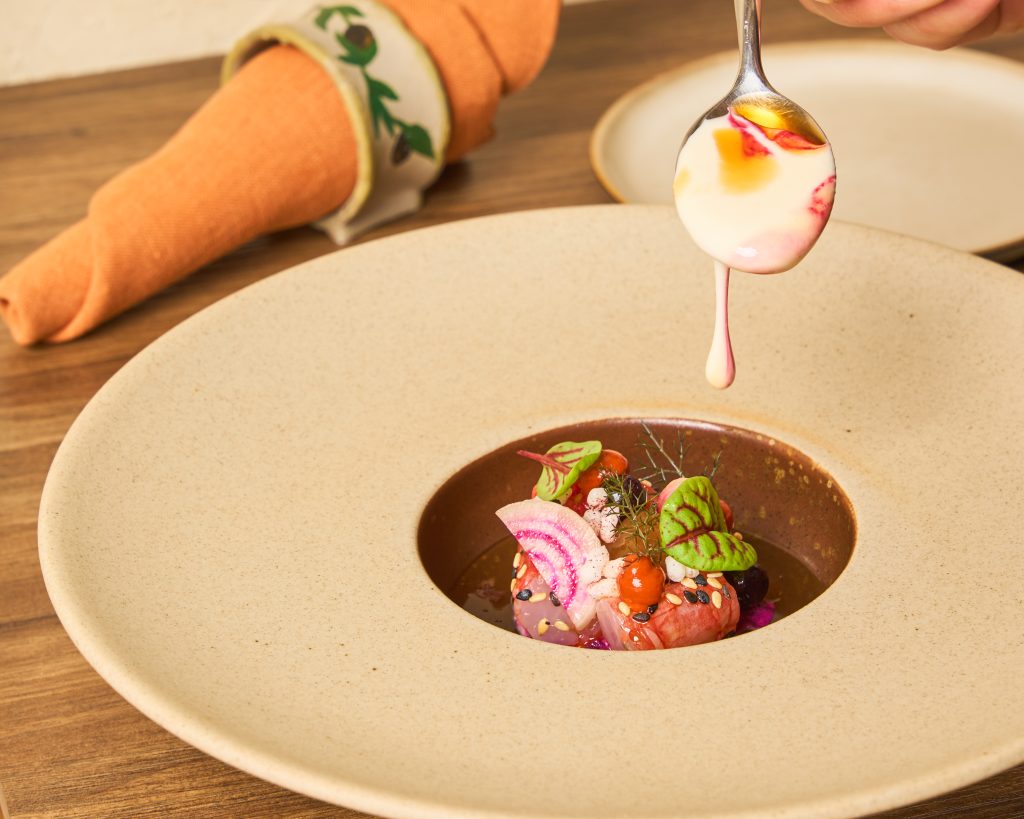
At its base, you’ll find a crisp tart crust crafted from hazelnuts and buckwheat, layered inside with raw figs, diced shallots and tender chervil root pieces, and topped with a luscious fig jam infused with cooked vegetables and Banyuls vinegar. Served alongside is a roasted chervil root royale and escargot prepared in a delicate escabeche. A raw slice of chervil root, seasoned with fig leaf vinaigrette, crowns the dish with a fresh, aromatic touch, with a drizzle of Pineau des Charentes gel and sprinkle of fig leaf powder for extra depth. The plate is completed with a frothy sauce made from the escabeche and a vibrant nasturtium coulis, creating a harmonious symphony of flavours.
In a world of culinary extravagance, there’s something beautiful about embracing the ordinary. As root vegetables make a triumphant return to our plates, it marks a return to simplicity, and a celebration of the earth’s bounty. “I love that root vegetables are humble, affordable and available all year round,” Catterall says. “When they’re treated with care and cooked properly, their natural flavours shine – deep, earthy, sweet, sometimes floral or nutty, and truly unbeatable.”
Also see: Fairmont Singapore uses aquaponics to Make Special Happen