

In town for the opening of his namesake restaurant, the lauded Korean-American chef Akira Back tells Stephenie Gee about his journey to the kitchen, signature brand of cooking and Hong Kong debut
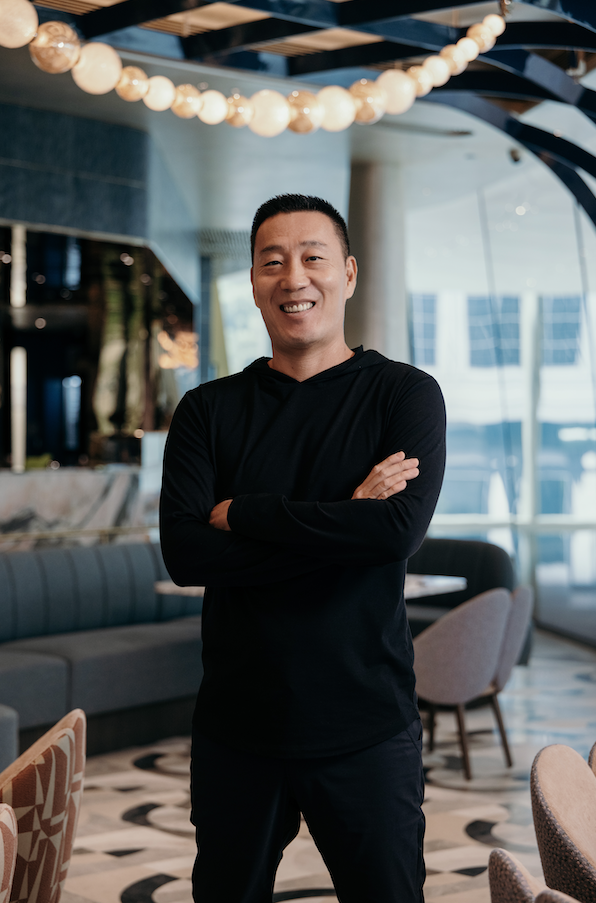
A young Akira Back knew from the moment he picked up his first pair of chopsticks that he wanted to be a chef. Sitting in his new eponymous restaurant at The Henderson, this is the story the celebrity chef and restaurateur wishes he had to tell. “But I don’t,” he admits. “I never thought I would be a chef actually. I just wanted to be cool.”
Back’s life has been the pursuit of becoming, well, cool. Born in Seoul, he was 15 when his father uprooted their family to Aspen, Colorado, to pursue the family business. Moving to the Rocky Mountain state could have been idyllic, except he didn’t speak a word of English. So, he picked up the coolest thing he could do with the sole intention of blending in and learning the language: snowboarding. A former baseball player, he quickly excelled, spending seven years competing on the professional circuit and even starring in extreme sports films. But while it gave him the friends and lifestyle he sought, the pressure from sponsors began piling on and Back decided it was time to step off.
“It just wasn’t what I signed up for anymore,” he tells me. “I wanted to be a snowboarder because I wanted to learn English and it was the coolest thing you could do. Snowboard, bleach your hair and, hopefully, you can date the blonde. That was the dream. And lucky enough, I dated the blonde and learned English. So I wanted to do something different.”
In Aspen, Back and his snowboarding buddies would frequent a Japanese restaurant, Kenichi, after training. He would watch sushi master Kenichi Kanada in action, chatting up guests over the bar and serving food that made people feel satiated and happy. He became smitten with the lifestyle. “He was so cool,” Back says. “So I asked him, ‘How can I be like you?’ He told me I first had to shave my head because at that time I had either white or blue hair. So I did and he went, ‘You know I was joking, right?’ But I was like, ‘I shaved my head. You have to hire me.’ I went there every day for almost two weeks before he gave me a job of washing dishes.”
He spent his first few years learning things the hard way, even counting grains of sushi rice on the floor with chopsticks as penance for wasting rice. “He would tell me to respect the rice and I would think, fucking respect the rice for what? He’s an idiot, right? Gradually though, I started spilling less rice, little by little.
But those three years, I’m telling you, were hell,” Back says. “The only reason I didn’t give up was because of my parents. My father was an outdoor designer and he wanted me to take over the family business. They still allowed me to do anything I wanted – wear baggy pants, bleach my hair, pierce my noise. He eventually gave me his blessing, but my father actually stopped talking to me when I told them I wanted to be a chef. I had never ever cooked in my life because my mom did everything for me. To this day I actually still don’t know how to do my laundry. I’m so spoiled. So I knew if I gave up cooking I would have to hear from my father, ‘I told you so’. I wanted to prove him wrong, and somehow after three years, I started enjoying it. It was challenging, but the more I did it the more I loved it because I felt like I could express myself.”
Combining his passions for adventure, travel and culinary exploration, Back went on to tour extensively through Japan and Europe, honing his skills under top celebrity chefs and industry leaders like Brian Nagao, “Iron Chef” Masaharu Morimoto and Nobu Matsuhisa. In 2008, he set out on his own, opening Yellowtail at the Bellagio and later Kumi at Mandalay Bay in 2013. Since then, the Korean-American chef has expanded his culinary empire to a collection of nearly 30 locations across the globe, including Paris, Los Angeles, Toronto, Dubai, Singapore, Seoul, and its latest addition, Hong Kong.
“I love Hong Kong. I visited as a kid with my father and many times after that. So after I became a chef and when I started expanding, I knew I had to one day open a restaurant in Hong Kong,” he says. “Everyone told me not to do it because it’s too tough. But I play sports so I like to challenge myself. I don’t want to go places that are easy. I don’t want to be easy. So for me, this is great because either you make it or you die. It’s awesome. I’m nervous, yes, because we have to be extra careful on what we’re do. But Hong Kong is such an energetic city – it’s amazing. And the people here – their palates are good. Unbelievably good. They can taste things most people cannot.”
Back’s first venture in the city, his namesake Akira Back marks the first of three culinary concepts to open at the architectural icon in Central, serving Japanese- Korean-American cuisine guided by a refined yet daring philosophy that weaves tradition and innovation together into an artistic array of dishes that at once surprise, delight and tell a story. A reflection of his own personal background, there’s precision and technique imbibed from his Japanese training, bold flavours from his Korean roots, and a pared-down approach to gastronomy that comes from serving an American clientele.
“It’s very simple and not too serious,” Back explains of the menu. “I don’t want people to come here and look at it and feel not educated enough to understand what we do. I want you to come here and just be able to have chill, eat, drink, enjoy and go. And we have something for everyone at this restaurant. If you come with a group of friends and one of them is vegan, we have something. If you like meat, we have some great meat dishes. I don’t put anything I don’t like on our menu because sometimes I’ll actually go vegan for a week. And sometimes I don’t even touch vegetables and will only eat meat or fish. So this is what makes our restaurant unique. We have it all.”
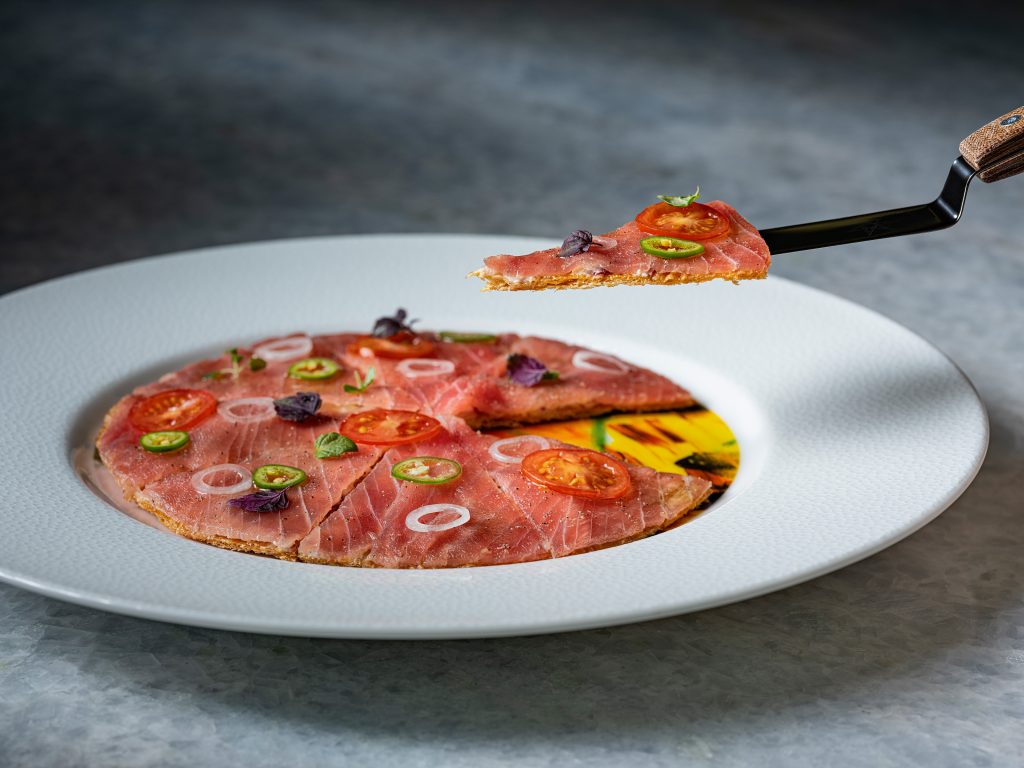
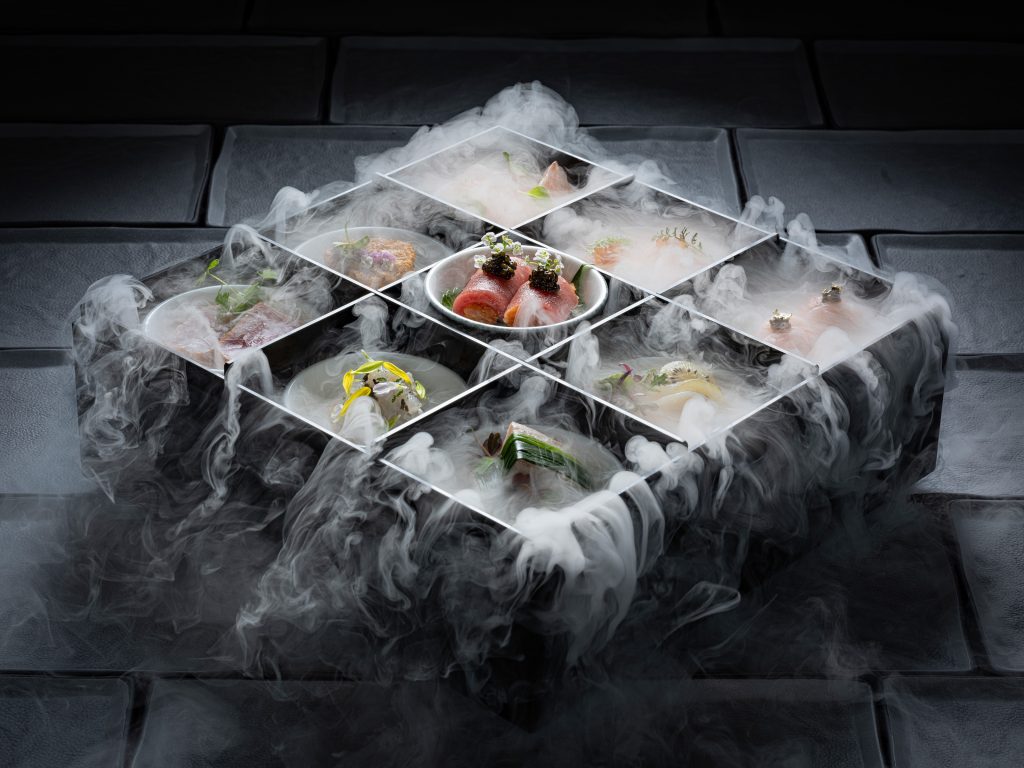
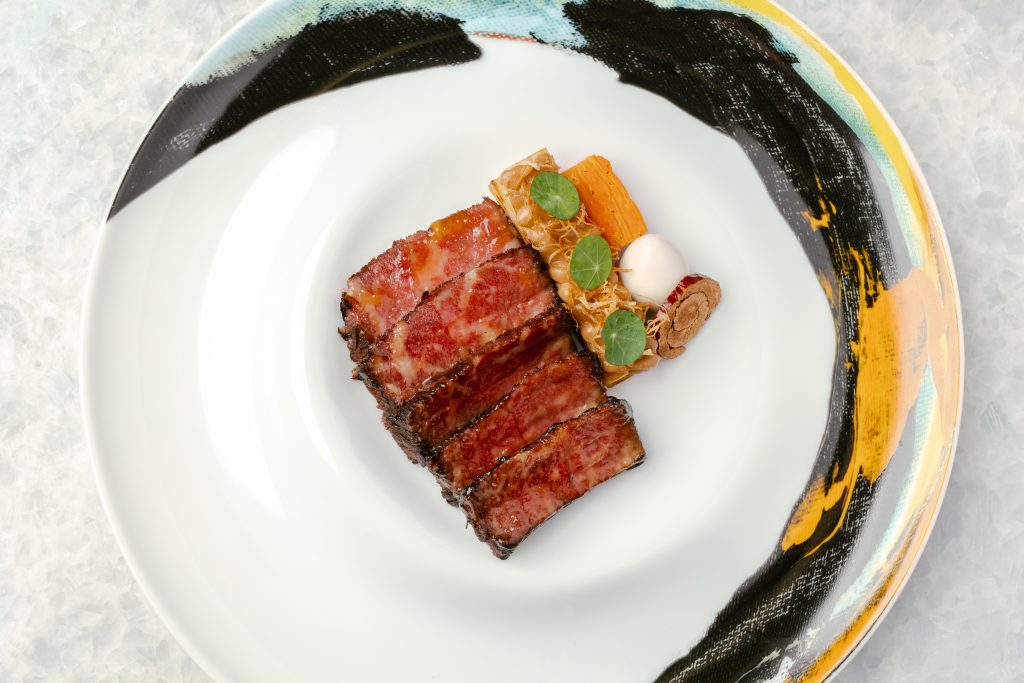
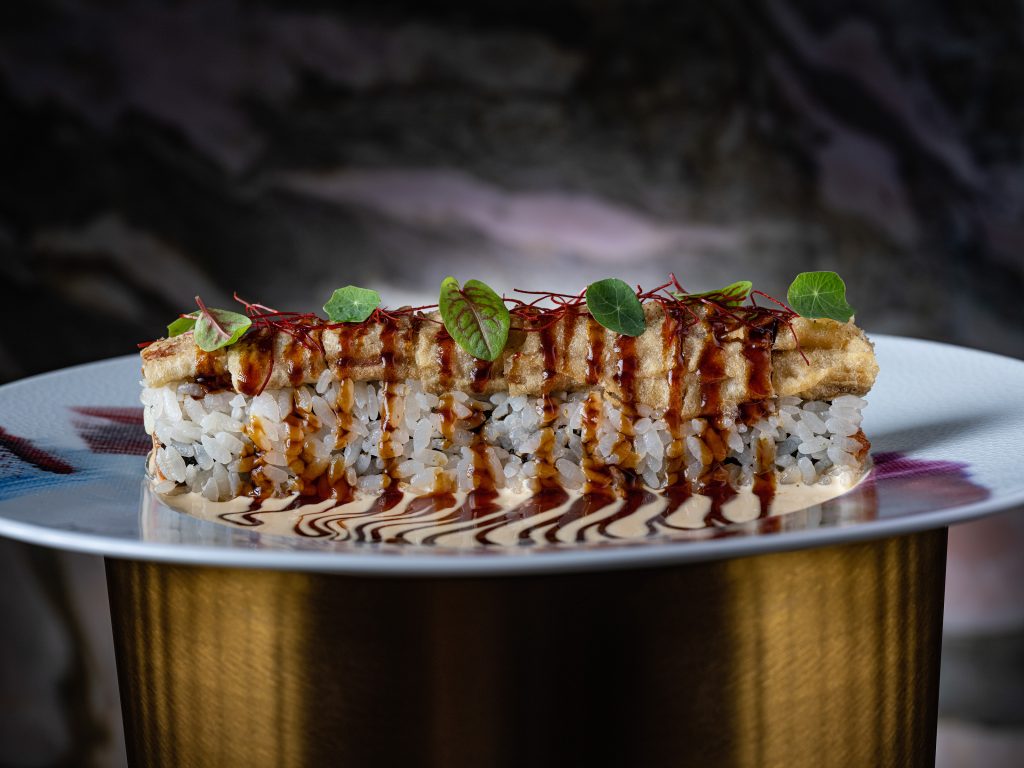
All inspired by life and memories, signatures and favourites include the AB tuna pizza, laced with umami aioli, micro shisho and white truffle oil; Brother from Another Mother, a maki roll featuring a combination of saltwater eel anago, freshwater eel unagi and shaved foie gras torchon, and dressed in ponzu aioli for a light, zesty touch; and 48-hour wagyu short ribs, an homage to his mother’s galbi-jim, served in a braising jus with root veggies and quail egg. “I hate to say this, but I love everything on the menu,” Back says. “But there are two items I think you must try. The first is the pizza. When you eat it, little by little you’ll see my mum’s painting underneath on the plate. When I first made this 30 years ago, it was my mum’s favourite and that’s why this dish became a signature for us. And the other one is the short rib. My mother used to make this for me. Beef was very expensive back in the day, so she’d braise it for a really long time with humble ingredients like carrots, potatoes and quail egg, which were much cheaper than chicken eggs. So I took that memory and made my own version. Is it better than my mum’s? No. But she never gave me a recipe. She always just goes, ‘Put this, put this’. It would always taste different but then she’ll fix it and it would be good again. I still have no idea what’s different and I can’t figure it out. But for me, it’s memory and I love it.”
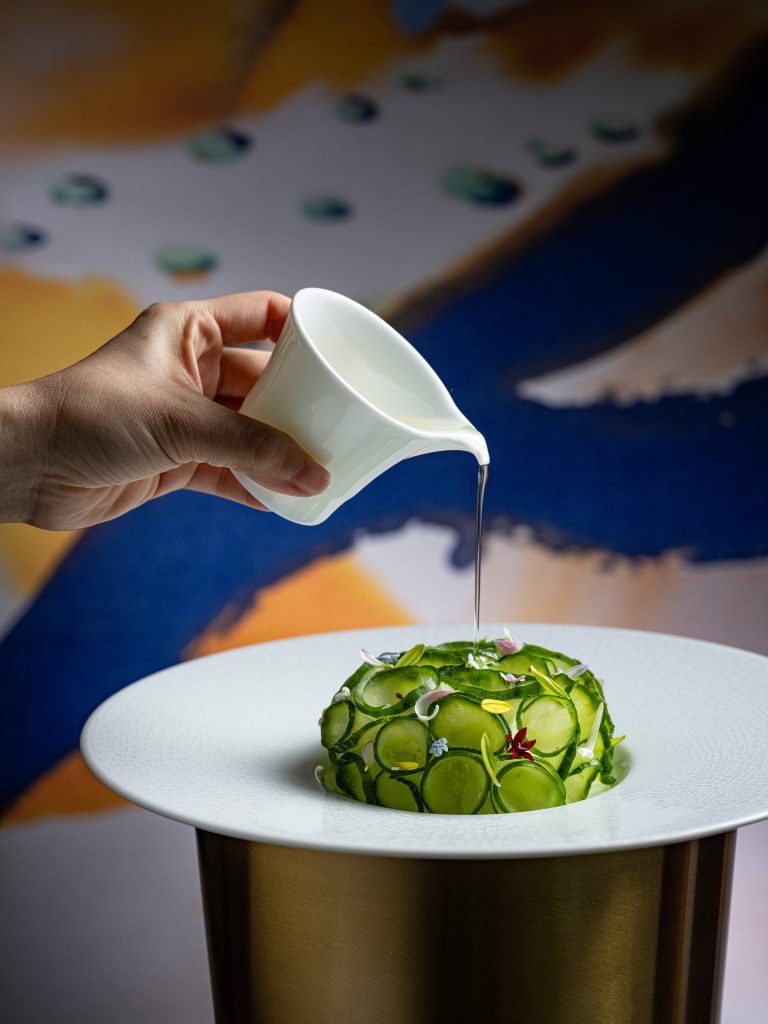
While his dishes may appear simple, each one conceals a wealth of details. The delicate AB cucumber salad, for example, is painstakingly constructed by folding slivers of the vegetable into a dome-like shape, then finished with amazu, toasted sesame seeds and seasonal flowers. In his compressed watermelon carpaccio, what appears to be raw beef is actually thinly sliced watermelon marinated in paprika vinaigrette for 24 hours, crumbled over with feta and candied walnuts. And the apple harumaki dessert – reminiscent of an apple pie in the form of a deep-fried Japanese spring roll filled with cinnamon cream cheese and caramelised apple – perfectly maintains its structural integrity and superbly crisp texture well after it’s been served.
Finding a home within the design-forward landmark penned by none other than Zaha Hadid Architects meant the restaurant interiors had to be appropriately striking. AB Concept rose to the occasion, mapping out a space that matches the dynamism and sophistication of Back’s genre-breaking cuisine, while respectfully balancing the building’s original design concept. “When we started working with Chef Akira, I was drawn to and inspired by his energy,” explains AB Concept co-founder
Ed Ng. “He has a unique blend of creativity, confidence and warmth that makes him truly special. His cuisine is bold and imaginative, but it always comes from a place of sincerity and comfort. So we developed the narrative of Akira Back the restaurant as a ‘culinary symphony’, a restaurant where light, texture and form move together in rhythm, complimenting chef Akira’s cuisine while also connecting with the fluid architectural form of The Henderson. Our goal was to create a space that feels alive and expressive, yet still intimate enough to foster personal connection at the table.”
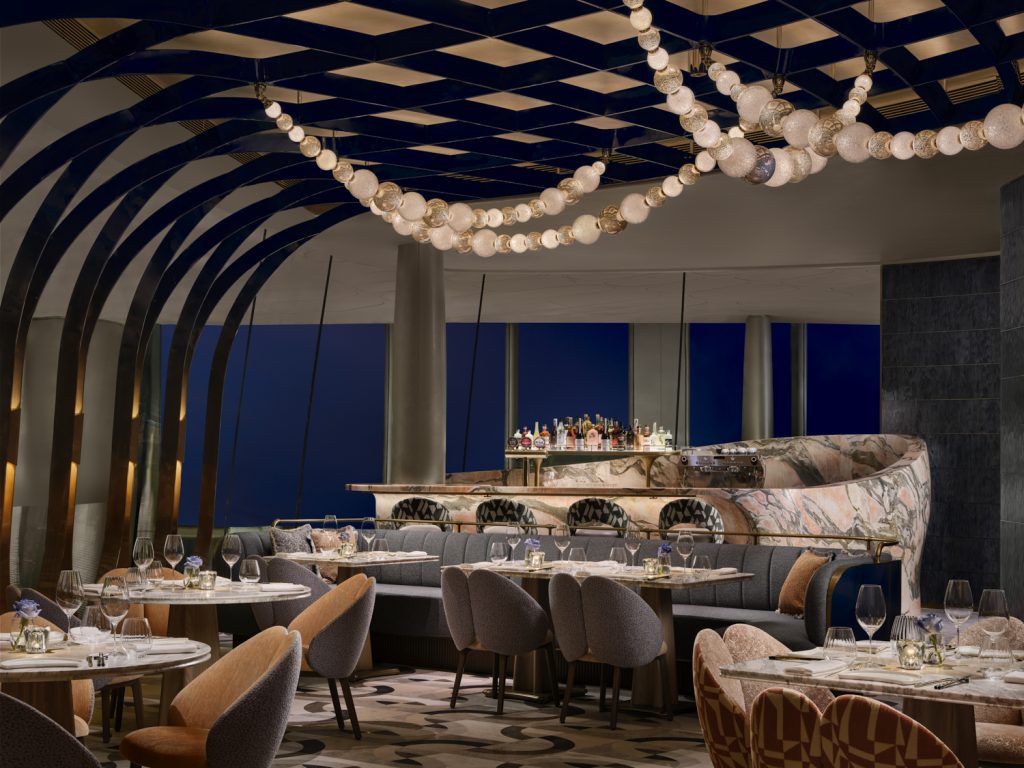
Gentle curves, undulating lines and spherical elements define the design. At the entrance, a swirling installation inspired by a water vortex makes for an immediate and strong first impression. Inside, the ceiling’s intricate lattice features individually unique panels, reflecting the tower’s own innovative structural language. The undulating mirrors are a more direct homage, mimicking the iconic curving facade of the building itself. While petal-like shapes throughout the custom-designed furniture pieces echo The Henderson’s Hong Kong orchid concept. Honouring Back’s culinary roots, walls are wrapped in modern blue, spoon-carved wood in a nod to Japanese craftsmanship, while gold accents resemble rice wheat, a symbol of harvest and gratitude.
“Working with chef Akira was always exciting. He does not give long design briefs – he gives feelings and pure imagination,” Ng continues. “For the restaurant, he envisioned the entrance as a swirling vortex – an idea that gave us the freedom to interpret and explore. That single concept became the seed for everything that followed. We asked ourselves: what could a vortex look like? It could be purely geometric, or something visually and emotionally captivating. In the end, we created a sculptural entrance that feels almost unreal, welcoming guests with a sense of wonder as they arrive. He placed complete trust in us and that level of creative freedom was what made the collaboration fluid. It allowed us to design something that not only reflects his vision but also evolves naturally through conversation and intuition.”
But the most distinctive feature of the space is Back’s mother’s art. It’s been a constant companion for the chef, and AB Concept has Young-hee Back’s abstract motifs seamlessly woven throughout the experience – from the walls and menu covers to the ceilings and even the plates you dine on. “When we began shaping the design narrative, we learned that chef Akira’s Korean and Japanese background strongly influence how he sees the world,” Ng continues. “His mother is an artist, and her paintings are filled emotion and vibrant colour. We used one of her artworks as the foundation of the interior palette, and those colours, lines and emotions appear subtly all throughout the space.”
In the private dining room, her graffiti-inspired painting serves as a large-scale statement piece under the whimsical “marshmallow” ceiling with polished brass highlights, infusing the space with vibrant colour and dynamic personality. It’s Back’s favourite room. “If there’s no my mum’s art, there’s no us,” he says. “I’m not religious, but whenever I see my mum’s art I feel like I’m protected. It’s like what we call in Korean bujeok, or talisman. Yesterday, something went wrong so I went inside because that’s where most of her art is and just sat there for a minute, then I was all good again.”
And so, what’s next? “A lot of people ask me how far I can go. When am I going stop? I tell them that I’ll stop once I’m not having fun anymore. And that’s my secret to success: just have fun. That’s it,” Back says. “It might be tomorrow. You never know in life. But I just love meeting new people. It’s so interesting listening to them talk about their life. Then they listen to my story, and they think my life is crazier than theirs. It’s awesome. I think I still have 10 years on me for sure, but who knows? Right now, though, I’m loving it.”
Also see: Pernod Ricard’s SIP Supernova 2026 aims to nurture a new generation of Hong Kong bartending talents