

Twenty years after the Qizhong Tennis Centre first opened to host the year-end Tennis Masters Cup, the Rolex Shanghai Masters has become one of the most popular events on the global tennis tour. Long-time director Michael Luévano explains to Steve Rockowitz what keeps players – and fans – coming back
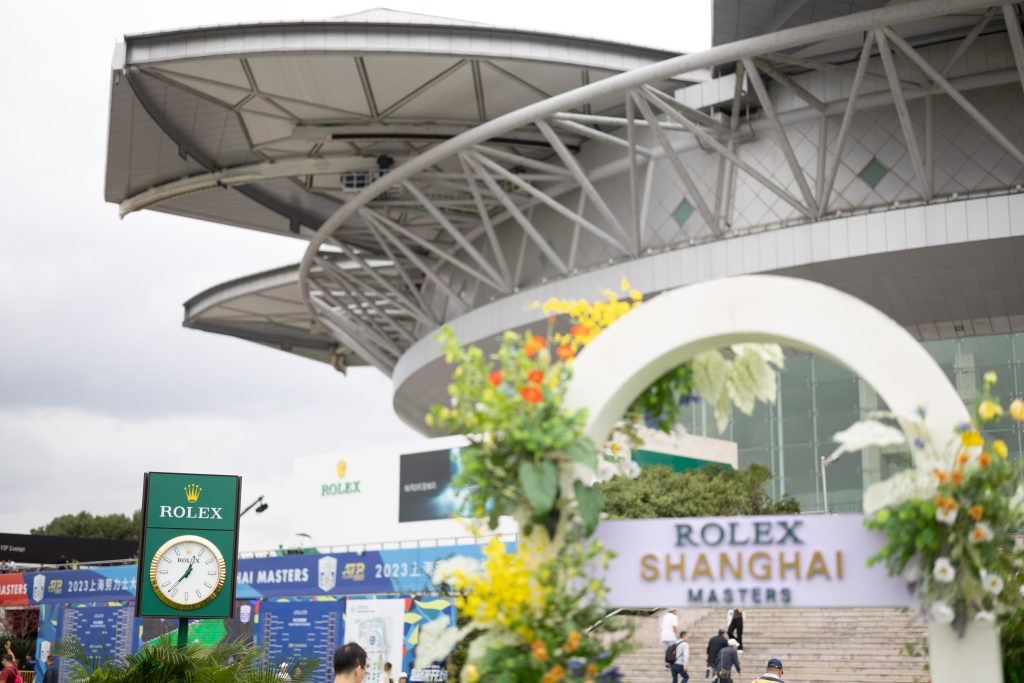
Each autumn, the Rolex Shanghai Masters returns to the Qizhong Tennis Centre and reaffirms its place as one of the most significant sporting events in the region. As the penultimate ATP Masters 1000 event of the year – and the only one in Asia-Pacific – it attracts the world’s leading men’s players while offering a uniquely Shanghai blend of world-class infrastructure, meticulous organisation and a highly knowledgeable fan base. The most recent edition in October once again demonstrated how far the event has evolved – and why it remains a defining stop on the global tennis calendar.
The tournament’s success is inseparable from its long-standing partnership with Rolex. Since becoming Title Sponsor in 2010, the Swiss watchmaker has helped shape the event’s identity and stature. Rolex’s deep involvement in tennis – spanning all four Grand Slams, every ATP Masters 1000, the Nitto ATP Finals, the WTA Finals and the leading team competitions – adds a historical and cultural layer that elevates the Shanghai stop beyond a standard tour event.
“Rolex is the envy of most tournaments in the world as a sponsor,” says tournament director Michael Luévano, who first arrived in Shanghai 28 years ago to help a stateowned transportation company that had just acquired a license to host an ATP 250 tournament. “We are incredibly fortunate to have a very long-term partnership with Rolex, who’s been supportive since 2009, since our inception as a Masters event.”
The tournament’s most recent editions represent the culmination of a long-term upgrade strategy – one that accelerated after a pandemic hiatus. “Coming back off Covid, we hadn’t staged a tournament in three years,” Luévano recalls. “So we had a lot of time to plan, which was probably a great thing. Anything that touched the players was the initial theme in 2023, from gymnasiums to physios to new doctors’ offices to a completely new player lounge and expanded kitchens. That was always our signature – providing a very player-focused environment.”
In 2024, investment shifted to infrastructure. New lighting systems were installed across the outer courts, and a retractable roof was added to Court Two – a fast-tracked project completed in just eight and a half months and representing an investment of more than 35 million RMB. “We’re very fortunate to have had great support from the Shanghai municipal government and, of course, our owners,” Luévano notes. “They’re very openminded and progressive when it comes to what it takes to keep up on an international scale at the Masters level.”
Court 17 was also expanded and redesigned as a 1,200- seat practice stadium, giving fans a rare up-close look at top players’ training sessions. There’s even a miniature golf course behind the players restaurant – a “tremendous success” given the tour pros’ apparent love of the sport as an off-court pastime. “You must innovate constantly,” Luévano says. “Early on, we knew expectations were low. ‘Oh, you’re a Masters in Mainland China, this is gonna be tough.’ It’s a great position to be in, because when they turn up and see Rolex is a title sponsor, okay, the bar is high. The bar is very high, but then all our software and hardware match this premium level.”
Rolex’s influence continues well beyond naming rights. The brand’s integration into the tournament reflects its influential role in shaping modern tennis. Rolex became the Official Timekeeper of Wimbledon in 1978 and has since expanded its portfolio to encompass the sport’s most important institutions, tournaments and players. In China, the brand has supported elite tennis for two decades, including the China Open in Beijing since 2005 and the Masters Cup in Shanghai in 2008.
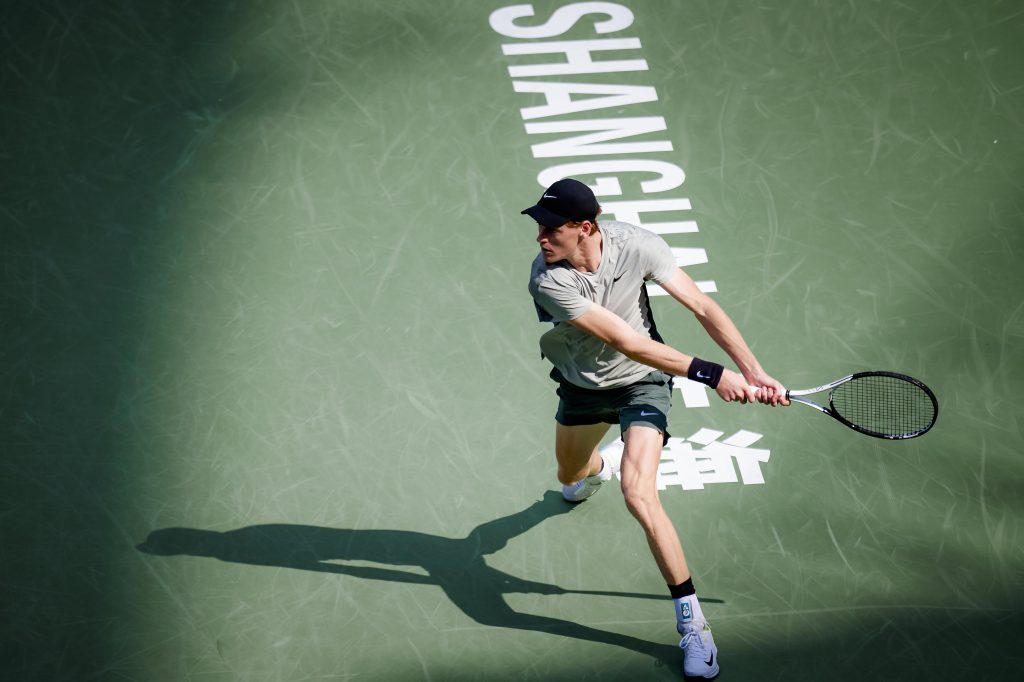
Many of today’s top players are part of the Rolex family, among them Jannik Sinner – a multiple Grand Slam champion and one of the leading figures of the sport’s new generation. Sinner has spoken often about the connection he feels with the brand. “Representing Rolex makes me feel part of a perfect family – you get to know and work with so many people who really care about you,” he says. “I’ve been with Rolex for five years and winning these kinds of titles together is one of the nicest feelings.”
For Luévano, the alignment between Shanghai Masters and the brand is easy to articulate. Asked which Rolex model best reflects the event, he says, “That’s actually an easy question. I would say the Presidential watch in platinum with an ice-blue face (The Oyster Perpetual Day-Date in platinum with an ice-blue dial and a President bracelet),” he says. “It’s by far the most elegant watch I’ve ever owned. It’s pristine – that sounds a bit arrogant, but it’s how I view this tournament.”
One of the Rolex Shanghai Masters’ defining strengths is its fan base. Tennis interest in China has grown steadily over the past two decades, buoyed by the achievements of Rolex Testimonees Li Na and Qinwen Zheng, who together have amassed two Grand Slam singles titles, an Olympic gold medal and a number of finals appearances.
“In 2023, we suddenly had 200,000 fans over the tournament,” Luévano says. “It became a twoweek event and these fans became incredibly enthusiastic. They’re chasing down players, watching practices and very educated, of course.” That momentum has continued in the years since, contributing to a tournament atmosphere that players frequently describe as among the most engaging on the tour.
The experience is also personal. Luévano’s habit of picking up players at the airport is a tradition unique to Shanghai and contributes to the warm reception that many athletes say distinguishes the event. Stars like Novak Djokovic and Stan Wawrinka have talked about “feeling the love of Mainland China”, while Roger Federer has returned every year since he retired from the sport. “He cut the ribbon to inaugurate the stadium for the ATP Masters Cup and he’s always had that feeling that this is his market,” Luévano says. “So he loves coming here and I think that also adds allure for all the players, certainly, but also our partners and the fans.”
While the Rolex Shanghai Masters is firmly established as Asia’s top men’s tournament, its role in player development is equally significant. The Road to the Rolex Shanghai Masters – a Challenger circuit now in its 11th year – offers a main-draw wildcard to the bestperforming Chinese player. The tournament’s organisers have also expanded their involvement into grassroots and professional development through the Just Seed programme, which supports local junior teams and runs junior tournaments. The most ambitious step came with the recent announcement of a full-scale tennis academy to be established at Qizhong.
“As we’ve matured as a professional tournament, we do need to do more,” Luévano says. “It’s all in the plan.”
Also see: A quick and convenient wellness retreat lies in Fusion Resort & Villas Da Nang