

A closer look at the roles that reveal Michael B. Jordan’s range and evolution over time
Michael B. Jordan’s Best Actor win at the Oscars may have surprised some – especially against strong contenders like Timothée Chalamet and Leonardo DiCaprio – but it ultimately feels well earned. It’s the result of years of steady growth on screen. From intimate indie dramas to major blockbusters, he has consistently brought depth to every role. Below are the five performances that trace the key moments that shaped his rise
Fruitvale Station (2013)
Michael B. Jordan’s breakthrough leading role arrived with Fruitvale Station (2013), his first collaboration with Ryan Coogler. Based on the true story of Oscar Grant, a 22-year-old man fatally shot by a police officer at Oakland’s Fruitvale station in the early hours of New Year’s Day 2009, the film follows the final day of his life.
Jordan captures the complexity and vulnerability of Grant during those final hours, as he tries to make amends, care for his family and navigate the pressures around him. He brings a natural, lived-in quality to the role, allowing the character’s humanity to emerge through quiet, everyday moments. Widely praised for its depth and emotional honesty, the performance established Jordan as a serious talent, with some critics even drawing comparisons to a young Denzel Washington.
Creed Trilogy (2015–2023)
Continuing his collaboration with Ryan Coogler, the Creed trilogy is where Jordan fully steps into leading-man territory as Adonis Creed – the role that arguably defined his rise to stardom. It’s a physically demanding part, with intense training and fight sequences, but what really gives the character weight is the emotional depth beneath it.
Across the films, Jordan turns Adonis into more than just a boxer. You see his insecurities, his struggle with legacy, and his need to define himself on his own terms. By Creed III, which he also directs, there’s a noticeable sense of control in the performance – both from the character and from Jordan himself as a filmmaker.
Black Panther (2018)
Entering the Marvel Cinematic Universe as Erik Killmonger in Black Panther, Jordan delivers one of its most memorable villains, and arguably the role that brought him the widest global recognition. What makes Killmonger stand out is that he never feels like a typical superhero antagonist.
Jordan grounds the character in something much more personal. His anger comes from loss, abandonment and a deep sense of injustice, which makes his motivations feel understandable, even when his actions are extreme. There’s charisma and intensity in the performance, but also a sense of pain that lingers underneath. In challenging T’Challa not just physically but ideologically, Killmonger becomes a mirror – turning the conflict into something much bigger than a standard hero-versus-villain story.
Just Mercy (2019)
After the scale of blockbuster roles, Just Mercy sees Jordan shift into something much quieter. As civil rights lawyer Bryan Stevenson, he leans into restraint, building the performance around composure and steady conviction rather than dramatic outbursts.
Based on a true story, the film follows Stevenson’s fight to overturn a wrongful conviction, and Jordan approaches the role with a strong sense of authenticity, drawing from real court transcripts and working closely with Stevenson himself. The result is a calm but deeply commanding presence, showing that his strength as an actor doesn’t rely on intensity alone, but on control.
Sinners (2025)
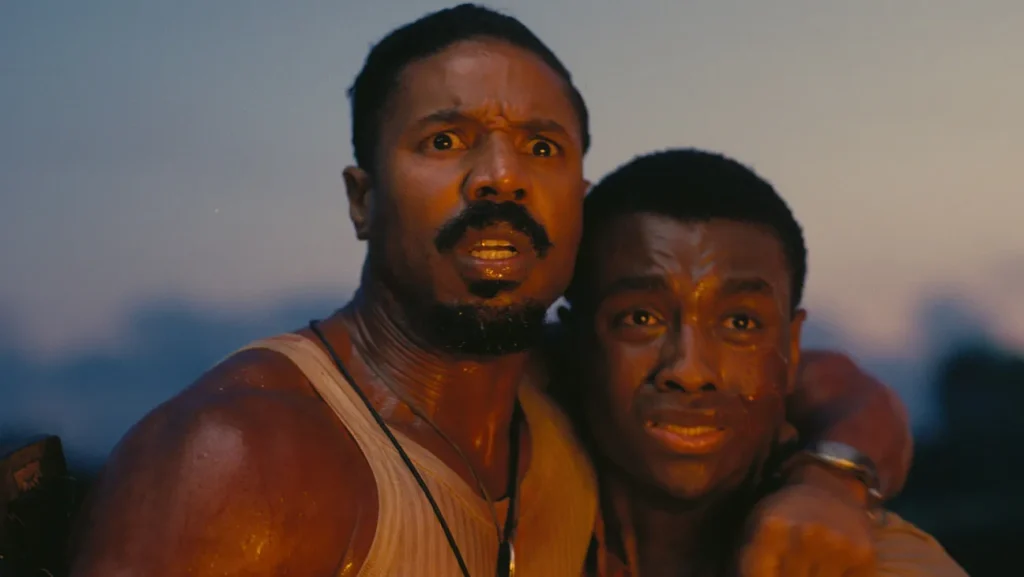
With Sinners, Jordan reaches a new level in his career, taking on the dual roles of twins Smoke and Stack. It’s a technically demanding performance, but he makes the distinction between the two feel effortless – Smoke is reserved and protective, while Stack is more impulsive and charismatic.
What really stands out is how clearly both characters come through, especially in their relationships: Smoke’s quieter, more intimate connection with Annie (Wunmi Mosaku) versus Stack’s more intense and passionate dynamic with Mary (Hailee Steinfeld). Jordan balances both roles without losing cohesion, bringing together everything he has built over the years. It’s a performance that feels fully realised, and one that clearly marks a peak.
Also see: 5 takeaways from Jia Zhangke’s masterclass at the Asian Film Awards