

“…In a world where distance once defined the limits of movement, the rise of commercial aviation in the 1950s reshaped the way time was understood. Journeys across continents became increasingly accessible, yet a new complexity emerged. Life was no longer bound to a single time zone. The need to navigate multiple zones with clarity and ease became essential. It was within this shifting landscape that Rolex introduced the Oyster Perpetual GMT-Master in 1955.…”
Developed in collaboration with Pan Am Airlines, the watch was created for pilots moving constantly between time zones. Its 24-hour display, paired with a distinctive bi-colour bezel, offered an intuitive way to read time across regions. From its earliest moments, it spoke a language understood by travellers everywhere. What began in the cockpit soon extended far beyond it. The GMT-Master found its place on the wrists of explorers, aviators and, notably, NASA astronauts. Jack Swigert wore his during the Apollo 13 mission, while Stuart Roosa carried his on Apollo 14. In doing so, the watch became quietly embedded in some of the most significant journeys of the modern era.
The Birth of an Icon and Its Evolution
The first GMT-Master, reference 6542, featured a 38 mm case and a Bakelite bezel divided into red and blue to distinguish day from night. The material was later discontinued due to durability and safety concerns, yet its short-lived presence has made early examples exceptionally rare and highly sought after.
By 1959, Rolex introduced reference 1675, a model that would define the collection for decades. The case grew to 40 mm and crown guards were added, giving the watch a stronger and more purposeful presence. The bezel evolved into anodised aluminium, offering greater durability while retaining its visual identity.
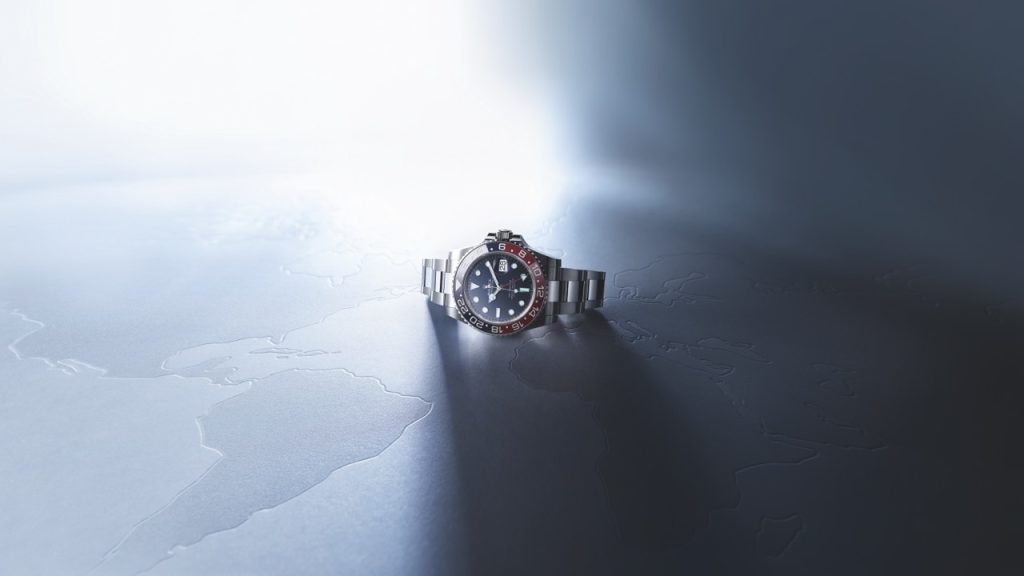
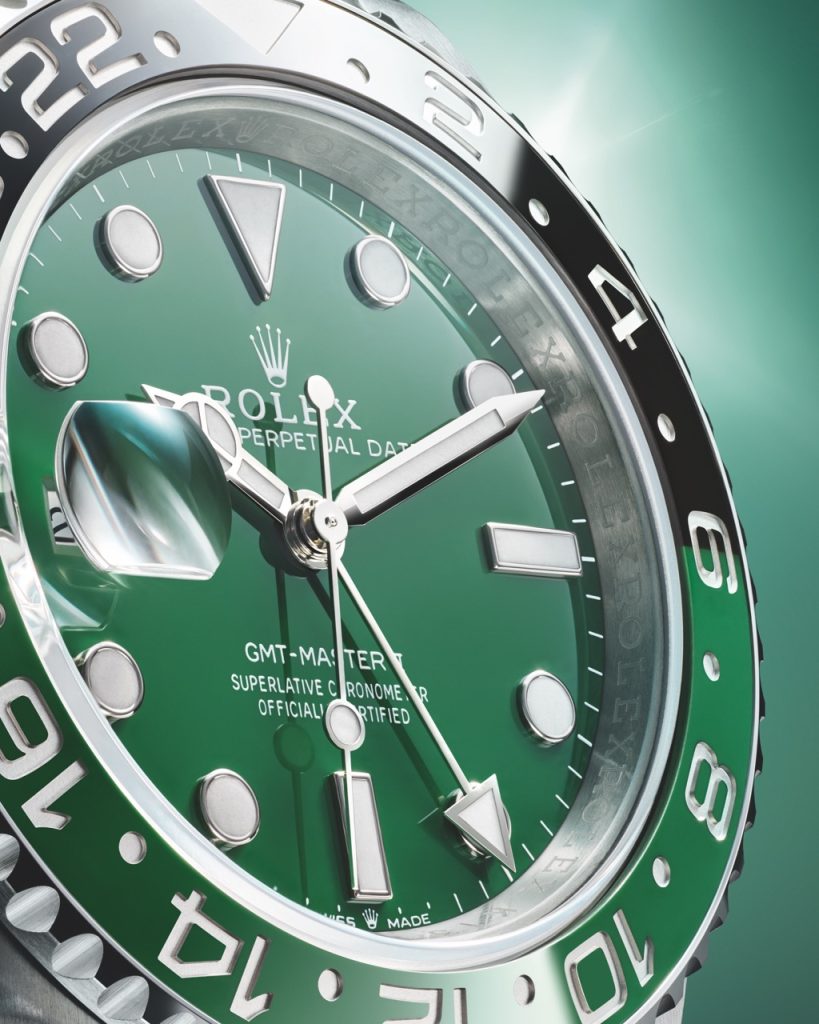
Closer inspection of the dial reveals a more nuanced story. The inscription Superlative Chronometer Officially Certifiedsignals Rolex’s commitment to precision. Beneath the 6 o’clock marker, a small “exclamation point” appears on certain models, a detail that has long intrigued collectors. It is widely associated with a transitional period during which Rolex began moving away from radium, valued for its brightness yet increasingly questioned for its safety, towards tritium, a more stable and controlled luminous material. These changes did not occur abruptly. Instead, they unfolded gradually, leaving behind subtle variations that now serve as markers of time within the watch itself.
At the same time, the GMT-Master began to extend beyond its utilitarian origins. The introduction of 18k gold versions brought a warmer, more refined expression. Rolesor models, combining steel and gold, offered a balance of strength and elegance. The watch was no longer defined solely by function. It had entered the realm of personal style.
From Dual Time to Global Precision
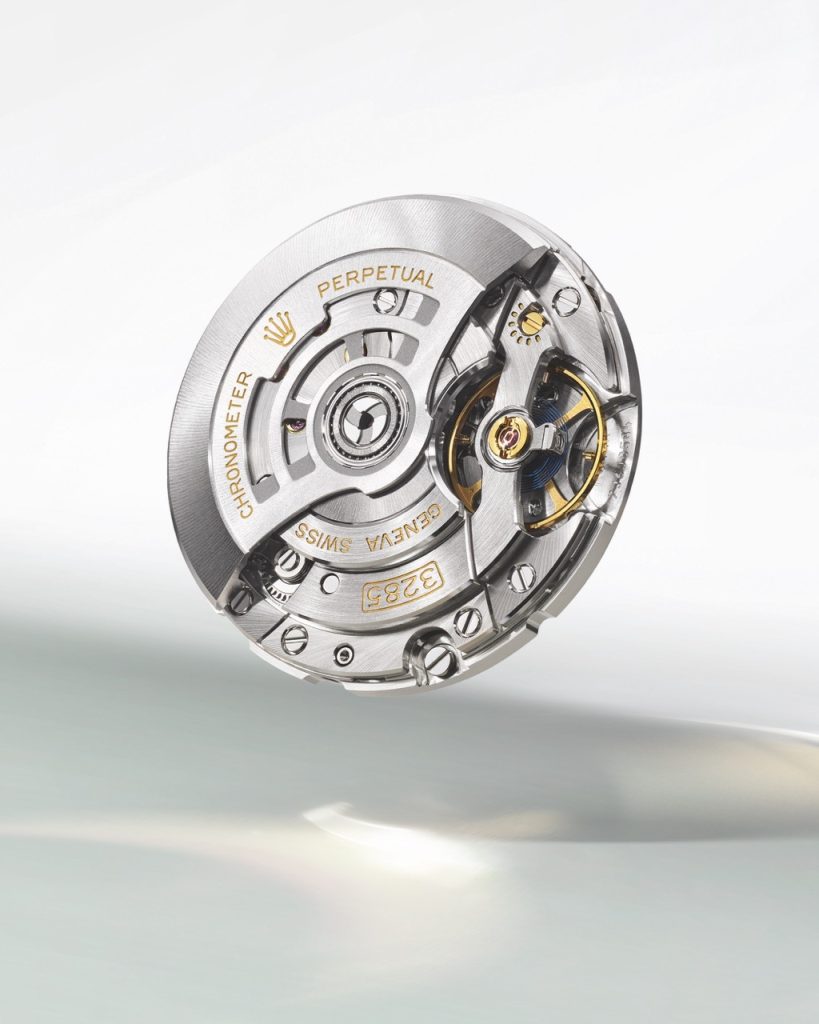
A significant shift came in 1982 with the launch of the GMT-Master II, reference 16760. Equipped with calibre 3085, it allowed the local hour hand to be adjusted independently of the 24-hour hand. This advancement made it possible to track three time zones, reflecting the increasing pace and complexity of global travel.For more than sixteen years, the GMT-Master and GMT-Master II existed side by side.
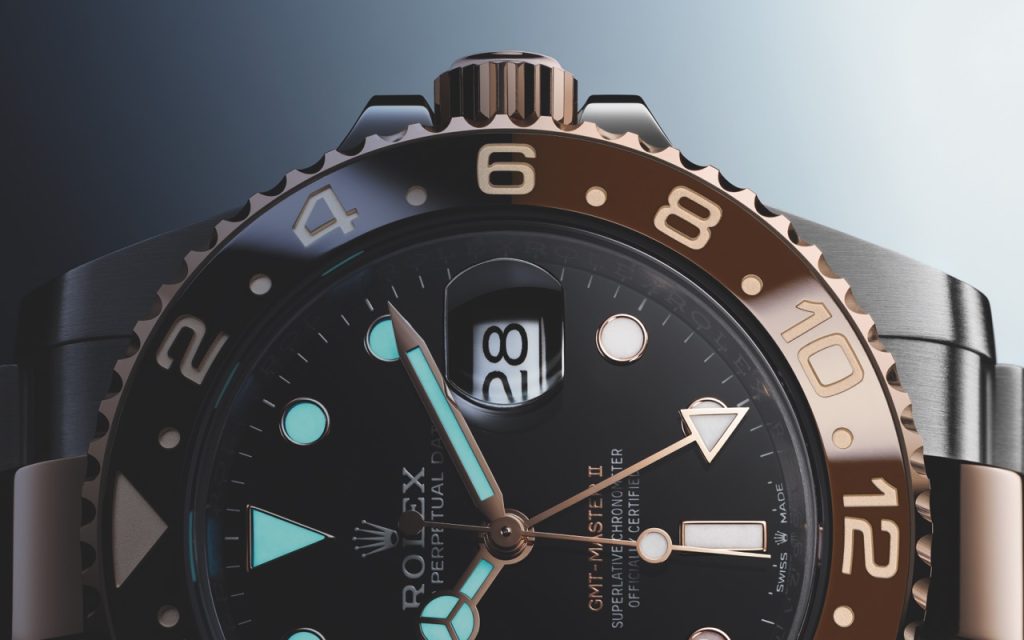
Over time, the latter became the natural successor, refining both functionality and technical performance. Ongoing developments have continued to shape the GMT-Master II. The introduction of the Cerachrom bezel enhanced resistance to scratches and fading. The Chromalight display improved legibility in low light with a clear blue glow. The calibre 3285, with its Chronergy escapement, brought further gains in efficiency, extending the power reserve to 70 hours while maintaining an accuracy of ±2 seconds per day. Each evolution reflects a quiet but deliberate pursuit of excellence.
The Language of Colour
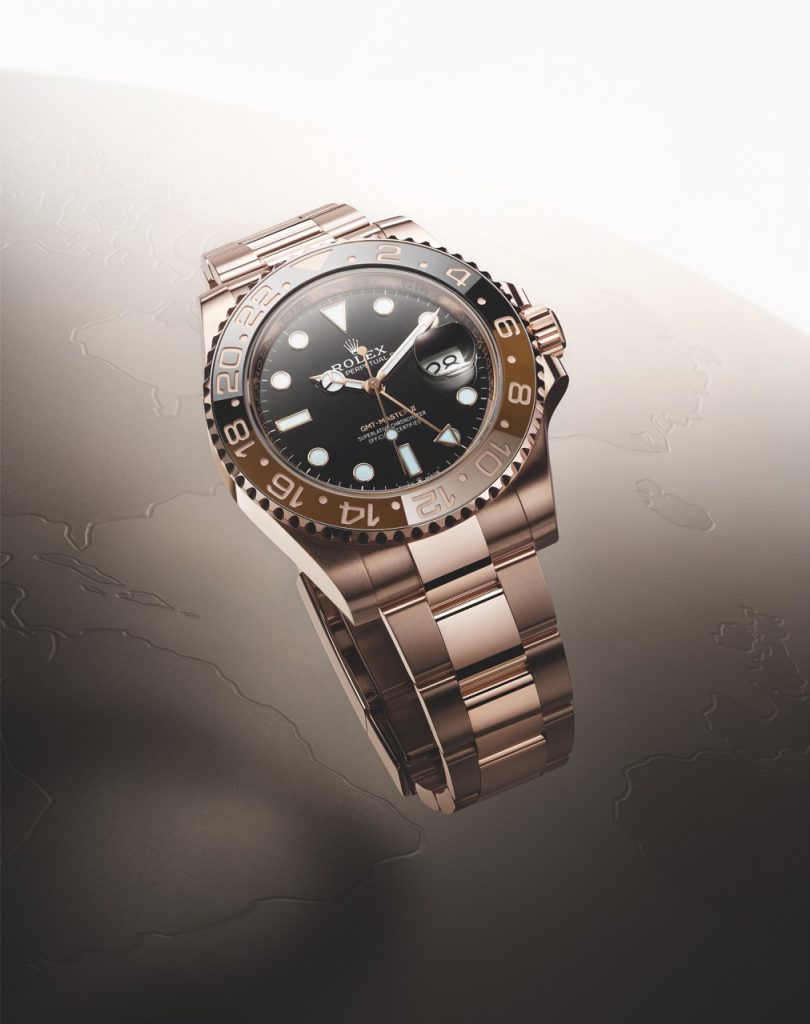
Colour has always been central to the identity of the GMT-Master. The red and blue of the Pepsi bezel, the red and black of Coke, the blue and black of Batman, and the warm tones of Root Beer each carry both function and character. In the era of Cerachrom, achieving these dual-colour combinations required new technical solutions. Rolex developed proprietary processes to reintroduce these palettes in ceramic, ensuring both durability and depth of colour.
Today, the GMT-Master II continues to evolve through subtle reinterpretations. Whether through new configurations or more restrained tones in grey and black, it maintains a balance between continuity and change. Its identity remains intact, even as it adapts to the present.
A Watch That Connects the World
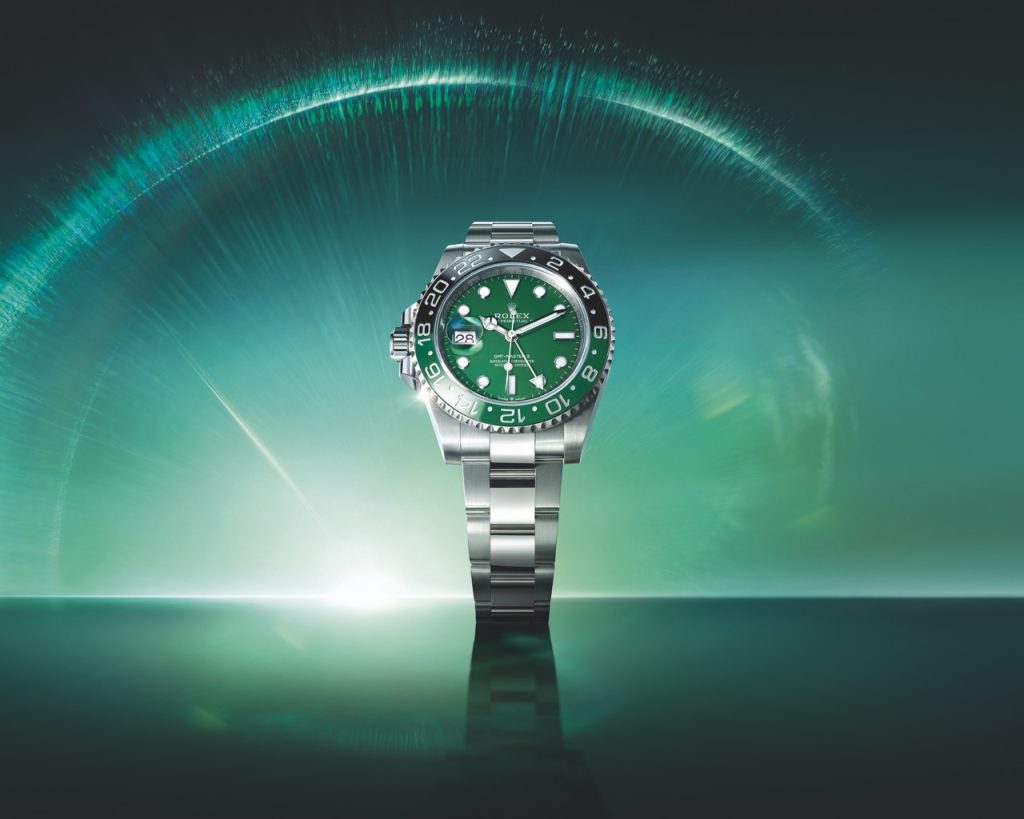
From its beginnings as a pilot’s instrument, the GMT-Master has become a symbol of global movement. This narrative was brought into focus once again through the Oyster Perpetual GMT-Master exhibition, presented by Rolex in collaboration with PMT The Hour Glass, this past March. Rather than simply recounting history, the exhibition offered a reflection on time itself. It traced the evolution of travel, technology and human connection, placing the GMT-Master within a broader cultural context. What emerges most clearly is a sense of continuity.
The GMT-Master is not only a watch that measures time, but one that reflects how we move through it—a connection between places, between people, and between moments that continue to unfold.