

Reported by Manit Maneephantakun
The announcement that Pieter Mulier will conclude his role as creative director of Alaïa after the Summer–Fall 2026 show in Paris is more than a routine leadership change. It marks the closing of one of the most significant revival chapters in contemporary fashion.
As the first designer to succeed legendary founder Azzedine Alaïa, Mulier faced an exceptionally delicate challenge: how to bring Alaïa “back” without becoming a shadow of the past, and how to move the house forward without eroding its essence. Over five years, his answer became increasingly clear. Alaïa did not need attention or hype, it needed precision and clarity of style.
When fashion begins with “form,” not paper
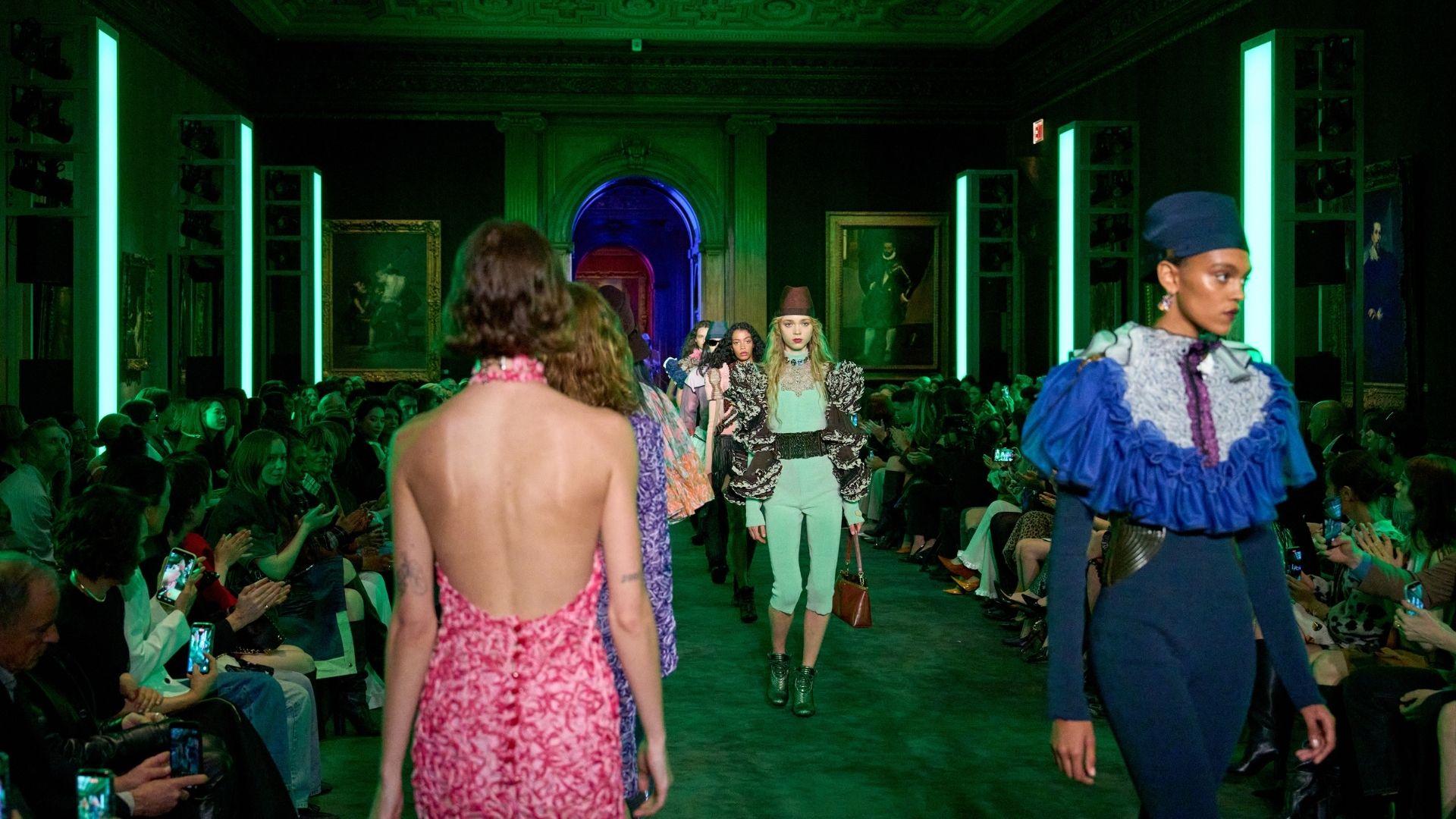
With a background in architecture from the Saint-Luc Institute in Brussels, Mulier designs by starting from three-dimensional shapes rather than flat sketches. His clothes are not merely “constructed,” but “sculpted“, expanding, constricting, embracing the body, and leaving space for it to speak on its own.
From cocoon-like garments that envelop the body to asymmetric dresses, hoods, sweeping fringes, and the introduction of denim into the Alaïa universe, everything reflects a profound understanding of silhouette, one that resonates strikingly with the founder’s original philosophy.
Naomi Campbell once summed it up incisively: “Alaïa was never about spectacle; it was about craft, sculpture, and timeless beauty.” She emphasized that Mulier is the one who “took that legacy forward while truly making it his own.”
From runway to handbag: success you can touch
Under Mulier’s leadership, Alaïa returned not only in image, but in business strength. Accessories such as the east–west Teckel bag, mesh ballerina flats with Mary Jane straps, and newer styles like Le Click became breakout hits, significantly expanding the brand’s audience. The boutique network grew nearly fourfold to around 20 stores worldwide, and although Richemont does not disclose brand-by-brand figures, it is widely understood that Alaïa has more than doubled in size since Mulier’s arrival.
Off-calendar shows and resisting acceleration
In his early years, Mulier deliberately ignored the official fashion calendar, staging shows in his Antwerp apartment, Alaïa’s Paris boutique, and even the Guggenheim Museum in New York before eventually returning the brand to the official Paris Fashion Week schedule. He once stated plainly: “We make fashion shows to make statements, otherwise, I don’t know why we would do them.” He also stressed that people are increasingly “fed up” with a kind of luxury that is aggressively pushed in their faces. This stance is precisely what made Alaïa under Mulier one of the few houses able to speak about luxury without forcing itself.
The next chapter: Versace?
Following his departure from Alaïa, Mulier is widely expected to take the creative director role at Versace, a position that has recently become vacant. Notably, Mulier has cited Versace as one of the designers who influenced him, describing the house as being “closely linked to Azzedine Alaïa from the very beginning.” If this move materializes, it will not simply be a change of address, but a major experiment in how a language of restraint, sculpture, and structural thinking might operate within Versace’s universe of sensuality and power.
As Mulier’s name continues to be linked with Versace, the real question is not merely where he will go next, but how a vocabulary of silhouette, silence, and architectural thought will perform in an entirely new world.