

How Julian Klausner Rewrote Menswear as a Coming-of-Age Story
Reported by Manit Maneepantakul
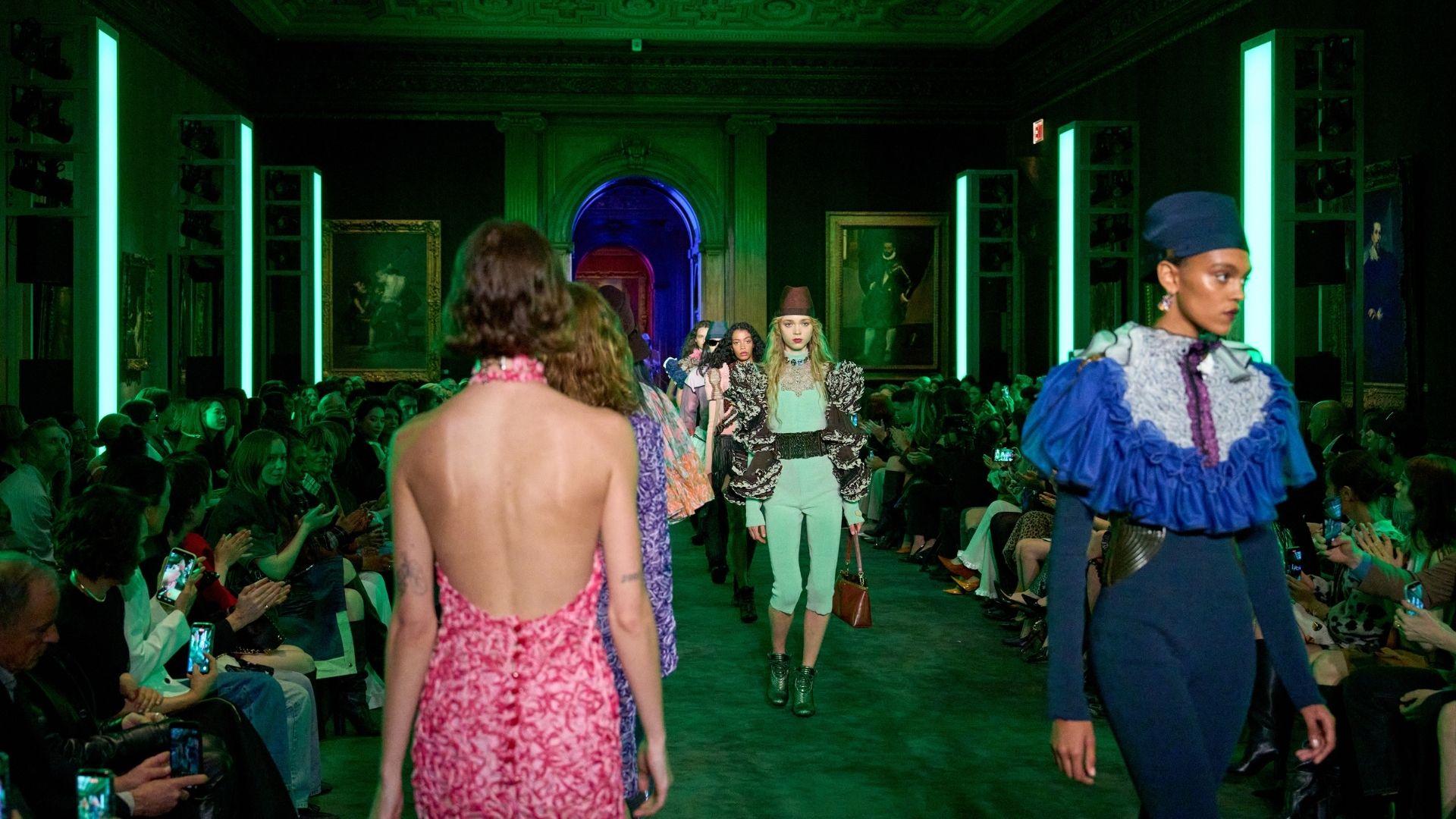
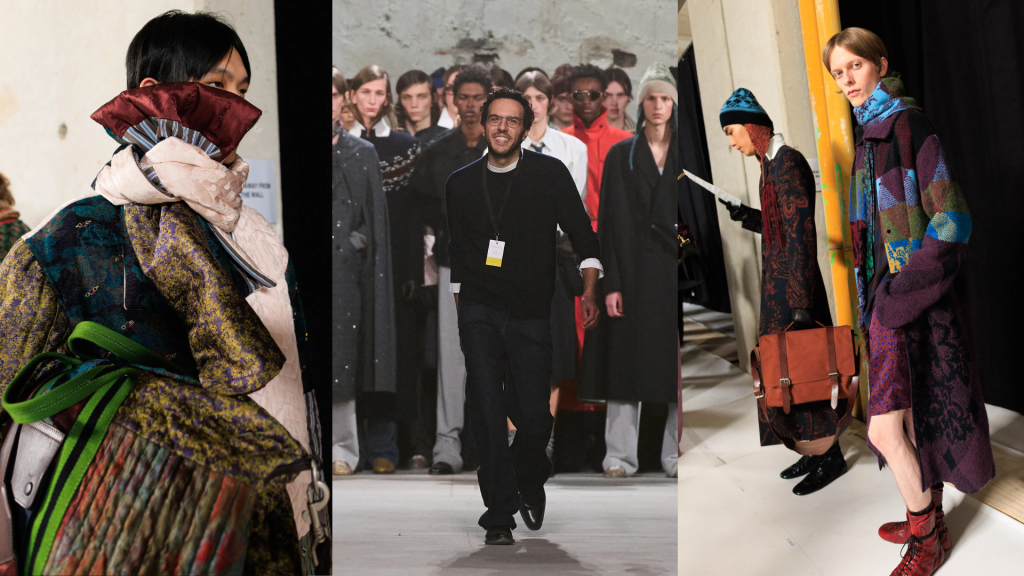
The Men’s Winter 2026 show of Dries Van Noten did not open with the familiar spectacle of a “fashion show” in its conventional sense. Instead, it unfolded like the opening chapter of someone’s life: slow, quiet, deep, and layered with meaning rather than spectacle. The footsteps of the models on the runway did not evoke the classic language of masculine power and dominance that traditional menswear often projects. Instead, they felt like the beginning of a journey, the journey of a young man leaving home, beginning to grow, and slowly becoming someone new in the world.
Under the direction of Julian Klausner, this collection was not created simply to showcase technical mastery. It was designed as a “space for growth”, a space where clothing does not function as an image-making tool, but as a language of self-discovery. Klausner articulated the concept of the show clearly:
“It’s the idea of growing up, moving beyond being a teenager, exploring the world, leaving home, and taking the things you love with you. Hand-me-downs, your granddad’s coat, your childhood blazer.”
The young man of Winter 2026 is therefore not someone who is “ready,” but someone who is “becoming ready.” Not someone who knows who he is, but someone who is learning who he might become. This sense of unfinishedness, of being incomplete, is embedded in every silhouette, every layer, and every structural decision throughout the collection.
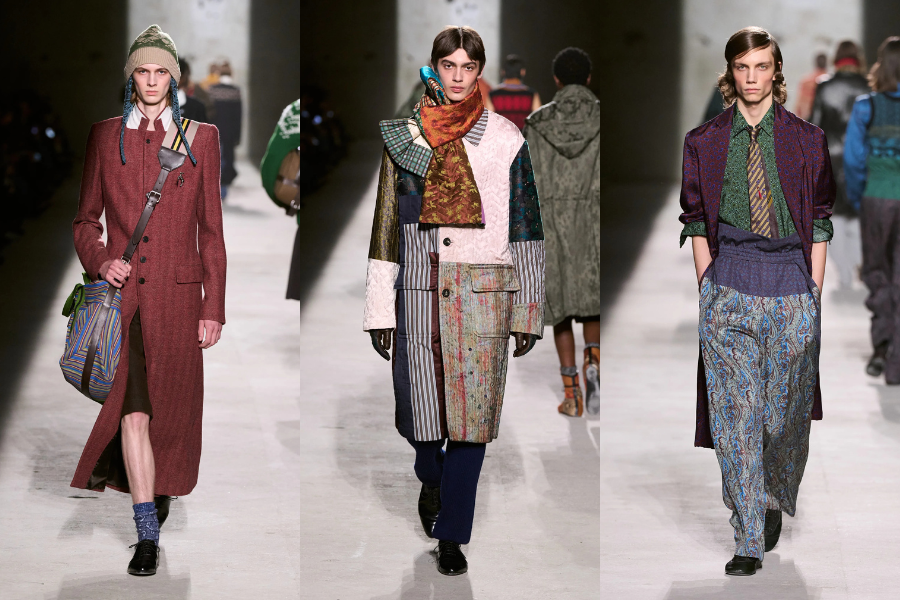
From the very first look, the structure of outerwear is unmistakable. Slim coats with a semi-military, semi-Victorian line, long cloaks, parkas, capes, and trenches appear not merely as fashion items, but as protective shells, garments that feel more like armor against the outside world than seasonal clothing. In this show, outerwear is not just a product category; it becomes a symbol of departure, transition, and confrontation with the world.
Yet within this strong structural framework, the details remain delicate, soft, and vulnerable, especially in the use of knitwear, which becomes the emotional core of the collection. Klausner explains:
“It’s been a moment since we had a strong knit message in the show. We have a wonderful knit team, some of them have been here for more than 30 years. They’ve actually done almost all the Dries knits. For me, it’s a huge honor to work with their experience and their perspective.”
In Winter 2026, knitwear is not simply winter clothing. It becomes a conceptual structure, a way of thinking. From hybrid hats layering Nordic beanies over ethnic chullos, rib-knit striped cardigans with structured shoulders, removable geometric knit panels, glitched knit textures, trompe-l’oeil knit tank tops, to Fair Isle embroidery on outerwear, every knitted element reflects experimentation, fluidity, and a rejection of fixed form and perfection.
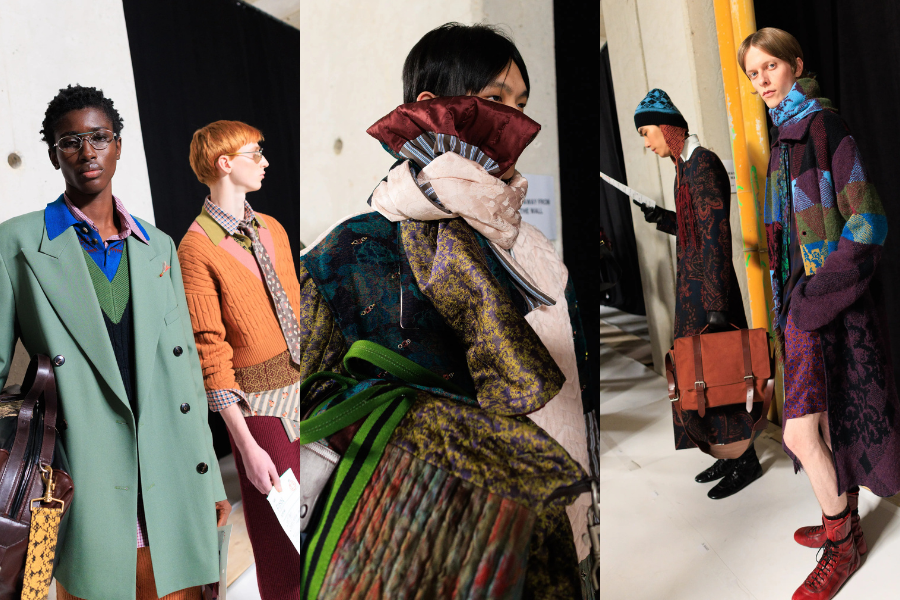
The silhouettes of the collection move clearly in a space between masculine and non-gendered expression. There are “shkirts” (shirt + skirt forms), wool tailoring kilts worn over trousers or on bare legs, capelets and mantle-like garments with quasi-religious undertones, pencil coats and cloaks that evoke a Victorian–collegiate gothic atmosphere. These garments are not designed to provoke gender spectacle, but to create a space of non-definition, a space where men are not required to define themselves, choose roles, or decide who they should be.
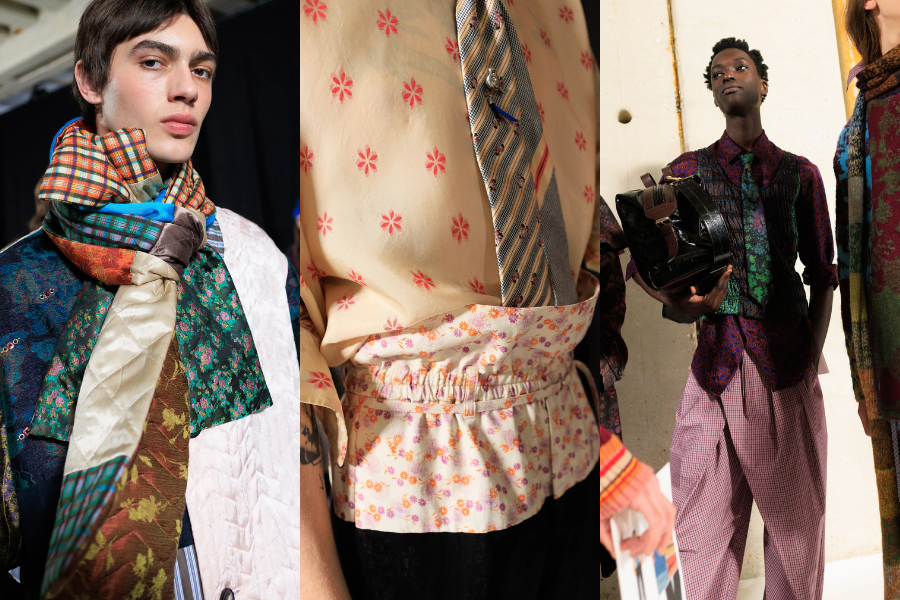
Patterns and motifs are densely layered, botanical, floral, Fair Isle, stripes, paisley, checks, and geometric prints, yet they never feel chaotic. This is because the color palette is tightly controlled within a muted harmony, allowing everything to merge into a soft, coherent visual field. When Klausner reintroduces shades inspired by the Francis Bacon–referenced Women’s Fall 2009 collection, the effect is not nostalgic imitation, but a living continuity of brand memory, history in motion rather than archive worship.
One of the strongest visual signatures of the show is the outerwear: Polaroid-floral printed coats, an olive jacquard floral parka layered over a burnt-orange quilted liner, and the Polaroid satin capelet trench double-overdyed in red and petrol. These pieces are not only visually striking, they tell stories in themselves. They carry memory, dream, romance, and travel within a single garment.
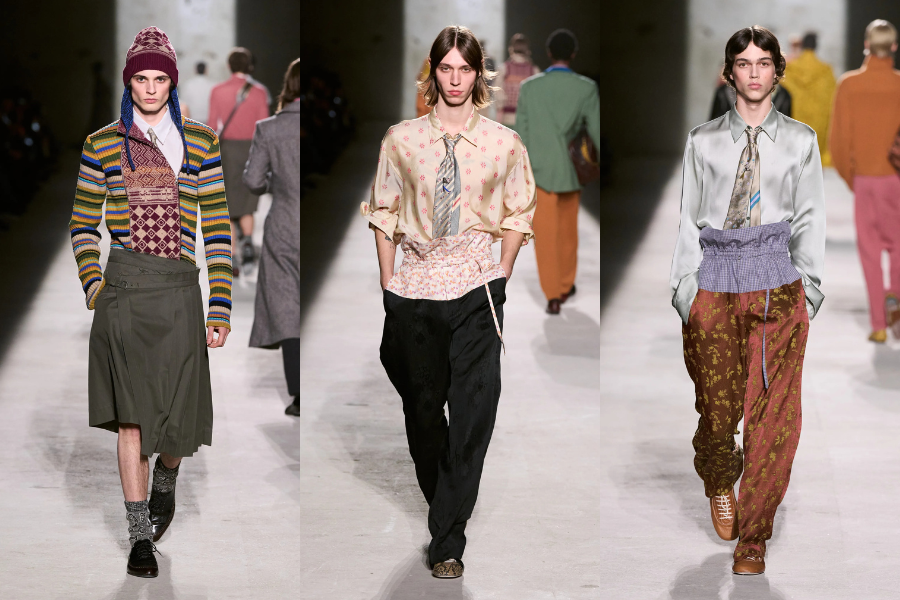
Throughout the show, the men do not walk with the confident authority of classical runway masculinity. They move like young boys trying on clothes, trying identities, trying roles, trying life itself. Knit trapper hats, center-parted hair, nerdy glasses, school bags, and collegiate crest embroideries give the entire show the atmosphere of first-year university students, young men entering a new world with uncertainty, vulnerability, and hope.
Klausner summarizes his philosophy simply:
“It’s not autobiographical. It’s more like a fantasy. It’s about the steps of self-exploration and finding yourself, and I think that’s a really beautiful idea to work with.”
And this sentence captures Winter 2026 perfectly. This is not a show that tries to define men. It does not attempt to prescribe masculinity. It does not impose a finished identity on its audience. Instead, it opens a space where uncertainty, hesitation, and vulnerability are allowed to exist in fashion.
Dries Van Noten Men’s Winter 2026 is therefore not beautiful only in image, it is beautiful in meaning, in structure of thought, and in the truth of growth. It is fashion that does not rush, does not provoke, does not chase momentum, and does not follow noise. It chooses to move slowly, deeply, and steadily.
This is fashion that does not sell perfection, it sells the process of becoming.
It does not sell ready-made dreams, it sells spaces of searching.
It does not sell confidence, it sells the courage to remain uncertain.
And in a fashion world increasingly driven by speed and surface, Dries Van Noten chooses to compete through depth, meaning, and continuity.
Winter 2026 is not merely a fashion show.
It is a record of growth.
Not just clothing, but a language of life.
Not just a runway, but a story of a human being learning how to grow up.
This is Dries Van Noten in the era of Julian Klausner,
a brand that does not tell you who you should be,
but tells you that you have the right to slowly become whoever you are meant to be.